
Forget the endless scrolling and guesswork. The best dropshipping products right now solve real, everyday problems, jump on social media trends, or feed passionate hobbies. Think portable beauty gadgets, innovative pet accessories, and eco-friendly home solutions—these are the categories grabbing attention and driving sales.
Here's a quick look at some of the most consistently profitable dropshipping niches and why they work so well.
High-Potential Dropshipping Niches At a Glance
| Niche | Market Share | Average Profit Margin | Key Strengths |
|---|---|---|---|
| Pet Supplies | 23% | 40-60% | High emotional connection, recurring purchase potential, large and growing market. |
| Beauty & Personal Care | 21% | 35-65% | Strong social media influence, problem/solution-driven, high perceived value. |
| Home & Kitchen | 18% | 30-50% | Evergreen demand, caters to "nesting" trends, wide range of price points. |
| Fitness & Outdoor | 14% | 45-70% | Passionate communities, high-ticket potential, aligns with wellness culture. |
These categories consistently perform because they tap into core human desires—convenience, self-improvement, and caring for loved ones (including furry ones).
How to Discover Products That Actually Sell
Finding a winning product isn't about luck. It's about building a system to read what the market is telling you. The goal isn't to chase every fleeting fad but to spot items with real momentum. It all starts with understanding where people are putting their attention and money.
Tapping into Trend Data
Your first move should be digging into tools that track public interest. Google Trends is a fantastic (and free) place to start. When you search for a product idea, you can instantly see its search interest over time. What you're looking for is a steady upward climb, which signals growing, sustainable demand. A crazy vertical spike might just be a short-lived trend that's about to flame out.
For example, a quick search for "hydrogen water bottle" shows a massive spike in late 2023 that has since settled into consistently high interest. This is a great pattern. It suggests the product has moved past being a fad and is now a legitimate wellness trend.
Decoding Social Commerce Signals
Social media isn't just for sharing photos anymore; it's a massive product discovery engine. Hashtags like #TikTokMadeMeBuyIt and #AmazonFinds are pure gold. These aren't just random posts—they're real-time proof of what's clicking with millions of people.
When you notice the same product popping up in multiple viral videos, dive into the comments. Are people asking where they can buy it? Are they tagging their friends? That kind of user-generated hype is one of the strongest demand signals you can get. A product like the "Rain Cloud Aroma Diffuser" blew up this way, mixing a cool aesthetic with a wellness benefit—a perfect formula for social media success.
Pro Tip: Don't just scroll past the videos. Really analyze how creators are framing the product. Pay attention to the camera angles, the problems they claim to solve, and the emotional chords they're striking. You're basically getting free market research for your future ad campaigns.
Learning from Your Competitors
Checking out successful dropshipping stores in your target niche is like getting a roadmap to profitability. Take a close look at their best-sellers lists, their social media ads, and what their customers are saying in reviews. What problems are their top products solving? How are they talking about them?
This isn't about blindly copying what they do. It's about understanding the market dynamics. If you see three or four different stores all successfully selling "self-cleaning hairbrushes," you can be confident there's a validated demand. Your job is to find a unique angle, a better supplier, or a more compelling offer.
For a much deeper dive, our comprehensive guide on product research for dropshipping lays out a step-by-step framework for this entire process.
How to Know if a Product Idea Is Actually a Winner
A great product idea feels exciting, but excitement doesn't pay the bills. The real make-or-break moment comes when you step back and look at the hard data. This is where you separate the flash-in-the-pan fads from the products that can actually build a profitable business. Without this step, you're just guessing.
The best dropshippers I know follow a repeatable system for finding and validating ideas. It’s a mix of spotting trends, spying on competitors, and listening to what people are saying on social media.
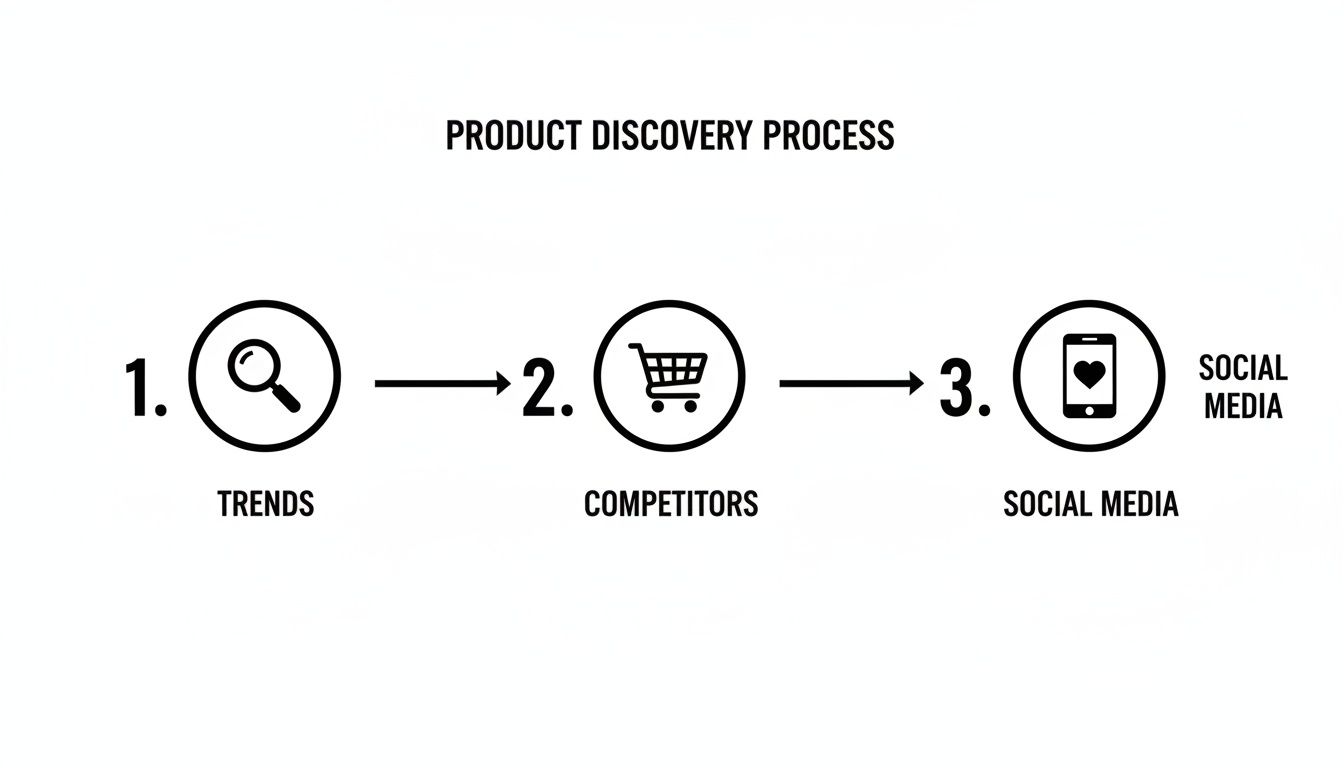
This workflow isn't complicated. It’s about using different pieces of information to build a complete picture of a product’s potential before you spend a single dollar on ads.
Look for Proof of Demand: Orders and Reviews
The most straightforward way to see if people are buying something is to check the order volume on platforms like AliExpress. When you find a product that looks promising, dig into the listings.
A product with thousands of orders split across a few different suppliers is a fantastic sign. It’s not just an idea anymore; it’s a proven concept. It tells you that other stores are already making money with it, and there's a real, active customer base out there.
But don't stop at the order count. The customer reviews are where the real gold is. They give you raw, unfiltered feedback on what people actually think.
When you're reading reviews, look for these patterns:
- What People Love: Are customers consistently raving about a specific feature? That’s your headline. That’s what you lead with in your ads and product descriptions.
- What People Hate: Are there repeated complaints about shipping times, product quality, or something breaking? This is your chance to find a better supplier or get ahead of the problem by being transparent with your customers.
- What’s Missing: Sometimes, reviews will hint at a use for the product that the seller isn't even marketing. This can be a unique angle that makes your store stand out.
Think about it this way: if you find a skincare gadget that everyone loves, but they all complain that the instructions are a confusing mess, you have an instant advantage. Just film a simple "how-to" video, and you've solved their biggest problem before they even buy.
Do the Math: Can You Actually Make Money?
Finding a high-demand product is only half the battle. If the numbers don't work, nothing else matters. You have to calculate your potential profit margin before you even think about building a store.
It’s simple math, but it’s the most important math you’ll do.
The Basic Formula: (Selling Price) – (Product Cost + Shipping Cost + Transaction Fees) = Gross Profit
Let's walk through a real-world example. Say you find a "self-cleaning hairbrush" on AliExpress. The supplier is charging $3.50 for the product and $4.00 for reliable shipping. Based on what competitors are doing, you think you can sell it for $19.99.
Your initial profit before ads is $12.49. Don’t forget to account for payment processing fees, which are usually around 3%.
But the biggest cost is almost always advertising. A good starting point is to assume your customer acquisition cost (CAC) will be about 30% of your selling price. For a $19.99 product, that means you should budget around $6.00 to make one sale.
So, let's put it all together:
- Gross Profit: $12.49
- Estimated Ad Spend: $6.00
- Net Profit: $6.49 per unit
For a lower-priced item, a net profit in the $5-10 range is a pretty healthy place to be. This quick calculation saves you from building a whole business around a product with paper-thin margins that can get wiped out by one bad ad day.
Why Fashion and Apparel Is Still a Dropshipping Powerhouse
While other dropshipping niches come and go, fashion and apparel has remained a titan. There's a simple reason for its staying power: it's not just about clothing; it’s about self-expression. People don't just buy a shirt, they buy a look. They're crafting an identity, and that emotional connection creates a market that’s always in demand.
The whole niche is built on change. A micro-trend can blow up on TikTok or Instagram literally overnight, and suddenly everyone is searching for a specific item, whether it's cottagecore dresses or Y2K-inspired tracksuits. For a dropshipper who can move fast, this constant cycle isn't a problem—it's a massive opportunity.
Finding Your Angle in Endless Sub-Niches
The beauty of apparel is just how broad it is. You're never just selling "clothes." You can get hyper-specific and target passionate communities who have their own unique aesthetics and needs. This is where you can build a real brand that people connect with.
Just think about some of the pockets you could dive into:
- Athleisure Wear: This isn't just a trend anymore; it's a full-blown lifestyle. We're talking high-quality leggings, perfectly oversized hoodies, and matching sweat sets that bridge the gap between the gym and the coffee shop.
- Sustainable & Eco-Friendly Clothing: More and more shoppers are voting with their wallets. If you can source products made from organic cotton or recycled materials, you can attract a loyal customer base that cares about where their money goes.
- Personalized Accessories: Things like custom-engraved necklaces or monogrammed tote bags feel special. They offer something unique that you can't just grab off a shelf, which means you can often charge more and give your customers something they'll remember.
By zeroing in on a sub-niche, you sidestep the brutal competition of trying to be a general fashion store. You can learn more about finding your perfect fit in our guide to the 10 best niches for drop shipping.
The Hard Numbers Behind Fashion's Reign
Let's be clear: Fashion and apparel is the undisputed leader right now. It commands a massive 34% market share in the global dropshipping industry. The projections are just as huge, with the market expected to hit a staggering $802.33 billion by 2025.
What's driving this? Relentless trend cycles and endless ways to customize. For anyone sourcing from a platform like AliExpress, trendy athleisure and stylish accessories are pure gold. It's not uncommon to see profit margins of 30-50% on these items, even after factoring in shipping.
One of the biggest wins in the fashion niche is the potential for repeat customers. Once someone trusts your brand for its style and quality, they're far more likely to come back the next time they need a wardrobe refresh.
To really get a feel for what’s possible, you have to keep your finger on the pulse of what people actually want right now. A great place to start is by checking out the 10 Key Summer 2025 Fashion Trends that are already shaping the industry.
Sure, you'll face challenges like sizing questions and returns, but those are easily managed with detailed sizing charts and a clear, customer-friendly return policy.
Why Beauty and Personal Care is a Goldmine Right Now
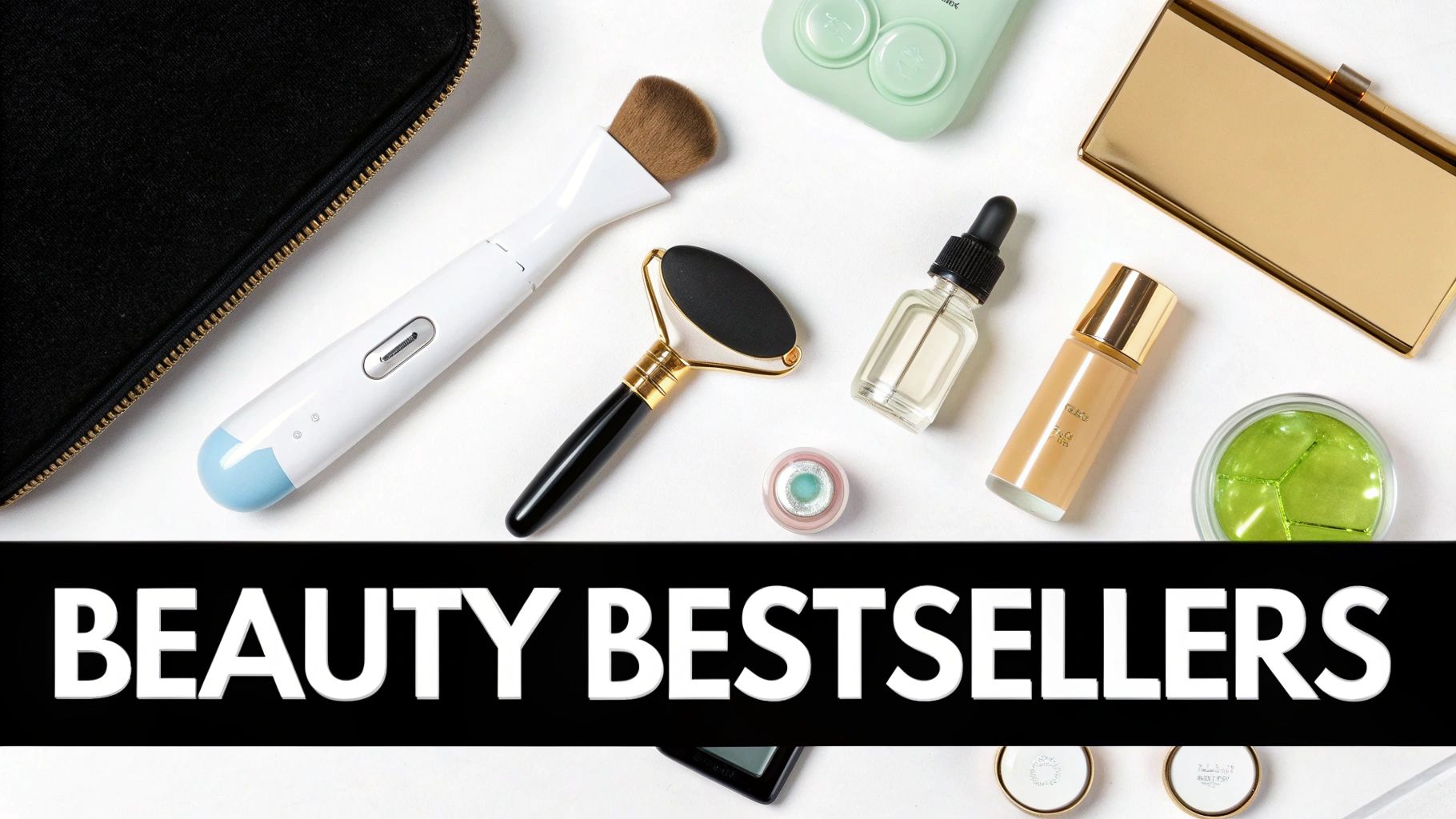
If you're looking for a dropshipping niche with staying power, beauty and personal care is an absolute giant. This isn't just about fleeting trends; it's an industry built on the powerful self-care movement and amplified by the visual-first world of TikTok and Instagram. A single "get ready with me" video can turn an unknown product into an overnight sensation.
This isn't about selling lipstick. It's about providing solutions. Customers are always on the hunt for products that help them look and feel their best, creating a reliable, built-in demand that's ripe for the picking.
Forget the Basics, Focus on These Winners
The real money isn't in competing with drugstores on generic foundation. Your breakthrough will come from innovative gadgets and unique accessories that stop the scroll and solve a real problem.
Here's where I've seen massive success:
- Skincare Tools and Gadgets: Move past simple jade rollers. Think bigger. Things like ultrasonic face scrubbers, LED therapy masks, and high-frequency wands have a much higher perceived value because they promise professional-level results at home.
- Portable Beauty Devices: People are busy, and convenience sells. Products like mini hair straighteners for your purse, clip-on LED car makeup mirrors, and electric pedicure files are perfect impulse buys that cater to an on-the-go lifestyle.
- Unique Cosmetic Accessories: These are the "wow-factor" items that make routines easier and more fun. I'm talking about self-cleaning hairbrushes, silicone facial ice molds, or those clever anti-wrinkle beauty stickers you see all over TikTok. They’re practically made for viral video ads.
The Numbers and Marketing Game Plan
Let's talk numbers, because they're impressive. This market is on track to hit a staggering $672.2 billion by 2025. In fact, beauty products make up 13% of the entire dropshipping market, thriving on the kind of visual storytelling that drives people to click "buy now." I've seen high-ticket beauty devices deliver jaw-dropping 40-60% profit margins.
My Pro Tip: The secret weapon of the beauty niche is consumables. When a customer falls in love with a serum, a face mask, or a pack of skincare patches you sold them, they’ll come back for more. This builds a recurring revenue stream that's incredibly difficult to establish in other niches.
Your marketing playbook here needs to be video-first. It's all about showing, not just telling. Lean heavily on user-generated content (UGC) and find influencers who can genuinely demonstrate your product. A real person showing how a self-cleaning hairbrush actually works is infinitely more persuasive than a sterile product photo. If you're looking for more specific ideas on what to sell and how to market it, check out our deep dive into drop shipping cosmetics.
Tapping Into the Booming Pet Products Market
There's a simple, powerful truth in e-commerce: people love their pets. And they're spending more than ever to prove it. This isn't just a trend; it's a fundamental shift in how we view our furry companions. The "pet humanization" movement—where pets are treated as full-fledged family members—is the engine driving a massive, resilient market.
This emotional connection is your biggest asset. It makes the pet niche incredibly stable. While other product categories rise and fall with fads, the demand for pet supplies is constant. Owners will always need food, toys, grooming tools, and accessories. That means you have a built-in audience ready for repeat purchases.
Finding the "Wow" Factor: Hot Product Categories
Forget about dropshipping another generic dog bowl. The real money is in unique, problem-solving products that make life better for the pet and easier for the owner. These are the kinds of items that stop someone mid-scroll on social media.
Here are a few sub-niches that are absolutely crushing it right now:
- Interactive & Puzzle Toys: Think automatic laser pointers and treat-dispensing puzzles. These aren't just toys; they're solutions for pet parents worried about a bored or anxious animal left home alone.
- Specialty Grooming Tools: Products like quiet electric nail grinders or deshedding gloves offer a huge value proposition: save money and stress by skipping a trip to the groomer.
- Unique Accessories: This is where you find the viral hits. Cooling mats for hot summer days, "astronaut" bubble backpacks for travel, and orthopedic beds for senior pets all solve specific problems with a touch of novelty.
The Numbers Don't Lie: A Look at Profitability
The financial side of the pet niche is what gets seasoned dropshippers excited. This market has exploded, with the global pet industry valued at over $200 billion. High-margin items like automatic feeders and cooling mats are consistently top sellers.
It's not unusual to see 25-40% profit margins on products sourced from platforms like AliExpress. I’ve seen those viral "astronaut" cat carriers sourced for $10 fly off the virtual shelves for $40.
Even better, the data shows that loyal pet owners lead to a customer lifetime value up to 3x higher than in more fickle categories like fast fashion. For more on this, it's worth checking out some of the product trends on Halo Themes.
My Takeaway: The pet niche is a winner because the buying decisions are emotional, not just logical. This translates directly into higher customer loyalty, more repeat business, and way fewer returns than you'd see in a category like apparel, where sizing and personal taste create constant headaches.
To really succeed, you need to know how to source the right products at the right price. It helps to read up on things like finding affordable pet supplies online. Your goal is to create emotional, engaging content that speaks directly to devoted pet owners, turning them from casual shoppers into loyal customers who see you as a trusted resource for their four-legged family.
Creating Product Pages That Convert
So you've found a killer product. That's a huge win, but it's really just the starting line. The single most important factor that turns a casual browser into a paying customer is how you present that product on your store.
A professional, media-rich product page does more than just show what you're selling—it builds the trust and creates the desire necessary to get someone to actually click "Add to Cart." This means you need crisp, high-quality images, photos for every single variant, and, ideally, a solid video that shows the product in action.
The problem? Manually saving all of that from an AliExpress page is a soul-crushing grind. Right-click, save, rename, repeat… for dozens of files. It’s a massive bottleneck, especially when you're trying to test multiple new products every week.
Streamline Your Media Collection
There’s a much smarter way to work. Instead of spending an hour painstakingly saving files one by one, you can use a simple tool to grab every single piece of media in a single click. In seconds, you get a perfectly organized ZIP folder with everything you need. This lets you jump straight to the fun part: building a killer listing and crafting your ads.
This approach gives you a complete asset library instantly:
- Main Product Images: All the high-resolution shots from every angle.
- Variant Photos: Every color, size, and style option is covered.
- Promotional Videos: The supplier's own video, which is gold for your first ads.
- Customer Review Photos: Real-world images that add powerful social proof.
With all your media ready to go, you can build a stunning Shopify page or WooCommerce listing that looks completely professional and trustworthy from the get-go.
This is what it looks like when a tool like AliSave Pro integrates directly into an AliExpress page, giving you a simple download interface.
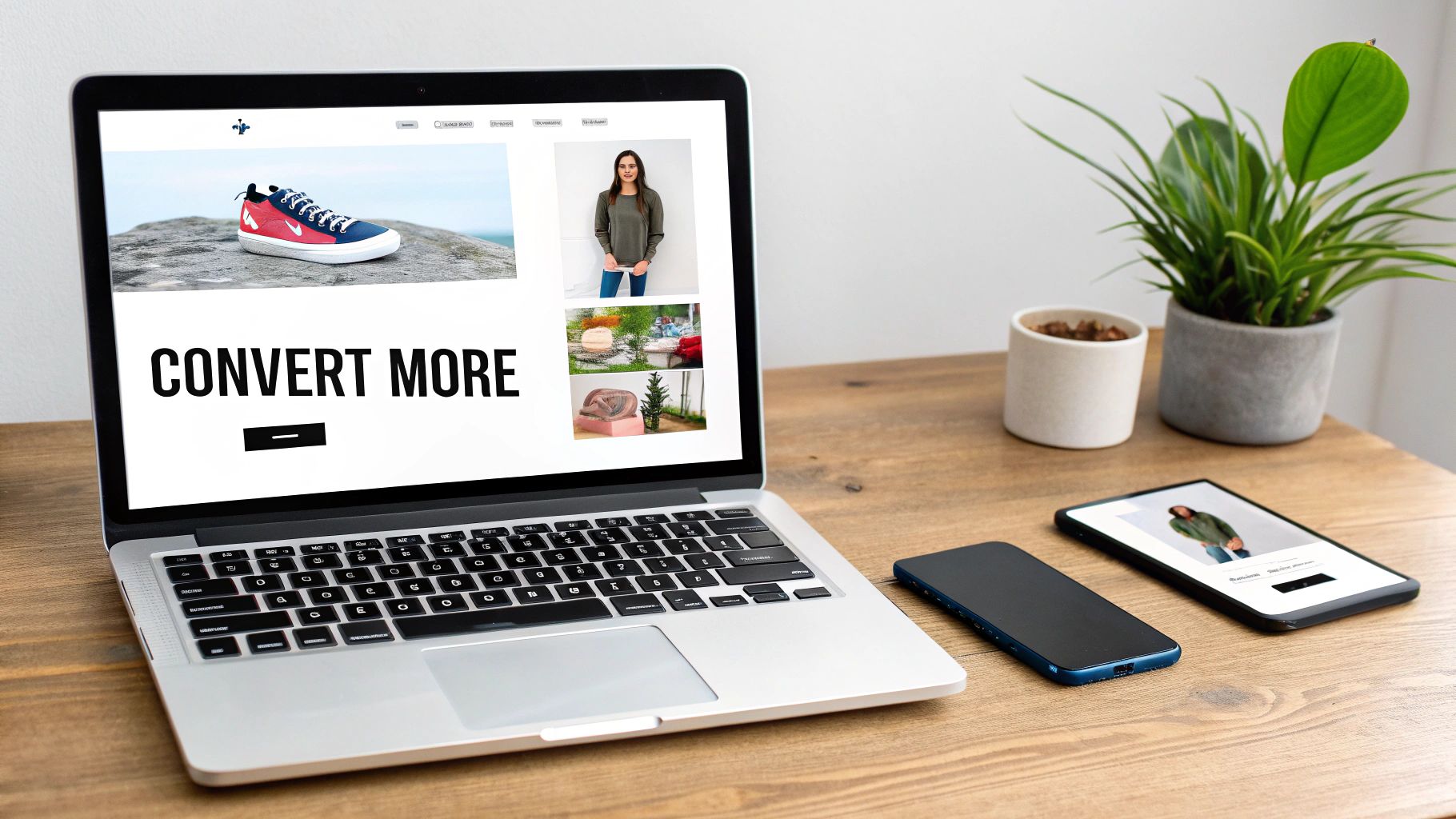
It’s all about efficiency. What used to be a tedious manual chore becomes a one-click process, freeing you up to focus on what actually makes you money: marketing and selling.
Turn Downloaded Assets into High-Converting Ads
That folder of media isn't just for your product page; it's a goldmine for your marketing. The promotional video from your supplier can be quickly edited into a punchy ad for TikTok, Instagram Reels, or Facebook. Considering that 73% of consumers say they're more likely to buy a product after watching a video about it, this is a step you absolutely cannot afford to skip.
My Pro Tip: Never use the supplier's video as-is. Spend 15 minutes adding your logo, some text overlays that call out the key benefits, and a trending audio track. This simple bit of polish can make a night-and-day difference in your ad performance.
For your image-based ads on Pinterest or in email campaigns, you have a wealth of content to pull from. Combining the polished, professional shots with the authentic customer review images (user-generated content, or UGC) is a proven strategy. It creates a powerful mix of slick branding and real-world credibility, helping shoppers see themselves actually using your product.
By getting all your media organized from the start, you can test different creative angles and campaigns way faster, letting you quickly find what resonates with your audience and turn those views into sales.
Still Have Questions? Let’s Clear Things Up
Even after you've got a solid research method down, some questions always pop up. It's totally normal. Here are some quick, straight-to-the-point answers for the common hurdles you'll hit when hunting for those winning dropshipping products.
How Do I Know if a Niche Is Just Too Saturated?
First off, let's reframe this. Saturation is often a good sign—it means there's real money being made there. The goal isn't to discover some magical, unknown niche. It's about finding your unique angle inside a market that's already proven to be profitable.
Think about it this way: instead of just selling "dog beds," what if you specialized in "orthopedic dog beds for large, aging breeds"? See the difference? When you look at competitors, pay attention. If you see a bunch of low-effort ads and websites that look like they were built in 2010, that’s your opening. A polished, trustworthy brand can slide right in and steal market share.
The sweet spot is a niche with plenty of search traffic but only a handful of truly professional competitors. That's the signal: demand is high, and there's still a massive opportunity for you to do it better.
What Are the Biggest Mistakes People Make When Picking Products?
So many new dropshippers fall into the same traps, and almost all of them are avoidable. The absolute biggest mistake? Picking a product you're personally passionate about without checking if anyone else actually wants to buy it. Your hobby might not be a business.
A few other classic blunders I see all the time:
- Forgetting About Shipping: Crazy high shipping costs or month-long delivery times will absolutely destroy your profit margins and leave you with a flood of angry customer emails.
- Skipping the Supplier Check: A bad supplier is a business killer. It means you're shipping out junk, orders are late, and your brand's reputation goes down the drain before it even gets started.
- Selling Trademarked Stuff: Don't even think about selling products with famous logos or movie characters. It’s a surefire way to get a nasty letter from a lawyer and have your store shut down.
Always let the data guide your decisions, and never, ever skip your supplier homework. It'll save you from some serious headaches down the road.
How Can I Test Products Without a Big Budget?
You don't need to throw a ton of cash at a product to see if it has legs. A great place to start is creating organic video content for platforms like TikTok or Instagram Reels. See what kind of reaction you get. The views, comments, and shares will give you a raw, honest signal of interest before you spend a single dollar on ads.
When you're ready to dip your toes into paid ads, start small. I'm talking $5–$10 a day per campaign, targeted at a few different audiences. The data you get back—even from a small spend—is incredibly valuable. It’ll tell you exactly which products and ad styles are getting clicks and sales, so you know what's actually worth scaling.
Stop wasting hours right-clicking to save every single product photo and video. AliSave Pro lets you grab all the media from an AliExpress page in one click. This means you can build out your product pages and crank out new ads way faster. Get the free AliSave Pro Chrome extension and start working smarter, not harder.