
Some of the absolute best things to flip on eBay are items you might walk past every day: retro gaming consoles, vintage band t-shirts, and even everyday essentials like genuine printer ink and TV remotes. These categories are goldmines because they consistently attract eager buyers and offer fantastic profit margins. This makes them a perfect place to start, whether you're new to the game or a seasoned pro.
The secret isn't just finding cool stuff; it's about finding products with a proven track record that you can get your hands on for cheap.
Unlocking Your eBay Reselling Potential
Have you ever been at a garage sale, spotted a dusty Nintendo 64, and thought, "I wonder what that's worth?" That gut feeling is where it all starts. eBay reselling is a huge opportunity to turn those curiosities and forgotten items into a real, steady income. With 134 million active buyers worldwide, eBay is still a powerhouse, giving you direct access to a massive audience hungry for secondhand treasures.
This guide is your roadmap to move beyond random guesswork. It’s about developing a sharp eye for what sells, understanding the market, and knowing exactly what buyers are typing into that search bar. We're going to shift your mindset from a casual thrifter to a strategic sourcing expert.
What Makes an Item Great for Reselling?
Before we jump into specific products, let's break down what actually makes an item a profitable flip. The most successful sellers don’t just stumble upon good deals; they operate with a mental checklist that vets every potential item.
Think of these as the four pillars of a great resell item:
- High Market Demand: It's simple—people have to be actively looking for it. eBay's own tools can show you the sales history, proving there's a hungry market waiting.
- A Healthy Profit Margin: After you subtract what you paid, eBay fees, and shipping costs, is there enough left to make it worth your time? The bigger the gap, the better.
- Easy to Ship: A great find can quickly turn into a nightmare if it's huge, fragile, or weighs a ton. Easy-to-ship items keep your costs down and your headaches to a minimum.
- Strong Brand or Niche Appeal: Recognizable brand names and items that cater to passionate collectors almost always sell faster and for more money. Think Nike, Sony, or a rare comic book.
Getting these fundamentals right is the foundation of a successful eBay business. For a wider look at how different platforms stack up and other strategies, check out a dedicated guide to reselling ratings. Once you master these principles, you'll be turning your treasure hunts into a predictable and rewarding business.
The Framework for Finding Profitable Products
Success on eBay isn't about luck or stumbling upon a hidden treasure. The real pros know it's a system—a repeatable process for spotting winners and avoiding duds. Think of this framework as your personal guide to filtering out the junk and homing in on genuinely profitable inventory.
This entire approach rests on five key pillars. Once you get these down, you'll be making smart, data-backed decisions instead of just guessing. Each one is a checkpoint to make sure an item is actually worth your time, money, and effort before you pull the trigger.
This simple decision tree gives you a bird's-eye view of how to evaluate a potential flip.
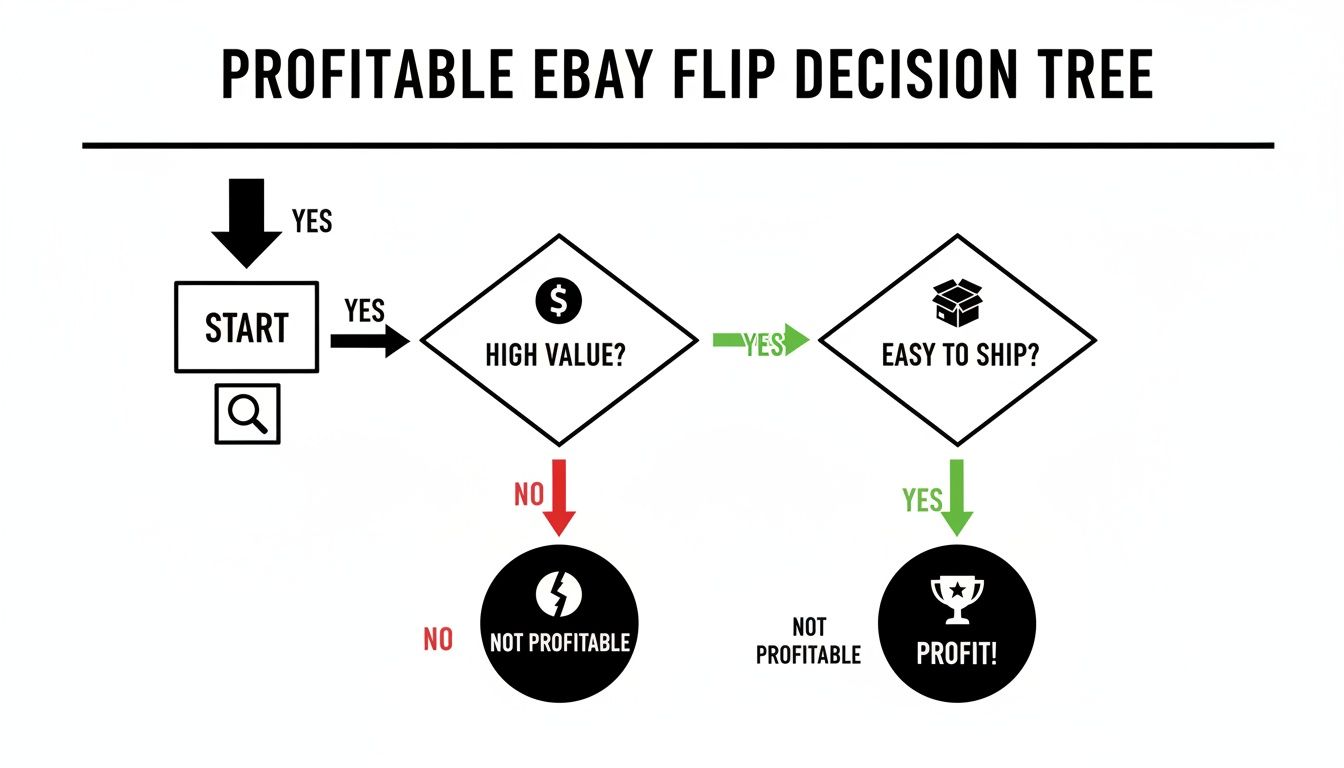
As you can see, a good flip has to pass two big tests: it needs to be valuable enough to make you a decent profit, and it needs to be easy enough to ship that the postage doesn't wipe out your earnings.
Profit Potential Across Top eBay Categories
To give you a clearer picture of what this looks like in the real world, here's a quick breakdown of common resellable items. This table shows what you might pay to source them, what they typically sell for on eBay, and the kind of profit you could be looking at.
| Product Category | Example Item | Typical Sourcing Cost | Average eBay Sale Price | Potential Profit Margin |
|---|---|---|---|---|
| Electronics | Vintage Video Game Console | $15 – $30 | $60 – $120 | 50% – 75% |
| Fashion & Apparel | Designer Jeans (Used) | $10 – $25 | $50 – $100 | 60% – 75% |
| Collectibles | Rare Comic Book | $5 – $20 | $50 – $500+ | 80% – 95%+ |
| Home Goods | Brand-Name Kitchen Gadget | $20 – $40 | $70 – $150 | 50% – 70% |
| Sporting Goods | Used High-End Golf Club | $30 – $60 | $100 – $250 | 60% – 75% |
Remember, these numbers are just examples. Your actual costs and selling prices will vary, but this gives you a solid idea of where the opportunities are. With the right sourcing, even small investments can lead to significant returns.
Calculating Your True Profit Margin
The first, and arguably most important, pillar is profit margin. It's easy to get excited about an item that sells for $100, but if it cost you $85 in total to acquire and ship it, was it really worth the effort? The goal is to find products with a healthy gap between your all-in cost and the final sale price.
You absolutely have to account for these three things every time:
- Sourcing Cost: Simple enough—this is what you paid for the item itself.
- eBay & Payment Fees: These can sneak up on you. Plan for around 13% of the total sale price, which includes the amount the buyer pays for shipping.
- Shipping Costs: This is what you'll actually pay the carrier to get the item packaged and delivered.
A great rule of thumb, especially when you're starting out, is the "3x Rule." Try to sell items for at least three times what you paid. That buffer gives you plenty of room to cover fees and shipping while still making a nice profit.
Validating Market Demand
A massive potential profit means absolutely nothing if no one actually wants to buy your item. This is where market demand comes in. You need cold, hard proof that people are actively searching for and, more importantly, buying what you have to sell. Guessing is the quickest way to turn your spare room into a museum of unsold inventory.
Luckily, eBay gives you the exact tool you need to do your homework: the "Sold Listings" filter. This is a reseller's best friend. It shows you what's actually selling, how often, and for how much money. If you want a deeper dive, check out our full guide on how to find sold listings on eBay.
By analyzing real sales data, you can confirm there’s a hungry market waiting before you ever spend a dime on inventory.
Shipping Simplicity And Seasonality
Finally, you have to think about the practical side of things. How easy is this item to ship? Something big, heavy, or fragile can quickly turn into a logistical nightmare, and a surprise $50 shipping charge can obliterate your profit. The best items for beginners are almost always small, durable, and lightweight.
You also need to keep seasonality in mind. A box of vintage Christmas ornaments will fly off the shelves in November but will probably collect dust in April. While you can sell seasonal goods year-round, listing them during their peak demand period almost always means a faster sale at a higher price. Get smart about these cycles—buy low in the off-season and sell high when everyone is looking for that exact item.
The Most Profitable Categories to Resell on eBay
Now that you've got a framework for spotting a good flip, let's get into the real treasure maps. Some categories on eBay are just evergreen goldmines, offering up consistent demand and solid profit margins for sellers who know what they're looking for. These are the product worlds where a small investment can consistently turn into a significant return.
Think of these categories as well-trodden paths to profit. While finding that one-in-a-million obscure item is a thrill, building your business on proven markets is the smartest way to generate real cash flow and build momentum.
Electronics: The Undisputed Reselling Champion
When you think about good things to resell on eBay, electronics should be at the top of your list. This category is an absolute powerhouse, fueled by non-stop innovation and a massive audience of buyers hunting for deals on everything from the latest gadgets to beloved retro tech.
The numbers don't lie. According to eBay's own data, electronics account for a staggering 16.4% of all 2.3 billion active listings. That's not just noise; it's a clear signal of massive demand. This includes smartphones, laptops, gaming consoles, and audio gear. Refurbished items are especially hot—think old Sony Walkmans or Game Boy Colors you snagged at a garage sale flipping for a 200-300% ROI. This deep dive into eBay's top-selling categories breaks it down even further.
So, what’s the secret sauce for electronics?
- Constant Demand: People are always upgrading, breaking, or replacing their tech.
- Brand Recognition: Names like Apple, Sony, and Nintendo do the selling for you.
- Hidden Value: So much "broken" tech just needs a simple, cheap fix to become incredibly valuable again.
Clothing and Fashion: Niche and Vintage Finds
Don't sleep on the humble closet clean-out. Clothing is another huge market, but the real money isn't in generic fast fashion. To succeed here, you have to get specific. Branded, vintage, and niche apparel is where you'll find the gold.
You're not just a seller; you're a curator. You’re finding a piece of history, a hard-to-get style, or a premium brand and making it accessible. This is where a sharp eye really pays off.
Zero in on these high-performers:
- Vintage T-Shirts: Old band tees from the 80s and 90s, single-stitch shirts, and pop culture graphics are huge with collectors.
- Designer Denim: Brands like Levi's (especially vintage "Big E" models), True Religion, or Paige hold their value incredibly well.
- Outdoor & Workwear: Think Patagonia, Carhartt, and The North Face. These brands are built to last and have loyal followings happy to buy secondhand.
- Sneakers: Limited-edition Nikes (Jordans and Dunks are king) and Adidas can fetch wild prices, even when they're not box-fresh.
Pro Tip: Always, always check the tags. A simple "Made in USA" label on a vintage piece can dramatically increase its worth. And be meticulous with your measurements—vintage sizing is all over the place compared to modern clothes.
Toys and Hobbies: The Power of Nostalgia
The Toys & Hobbies category runs on one of the most powerful engines in commerce: nostalgia. Collectors and parents are constantly combing eBay for toys that connect them to their childhood or help them complete a collection. That emotional pull means they're often willing to pay a premium.
LEGO is a perfect example. A retired LEGO set, especially from a franchise like Star Wars or Harry Potter, can appreciate in value better than some stocks. Keep a sealed set in good condition, and you could sell it for several times its original price just a few years later.
Keep this checklist handy when you're sourcing:
- LEGO Sets and Minifigures: Hunt for retired sets (even opened ones if they're complete) and rare minifigures, which often sell for a surprising amount on their own.
- Vintage Video Games: Classic cartridges for the NES, SNES, and Sega Genesis are always hot. You can't go wrong with iconic franchises like Pokémon, Zelda, and Mario.
- Action Figures: Vintage Star Wars, G.I. Joe, and Transformers from the 70s and 80s are collector gold, especially if you can find them with the original packaging.
- Board Games: Check for out-of-print or special editions of popular games. Just make sure all the pieces are there before you buy.
Home Goods: Small Appliances and Unique Decor
The Home Goods category is a sleeper hit that many resellers overlook. You'll want to avoid big, bulky furniture—shipping is a nightmare—but smaller items can be fantastic flips. People are always looking to upgrade their living space or find a unique piece of decor they can't get at a big-box store.
Think about the little things that make a house feel like a home. These items often have a high perceived value, making them perfect for resale. If you're looking for more ideas, check out our guide on the best items to resell for profit.
Be on the lookout for these opportunities:
- High-End Kitchen Gadgets: Used Vitamix blenders, KitchenAid stand mixers, and premium coffee makers sell incredibly well.
- Discontinued Dinnerware: People are constantly trying to find replacement pieces for their retired Corelle, Fiestaware, or Pyrex sets.
- Unique Home Decor: Mid-century modern lamps, interesting vintage art, or quirky brass figurines can command surprisingly high prices from buyers looking for character.
Mastering the Art of Sourcing Your Inventory
You can spot a winning product from a mile away, but that’s only half the game. The real magic—and your profit—happens when you can actually get your hands on that item for a low enough price. Think of sourcing as a treasure hunt. Your knowledge is the map, and the treasure is high-margin inventory just waiting to be found.
This isn't about getting lucky. Successful sourcing comes from having a system, training your eye, and knowing the unique quirks of each place you look. Whether you're digging through dusty thrift store bins or scanning online clearance pages, every corner of the market has potential.
Hunting for Local Treasures
Your own neighborhood is probably overflowing with undervalued items. The trick is knowing where to look and developing an instinct for spotting value where everyone else just sees junk. These classic, boots-on-the-ground methods have stuck around for a reason: they work.
- Thrift Stores & Flea Markets: This is the bread and butter for so many resellers. Don't just wander in aimlessly; have a plan. Know the brands or types of items you're after, whether it's vintage Pyrex or brand-name hiking boots.
- Garage & Estate Sales: Show up early. That’s when the best stuff is still there. Don't be shy about negotiating, especially if you're buying a few things at once. Estate sales, in particular, can be absolute goldmines for quality furniture, vintage collectibles, and unique home goods.
Sometimes, value isn't just found—it's created. For instance, many sellers make a killing by transforming used phones into refurbished items. A "broken" phone bought for pocket change can turn into a big payday with a little bit of know-how.
Sourcing Pro Tip: Your smartphone is your most important tool. When you find something that looks promising, pull up the eBay app and check its "Sold Listings." If you don't see at least a few sales in the last month, it's probably best to leave it on the shelf for someone else.
Tapping into Online Sourcing Methods
You don't always have to leave the house to strike gold. The internet is a massive, constantly shifting marketplace packed with opportunities for resellers who know where to click.
One of the most popular strategies is Online Arbitrage. It’s the digital version of "buy low, sell high." You find an item on deep clearance on one website and then flip it for a profit on eBay. It takes patience and a good eye for a bargain, but the beauty is that you can scale it up significantly.
Another tried-and-true method is sourcing new products directly from suppliers on platforms like AliExpress. This is a fantastic way to build a reliable inventory without having to rely on random luck. It helps you build a more predictable business, moving from one-off finds to a consistent stream of sales. For sellers focused on new and trending products, sourcing from AliExpress is a great way to find good things to resell on eBay.
When you're sourcing from AliExpress, a tool like the AliSave Pro Chrome extension is an absolute must-have. It saves you an incredible amount of time.
Instead of right-clicking and saving every single product photo and video, this tool lets you download all of them with just one click. It completely gets rid of that tedious manual work, giving you a folder full of high-quality media that’s ready to be uploaded to your eBay listing in seconds.
How to Create Listings That Actually Sell
Finding the right products is only half the battle. Seriously. You could have a goldmine of inventory, but if your listings are sloppy, you're leaving a ton of money on the table. Think of your listing as your digital storefront and your 24/7 salesperson—it has to do the work of convincing someone to click "Buy It Now."
A great listing isn't just a description; it's a trust-building exercise. It anticipates a buyer's questions, showcases the product honestly, and makes your item stand out from the dozens of others just like it. This is where you turn a good find into actual profit.

Crafting Titles That Get Clicks
Let's be clear: your title is everything when it comes to search. People don't wander around eBay like it's a mall; they search for exactly what they want. Your job is to match their search terms perfectly.
Put yourself in their shoes. A collector isn't just typing "t-shirt" into the search bar. They’re looking for a "Vintage 1994 Metallica Ride the Lightning T-Shirt XL Single Stitch." The more specific you are, the better.
Here’s a simple formula that works wonders:
- Brand Name: Always lead with the brand (e.g., Sony, Nike, Levi's).
- Product Name/Model: What exactly is it? (e.g., Walkman WM-FX21, Air Jordan 1).
- Key Descriptors: Add 2-3 crucial details like color, size, material, or style.
- Condition: Finish with its condition (e.g., New, Used, For Parts).
This structure gets your item in front of the right eyeballs—the ones attached to motivated buyers ready to spend.
Writing Descriptions That Build Trust
Once the title and photos have done their job, the description is where you close the sale. The number one rule here is total transparency. Describe the item so well that the buyer feels like they’re holding it.
And don't be afraid to point out the flaws! Highlighting a small scuff on a shoe or a tiny snag on a sweater isn't a negative. It’s a massive trust-builder. It proves you're an honest seller, which dramatically cuts down on returns and bad feedback.
An honest, detailed description is your best defense against buyer's remorse. When someone receives an item that is exactly as you described it—warts and all—they're far more likely to leave you glowing feedback.
If you're ready to really dive deep, our guide on eBay listing optimization has more advanced techniques to take your descriptions to the next level.
Why Your Photos and Videos Are Non-Negotiable
On eBay, your photos and videos are the product. A buyer can't pick up your item, feel its weight, or check the quality. Your media has to do all that work for them. Dark, blurry photos from one angle just scream "amateur" and will send buyers running. You need bright, clear, and comprehensive shots from every angle.
For resellers who source new products from sites like AliExpress, getting all the media together can be a real drag. Manually saving image after image for every single product is a mind-numbing task that eats up valuable time.
This is exactly where a tool like AliSave Pro becomes a game-changer. With one click, it downloads every professional, high-res photo and video from an AliExpress listing into a neat ZIP file. It literally saves you hours of tedious work and equips you with a full library of professional assets to build a killer eBay listing in minutes. You can instantly show off every feature, color, and angle, making your listing look far more professional than your competitors'.
Managing Shipping, Returns, and Business Essentials
Finding and listing great products is the fun part of reselling on eBay, but what you do after the sale is what really builds a lasting business. Getting a handle on the nuts and bolts—shipping, returns, and your finances—is what separates the pros from the hobbyists who burn out from surprise costs and headaches.
Think of shipping as the final, crucial step in locking in your profit. The single biggest mistake I see new sellers make is guessing at postage. That’s a surefire way to watch your hard-earned margin evaporate. Always, always weigh and measure your item after you’ve packed it up for shipping. With those exact numbers, you can use eBay’s built-in shipping calculator to get a precise cost when you create your listing.
Setting Up Your Shipping and Returns
Having a clear, fair set of policies is all about building trust with your buyers while protecting yourself. When people know exactly what to expect, they’re more comfortable hitting that "Buy It Now" button.
Here’s a simple checklist to get you started on the right foot:
- Use eBay Labels: This is a no-brainer. Printing your labels directly through eBay gives you a commercial discount on postage that you can't get at the post office. Plus, it automatically uploads the tracking number for you and the buyer.
- Offer 30-Day Returns: This might feel a little scary at first, but offering a 30-day return window can actually give your listings a boost in eBay's search results and increase your sales.
- Specify Your Return Conditions: Be crystal clear in your policy. State that the buyer pays for return shipping and that the item has to come back in the exact condition it was sent.
This professional approach doesn't just protect your seller metrics; it makes your listings far more appealing to experienced eBay shoppers. A transparent return policy often has the funny effect of making returns less likely because it establishes confidence right from the start.
Mastering your shipping and return policies is about more than just logistics; it's about building a brand reputation. When buyers see you operate professionally, they feel more confident making a purchase, leading to better feedback and repeat business.
Managing Your Business Essentials
Finally, you have to treat this like a real business from day one if you want it to become one. It doesn’t have to be complicated.
A fantastic first step is to open a separate bank account just for your eBay activities. This makes it incredibly easy to see what’s coming in and what’s going out, keeping everything clean and separate from your personal finances.
From there, start a simple spreadsheet to track every single sale. Log what you paid for the item, the final sale price, the eBay fees, and what you actually spent on shipping. This little habit is the key to understanding your true profit on every item you sell. When tax time comes, you’ll be so glad you did—it will save you from a world of stress.
Common Questions About Reselling on eBay
Diving into the world of eBay always kicks up a few questions. Getting a handle on the basics is the best way to move past uncertainty and start making confident, profitable moves. Let's walk through some of the most common things new sellers ask.
What Are the Easiest Items for a Beginner to Resell?
When you're just starting out, keep it simple. The best items for your first few flips are small, tough to break, and already have people looking for them.
Think about things like video games for older systems (like Nintendo or PlayStation), graphic t-shirts with recognizable brands or bands, or even individual LEGO minifigures. These are great because they’re lightweight, which means shipping is cheap and easy. Plus, there’s steady demand, so they tend to sell fast. Your main goal here is to learn the ropes—the listing, packing, and shipping process—without the stress of dealing with fragile items or complicated postage costs.
How Much Money Do I Need to Start?
You can actually get started on eBay with very little cash. A lot of successful sellers I know began with just $50 to $100 in their pocket.
That’s more than enough to hit up local thrift stores, garage sales, or flea markets and hunt for hidden gems. The best part is that your initial investment goes straight into products you can sell, not into big business overheads. As you sell items, you can just roll that profit right back into buying more inventory and grow from there.
The beauty of reselling is how accessible it is. You don't need a huge loan. Your first profits fuel your next buys, letting you build a real, self-funding business from a few smart, low-cost finds.
Should I Use Auction or Buy It Now?
This is a classic question, and the answer really depends on what you're selling.
- Auction: This format is your best friend for items that are rare, collectible, or in super high demand. Auctions can create a bidding war that drives the final price way up. It’s perfect for things like a vintage Star Wars figure or a pair of limited-edition sneakers.
- Buy It Now (BIN): For most everyday items where the market price is pretty well-established, "Buy It Now" is the way to go. It’s simple for the buyer—they see a price, they click, they buy. For you, it means a predictable sale. Most full-time sellers use BIN for the vast majority of their listings.
How Do I Handle Negative Feedback?
First things first: don't panic. Negative feedback happens to everyone eventually.
The moment you see it, reach out to the buyer politely and professionally to figure out what went wrong. If you made a mistake, own it and offer a solution—maybe a partial refund or a full return. If you genuinely believe the feedback is unfair or breaks eBay’s rules, you have the option to ask eBay to remove it.
No matter what, always leave a calm, professional public reply to the feedback. Future customers will see it, and how you handle a problem says a lot about you as a seller.
Ready to find your next winning product? When you need professional photos and videos for your listings, AliSave Pro is the fastest way to download them from AliExpress. Get AliSave Pro for free on the Chrome Web Store and start creating incredible eBay listings in a fraction of the time.