
The main difference between Alibaba and AliExpress boils down to their intended customer. Think of Alibaba as the giant wholesale warehouse (B2B, or business-to-business) where companies go to buy products in massive quantities. On the flip side, AliExpress is the direct-to-you online shop (B2C, or business-to-consumer), perfect for individuals or small businesses buying just one or a few items at a time.
Understanding The Core Difference At A Glance
Even though they're both part of the Alibaba Group, they operate in completely different worlds. Alibaba is where you go to connect directly with manufacturers, negotiate prices for thousands of units, and even get your own branding on products. It’s a serious sourcing platform.
AliExpress, however, feels more like a sprawling international mall. You browse, you click, you buy, and a single item arrives at your door. There’s no negotiation—just a huge variety of products ready to ship immediately. This single difference creates a ripple effect, changing everything from pricing and shipping to the kinds of relationships you build with sellers.
Quick Guide Alibaba vs AliExpress
To put it simply, here’s a quick rundown of what sets them apart. This table is a great starting point for seeing which platform fits your needs at a glance.
| Feature | Alibaba | AliExpress |
|---|---|---|
| Business Model | B2B (Business-to-Business) | B2C (Business-to-Consumer) |
| Best For | Bulk purchasing, private labeling, sourcing inventory | Dropshipping, personal shopping, product testing |
| Pricing | Wholesale, negotiable per unit | Fixed retail prices |
| Minimum Order | High MOQs (Minimum Order Quantities) are common | No minimum order (buy single items) |
| Customization | High (OEM/ODM services available) | Low to none (products are pre-made) |
| Shipping | Bulk freight (sea/air), longer lead times | Standard consumer parcel shipping (e.g., ePacket) |
Ultimately, the right choice is tied directly to what you're trying to achieve. If you're an entrepreneur aiming to launch your own brand, you'll be on Alibaba hunting for a manufacturing partner to bring your vision to life. But if you're a new dropshipper wanting to test the market without buying any inventory, AliExpress is your playground.
Of course, transaction security is a big question for many, but understanding if AliExpress can be trusted can give you confidence in the buyer protections in place for those smaller, consumer-level purchases.
Comparing Pricing Models and Order Sizes
The biggest and most immediate difference you'll run into between Alibaba and AliExpress is how they handle pricing and order sizes. It’s the core of what separates them. Alibaba is built on a classic wholesale model, which means unit prices are low, but more importantly, they're almost always negotiable. This entire system is designed for business-to-business (B2B) deals where buying in large quantities is the name of the game.
This wholesale structure is driven by Minimum Order Quantities (MOQs). For instance, a supplier might tell you the minimum you can buy is 500 units of a single item. This makes the platform a perfect fit for businesses looking to stock up on inventory or launch their own private label brand. The bigger your order, the more leverage you have to negotiate, driving that per-item cost even lower.
The Financial Trade-Offs
Let's be clear: going with Alibaba requires a significant upfront investment. If you want to source 1,000 custom-branded water bottles, you might be looking at a $2,000 invoice. The good news? That breaks down to just $2 per bottle. This economy of scale is exactly what you need to build healthy profit margins for a retail or e-commerce store, but it also comes with the very real risk of getting stuck with unsold inventory.
AliExpress, on the other hand, operates on a simple, fixed-price retail model. It works just like any online shop you've ever used—the price you see is the price you pay. There are no MOQs, so you can buy a single item if that’s all you need. This is a game-changer for dropshippers or anyone wanting to test a product's potential without dumping a bunch of cash into it first.
The core financial distinction is clear: Alibaba is built for scaling with capital, offering lower per-unit costs for bulk orders. AliExpress is designed for agility and low-risk entry, prioritizing accessibility over wholesale discounts.
Comparing Real-World Scenarios
Think back to that water bottle example. On AliExpress, you could easily find and buy just one of those bottles, but it would likely cost you around $8. This is perfect if you just want a sample to check the quality or need to fulfill a one-off dropshipping order. You completely avoid that $2,000 investment, but your cost for that single item is four times higher, which will eat into your profit margins pretty quickly.
This really gets to the heart of it all. The two platforms were built to serve completely different needs. Alibaba is a sourcing powerhouse for businesses that need bulk, customized orders, where hitting MOQs can slash unit costs by 20-40%. In contrast, AliExpress is a global marketplace for individual consumers and small-scale sellers, making it the go-to for single purchases and keeping cash flow nimble without tying it up in inventory. If you want to dive deeper, experts at Titan Network have some great insights on these platform differences.
Ultimately, the right choice boils down to your business model and how much capital you're working with.
- Alibaba is for: Businesses with a proven product ready to scale up their inventory.
- AliExpress is for: Startups, dropshippers, and entrepreneurs testing new ideas with minimal financial risk.
Building a Partnership vs. Making a Purchase
The kind of seller you'll find on each platform is probably the single biggest difference between Alibaba and AliExpress. It shapes everything from communication to the scale of your business. Alibaba is a true B2B powerhouse, connecting you directly with manufacturers, seasoned trading companies, and massive wholesalers.
When you contact a supplier on Alibaba, you’re not just clicking "buy." You're starting a conversation that could lead to a long-term manufacturing partnership. These discussions get into the real nitty-gritty of production—timelines, material specs, quality control, and custom designs.
Alibaba: Forging a True Supply Chain Partnership
Think of Alibaba as your gateway to the factory floor. It's where you go to find a partner to actually produce your goods, especially if you're developing a custom product from scratch. This is what the industry calls Original Equipment Manufacturer (OEM) or Original Design Manufacturer (ODM) work.
Finding the right partner takes some homework, and Alibaba gives you the tools to do it. You can and should look into a supplier's background by checking for:
- Verified Supplier: This badge means a third-party inspection company has confirmed their factory and legal status. It’s a huge trust signal.
- Trade Assurance: This is Alibaba’s own protection service. It holds your payment in escrow until you confirm the order meets your standards, giving you crucial leverage.
- Years in Operation: A supplier with 5+ years under their belt has likely weathered a few storms and has a more stable operation.
You’re not just buying a widget; you’re entrusting your brand's reputation to this supplier. The entire process is built around finding someone who can deliver consistent quality, order after order.
AliExpress: Quick and Transactional Relationships
Flip the coin, and you have AliExpress. The sellers here are mostly resellers, smaller trading companies, or even the direct-to-consumer storefronts of manufacturers. The relationship is almost always transactional.
Communication is simple and to the point—you might ask about shipping times or a specific product feature, but that's about it. You aren't building a supply chain; you're just making a purchase. This is exactly why it’s a go-to for dropshippers who need to quickly and easily send products directly to customers. If you're exploring this path, our guide to AliExpress dropshipping covers everything you need to know.
Here’s the bottom line: Use Alibaba to build a manufacturing relationship for your own brand. Use AliExpress to make a simple retail purchase of a product that already exists.
Your choice really comes down to what you're trying to build. If you're scaling a unique product line and need a factory that can grow with you, Alibaba is where you need to be. But if you’re focused on reselling existing goods with as little friction as possible, AliExpress is designed for exactly that.
Navigating Shipping Logistics and Payments
When you get down to the nitty-gritty of shipping and payments, the true difference between Alibaba and AliExpress snaps into focus. Each platform is built for a completely different kind of transaction, and that shapes everything from how long a delivery takes to how your money is handled.
Alibaba is a B2B powerhouse, which means it’s designed to move massive quantities of goods across continents.
Alibaba Shipping and Payment Methods
Forget standard mail. On Alibaba, you're dealing with serious logistics like sea or air freight. Sea freight is your go-to for heavy, bulk orders because it's cheap, but you need patience—it can easily take 30-60 days. Air freight is much quicker, sometimes just a week or two, but the cost can be eye-watering.
You'll also run into a whole new vocabulary with Incoterms. These are the global rules of the road for shipping, defining who's responsible for what. A term you’ll see a lot is FOB (Free On Board), which basically means the supplier gets your goods to the port, and you handle the rest of the journey from there.
Payments are also geared for these big-ticket B2B deals. The most common options are:
- Wire Transfers (T/T): This is a direct bank-to-bank transfer. It's a standard method, but offers very little buyer protection on its own.
- Alibaba Trade Assurance: This is an absolute must. Think of it as an escrow service. Alibaba holds your payment until you confirm the order arrived safely and meets the quality standards you agreed on. It is by far the safest way to pay on the platform.
AliExpress Shipping and Payment Methods
AliExpress, on the other hand, feels much more like the online shopping you're used to. It's all about shipping small, individual parcels directly to a customer's doorstep, which is why it's a favorite for dropshippers and personal shoppers.
You’ll find familiar options like AliExpress Standard Shipping and ePacket. These services are surprisingly reliable, typically delivering within 15-45 days and almost always include tracking.
Because it operates like a retail site, paying is simple and instant. You can use your everyday credit card, debit card, or a digital wallet. This easy, no-fuss approach is a huge part of its appeal. If you're new to the platform, it's a good idea to check out the complete list of AliExpress payment methods to find what works for you.
Here's the bottom line: Alibaba’s logistics are about managing a supply chain. It’s a game of freight forwarders, customs, and significant capital. AliExpress logistics are about simple, direct-to-consumer fulfillment, just like any other online store.
Choosing between them means committing to a specific financial and logistical world. An Alibaba purchase requires serious planning, factoring in manufacturing lead times and international freight. An AliExpress order is a quick transaction built for speed and flexibility, with much less money on the line upfront.
Choosing the Right Platform for Your Business
Okay, so we've broken down the key differences between Alibaba and AliExpress. Now comes the important part: figuring out which one actually makes sense for your business. The right choice really hinges on what you're trying to accomplish—whether that's launching a brand from scratch or just testing the waters in a new niche.
It’s hard to overstate the influence these platforms have. Alibaba is a goliath, the world's largest e-commerce company, completely changing how retail, manufacturing, and logistics work together. Its international offshoot, AliExpress, is its secret weapon for global reach, especially in key markets like the United States, which drove nearly 20% of its transaction volume in 2023. This mobile-first platform ships to over 200 countries, making it a powerhouse for anyone selling directly to consumers across borders.
Scenarios for Dropshippers and Startups
If you're a new entrepreneur, cash flow is king and minimizing risk is everything. This is precisely why AliExpress is the go-to for dropshippers. There’s no ambiguity here.
The ability to sell products without buying a single piece of inventory upfront is a game-changer. For anyone exploring this business model, knowing how to find trending products for dropshipping is half the battle. AliExpress lets you test dozens of ideas with virtually no financial exposure; you only pay for an item after a customer has paid you. Alibaba, with its bulk order requirements and freight shipping, just isn't built for that kind of agile, single-item fulfillment.
The Verdict: If you're a dropshipper or a startup just trying to validate a product idea, AliExpress is your platform. It gives you the flexibility and low barrier to entry you need to test the market before you invest serious capital.
Recommendations for Brands and Retailers
Now, if you're an established brand looking to create a private label line or a small retailer who needs to stock physical or virtual shelves, your priorities are completely different. You need control over branding, consistent product quality, and profit margins that can only come from buying in bulk.
This is Alibaba's home turf. It’s designed to connect you directly with manufacturers who can build products to your exact specs—we’re talking custom logos, unique packaging, and specific materials. By negotiating prices on large orders, you can get your per-unit cost low enough to make a healthy profit at retail.
This simple decision tree nails the core logistical difference.
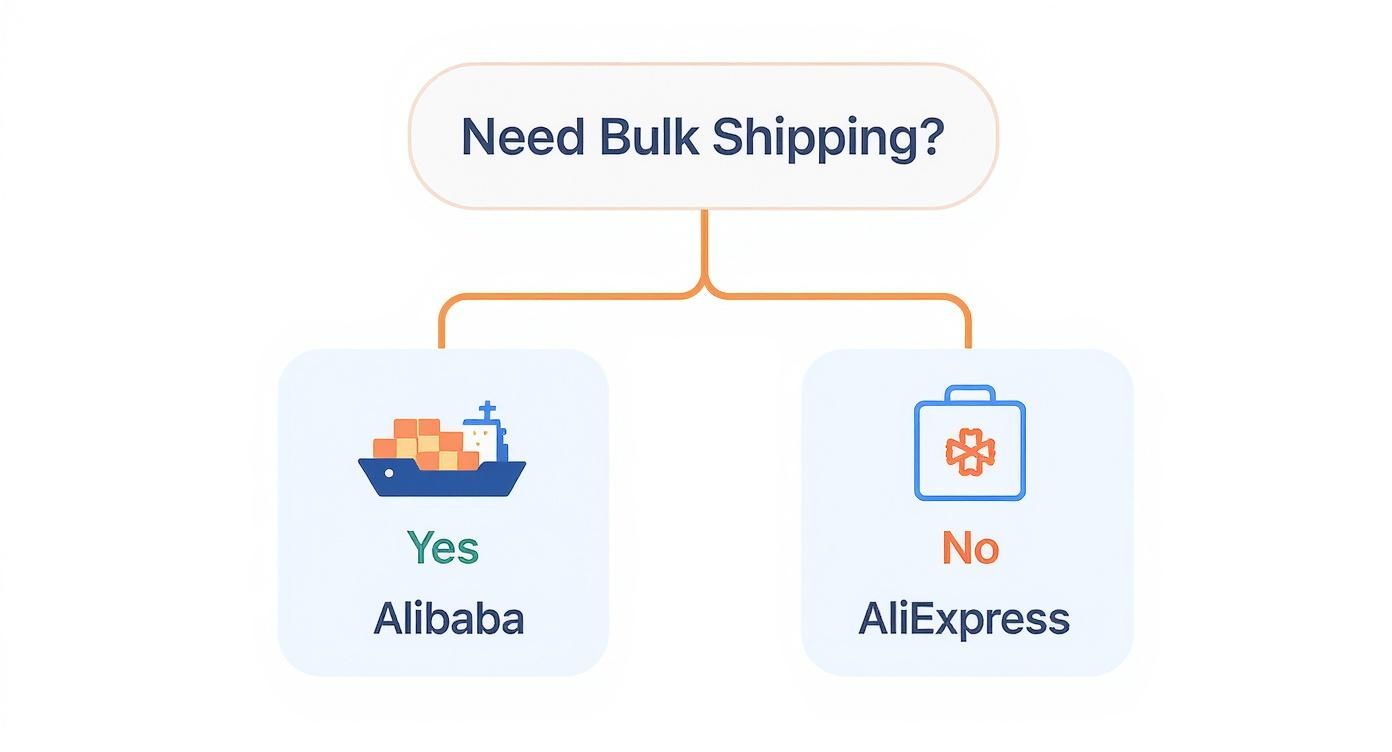
As the graphic shows, when you're dealing with serious inventory, Alibaba's freight-based logistics are the only way to go.
Let's quickly recap who wins for what:
- Private Label Brands: You need custom manufacturing (OEM/ODM). Alibaba is the clear choice.
- Small Retailers: You have to buy in bulk to get wholesale pricing and turn a profit. Alibaba is built for this.
- Inventors: You're looking for a factory to produce a prototype or a first run. Alibaba is where you'll find them.
Frequently Asked Questions
When you're trying to source products, it's easy to get tangled up in the difference between Alibaba and AliExpress. They're both owned by the same company, but they're built for completely different customers. Let's clear up a few of the most common questions people have.
Think of this as a final check to make sure you're picking the right tool for the job, whether you're stocking a warehouse or just buying a single gadget.
Is Alibaba Cheaper Than AliExpress?
Yes, on a per-unit basis, Alibaba is drastically cheaper. That’s the whole point of wholesale. You might see a widget for $10 on AliExpress, but on Alibaba, the same item could be just $2—if you're willing to buy 500 of them.
The catch is the total cost. You're shelling out a lot more cash upfront on Alibaba because of their Minimum Order Quantities (MOQs). For buying just one or two things, AliExpress is obviously the cheaper choice, but those higher per-item costs will eat away at your profit margins if you're trying to build a business inventory.
Can I Dropship From Alibaba?
You technically could, but it's a terrible idea. Dropshipping from Alibaba is not practical and I wouldn't recommend it to anyone. The platform is set up for bulk orders, not fulfilling one-off customer purchases.
Here’s why it just doesn’t work for a dropshipping model:
- High MOQs: You can't just order one item for your customer; you have to meet the supplier's minimum, which could be hundreds of units.
- Slow Shipping: Production lead times plus ocean freight can stretch into months. Your customers simply won't wait that long.
- Logistics Nightmare: Trying to manage freight shipping and customs clearance for a single order is a logistical and financial headache.
For dropshipping, stick with AliExpress. It's built from the ground up for B2C sales, with no minimum orders and shipping options designed to get products directly to individual customers. It’s the clear choice here.
Which Platform Offers Better Buyer Protection?
Both platforms have solid buyer protection, but they’re designed for different scenarios. It's not about one being "better" overall, but which one is better for your specific purchase.
Alibaba’s Trade Assurance is a heavyweight B2B protection program. It’s built to safeguard huge payments—often thousands of dollars—by holding funds in escrow. It also covers things like production quality and on-time shipping, which gives you crucial leverage when dealing with manufacturers.
On the other hand, AliExpress Buyer Protection is all about protecting individual retail orders. It makes sure your single item shows up as described and on time. If it’s damaged, wrong, or a no-show, this program is your ticket to getting a refund. It all comes down to the size and nature of your order.
Ready to streamline your product sourcing workflow? AliSave Pro is a free Chrome extension that lets you download all AliExpress product images and videos in a single click. Save time, create stunning listings, and focus on growing your business. Get it free from the official Chrome Web Store at https://alisavepro.com.