
Picture this: you're the curator of a cool online boutique, not a warehouse manager drowning in inventory. That's the core idea behind AliExpress dropshipping, a business model that lets you sell a massive range of products to customers anywhere in the world without ever handling the goods yourself. It's easily one of the most popular ways to get started in ecommerce.
What Is AliExpress Dropshipping and Is It Worth It?
At its heart, AliExpress dropshipping is a retail model where your store doesn't actually stock the items it sells. When a customer buys something from you, you turn around and purchase that exact item from a third party—an AliExpress supplier—who then ships it directly to your customer. You’re essentially the bridge between the product and the buyer.
Think of AliExpress as your personal, on-demand warehouse packed with millions of products. You hand-pick what you want to feature on your digital storefront. When an order comes in, you simply pass the details to your supplier in China. They handle the packing and shipping, sending the item straight to your customer's door. Your profit? It's the simple difference between the price your customer paid and what the supplier charged you.
It's no surprise this model has become so popular. It completely lowers the barrier to entry for anyone dreaming of starting their own business.
Why It Remains a Powerful Business Model
The magic of AliExpress dropshipping is its simplicity and incredibly low financial risk. Unlike a traditional retail business, you don't need a huge chunk of capital to buy inventory upfront. This sidesteps the classic nightmare of being stuck with a garage full of products that won't sell.
This lean, agile approach is a huge reason for its continued growth. In fact, dropshipping is a major player in the ecommerce world, with over 30% of online stores using it to fulfill orders. The market itself was valued at a whopping $243.42 billion in 2023, which was a 23.7% jump from 2022. These numbers show just how much demand there is. If you're curious, you can dig into more dropshipping statistics to see the full picture.
The real power of dropshipping isn't just about selling products without inventory. It's about having the freedom to test new products, pivot your strategy, and scale your business with minimal financial exposure.
To make this crystal clear, here’s a simple visual that breaks down the entire process.
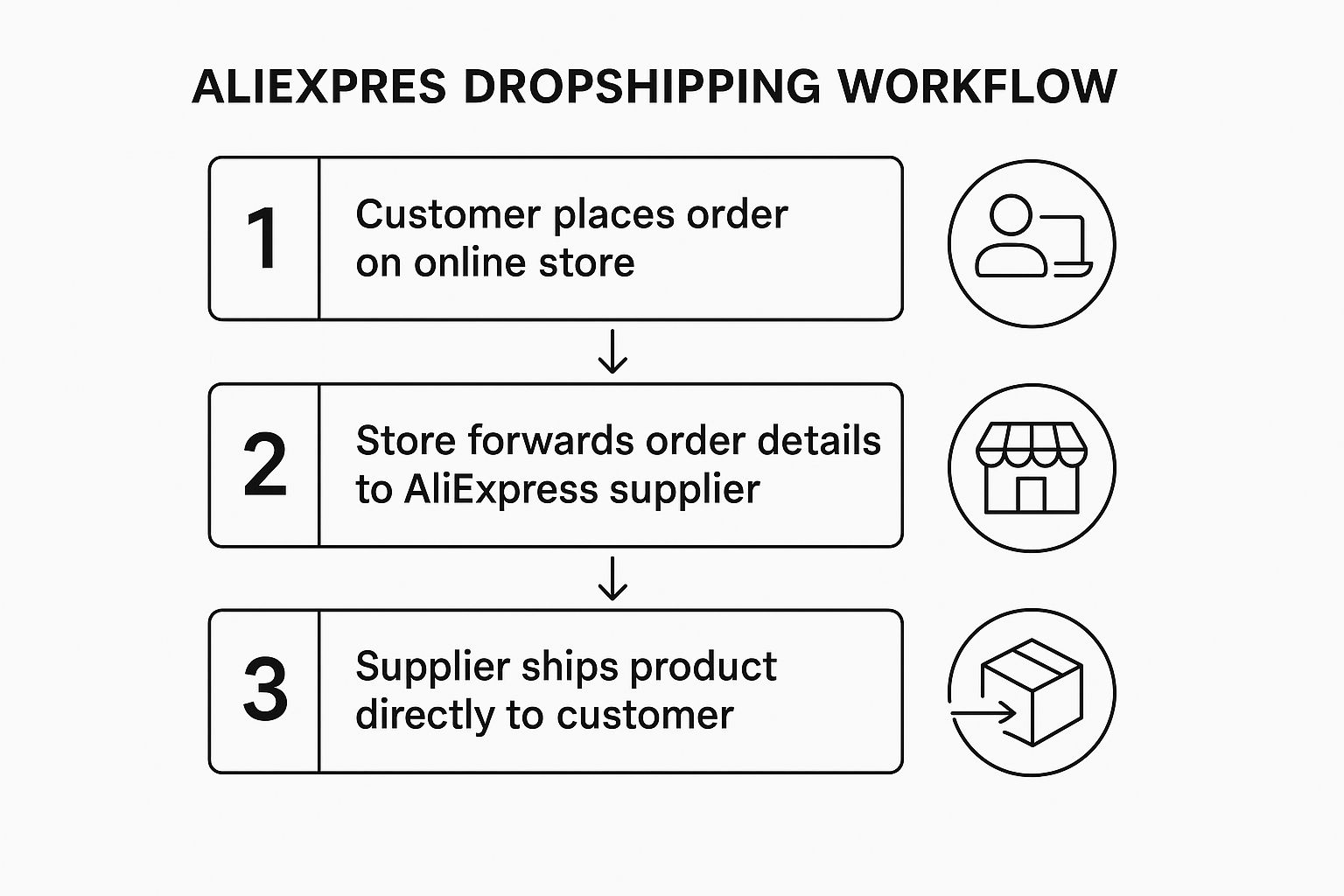
As you can see, your job is to focus on what grows the business—marketing, branding, and customer service. The supplier takes care of the rest.
To simplify it even further, here's a quick table showing who does what.
The AliExpress Dropshipping Workflow At a Glance
| Your Role as the Store Owner | The AliExpress Supplier's Role | The Customer's Journey |
|---|---|---|
| Curate and list products in your online store. | Maintains inventory of the products you sell. | Browses your store and finds a product they love. |
| Market your store and products to attract buyers. | Packages the product when an order is received. | Places an order and makes a payment on your site. |
| Process customer orders and provide support. | Ships the order directly to the customer's address. | Receives the package directly from the supplier. |
| Forward order details to the AliExpress supplier. | Provides tracking information for the shipment. | Enjoys their new purchase! |
This clear division of labor is what makes the model so efficient and beginner-friendly.
Is It Still Profitable Today?
So, the big question: can you still make money with AliExpress dropshipping? The short answer is a resounding yes, but it’s not a get-rich-quick scheme. Success today demands a smart strategy. The market is definitely more crowded, and customers expect a great experience.
Profitability isn't about just listing the cheapest items anymore. It's about building a real brand, curating a unique collection of products, and delivering top-notch customer service.
Here are a few key benefits that keep this model so relevant:
- Minimal Startup Costs: You can get a store off the ground with little more than a platform subscription and a small marketing budget.
- Immense Product Variety: AliExpress is a treasure trove of millions of products, letting you test out different niches and ideas without any risk.
- Scalability: As your store grows, your workload doesn't have to explode. With the right automation tools, you can handle more orders without pulling your hair out.
At the end of the day, AliExpress dropshipping is still a fantastic, low-risk way to dive into ecommerce. It’s perfect for ambitious entrepreneurs who are ready to build a brand from the ground up.
Building Your Dropshipping Store From the Ground Up
Alright, you've got the theory down. Now it's time to roll up your sleeves and actually build this thing. This is the fun part—where you lay the digital foundation for your business and turn your idea into a real, operational storefront. Getting this right from the beginning is absolutely critical for long-term success.
Think of it like building a house. You wouldn't just start throwing up walls without a solid blueprint and a strong foundation, right? The same logic applies here. Each step builds on the last, creating a stable structure ready to handle customers and, most importantly, drive sales.
Identifying Your Profitable Niche
Before you can sell a single product, you have to decide what you're going to sell. This all starts with finding your niche, which is just a fancy word for a specialized corner of the market. Trying to sell a little bit of everything is a fast track to getting drowned out by the noise from retail giants. You can't out-Amazon Amazon.
A great niche is where your personal interests meet real market demand. You're going to be living and breathing these products—creating content, running ads, and answering questions—so it helps immensely if you're genuinely enthusiastic about them. But passion alone won't pay the bills; you have to make sure other people are actually willing to spend money on these items.
Here's what a strong dropshipping niche usually looks like:
- A Passionate Audience: Think about hobbyists—hikers, gamers, pet lovers. These groups are often eager to spend money on products that support their interests and lifestyle.
- Problem-Solving Products: Items that fix a specific annoyance, like ergonomic desk accessories for back pain or clever kitchen gadgets that save time, have demand baked right in.
- Hard to Find Locally: If a customer can't just walk into a local big-box store and grab it off the shelf, they're far more likely to buy it online and wait for shipping.
- Trending Potential: Keep an eye on what's gaining traction on social media or in search trends. Just be careful to avoid short-lived fads that will be dead in a month.
Choosing Your Ecommerce Platform
Once you know your niche, you need a place to set up shop. Your ecommerce platform is the digital real estate where your store will live. For most people getting into AliExpress dropshipping, the decision boils down to two main players: Shopify and WooCommerce.
Shopify is an all-in-one platform famous for being incredibly user-friendly. It’s perfect for beginners who want a professional-looking store up and running quickly, without having to touch a line of code. It’s a subscription-based service, so you pay a monthly fee.
WooCommerce is a different beast. It's a free, open-source plugin that works with WordPress. This means you get almost unlimited control and customization, but it also means you’re more hands-on. You'll need to sort out your own web hosting and be comfortable navigating the WordPress environment.
Key Takeaway: Your choice really depends on your budget, technical comfort level, and how much control you want. Shopify is built for simplicity and speed, while WooCommerce offers ultimate flexibility at a lower initial cost (if you're already familiar with WordPress).
Finding and Vetting Reliable Suppliers
In the world of dropshipping, your supplier is your most important business partner. Period. Their reliability is your reliability, and their mistakes become your problems. A great supplier ships on time and delivers quality products, keeping your customers happy. A bad one can bury your new store in complaints, refunds, and a mountain of negative reviews.
That's why vetting suppliers on AliExpress isn't just a suggestion—it's a non-negotiable step. Don't just sort by the lowest price and pick the first one you see. Instead, use a mental checklist to evaluate every potential partner.
Supplier Vetting Checklist:
- Positive Feedback Score: Only work with sellers who have a feedback rating of 95% or higher. This is a clear indicator of consistent customer satisfaction.
- Years in Business: A supplier who has been on AliExpress for a few years is generally more stable and trustworthy than a shop that just opened last week.
- High Order Volume: Look at the number of orders on the product listing. A high number suggests two good things: the product is popular, and the supplier knows how to handle fulfillment.
- Responsiveness: Before you commit, send them a message with a couple of simple questions. A quick, helpful response is a great sign that you'll be able to communicate effectively when it matters.
- ePacket Shipping: If possible, prioritize suppliers who offer ePacket shipping. It’s often the best balance of speed and cost for shipping from China to the US, Canada, and Europe.
Steer clear of suppliers with spotty communication, a string of recent negative reviews, or generic stock photos that look like they were pulled from Google Images. And one last pro tip: always order a sample. Getting the product in your own hands is the only way to be 100% sure that what your customers receive is exactly what you advertised.
How to Find Winning Products and Trustworthy Suppliers
In AliExpress dropshipping, your entire business hinges on two things: finding great products and partnering with reliable suppliers. Nail both, and you're golden. But if one is weak, the whole thing can come crashing down.
Finding a "winning product" feels a lot like a treasure hunt. You're searching for that one item that solves a real problem, feeds a passionate hobby, or just has that "wow" factor that stops someone mid-scroll. These are the products that don't just sell; they create a buzz.
Uncovering Products That Sell
So, where do you start? The most obvious place is also one of the best: AliExpress itself. If you know what to look for, the site is a goldmine. Head straight for the AliExpress Dropshipping Center—it’s a free tool that shows you exactly what’s trending based on real sales data and reviews.
Don't stop there, though. Your future bestsellers are probably already going viral on TikTok and Instagram. Pay attention to the products popping up in influencer videos and "TikTok Made Me Buy It" posts. Spotting these trends early gives you a huge head start before the market gets crowded.
As you sift through potential products, keep these benchmarks in mind:
- Proven Demand: Look for items with a solid sales history, ideally over 300 orders. This tells you there's already a market for it.
- Happy Customers: Stick to products with a rating of 4.5 stars or higher. High ratings are a strong signal of quality and customer satisfaction.
- Healthy Profit Margins: You need to be able to mark up the price enough to cover your costs and make a decent profit. A good rule of thumb is to at least double the supplier's price.
How to Vet and Choose Reliable Suppliers
Finding the product is only half the job. Your supplier is your silent business partner, handling everything from quality control to shipping. A great one will make your life easy. A bad one can sink your reputation overnight.
One of the biggest mistakes new dropshippers make is choosing a supplier based on the lowest price. In the long run, reliability, communication, and shipping speed are worth far more than saving a few cents per unit.
You have to be systematic when vetting suppliers—think of it like a job interview for a key position. You’re building a partnership, and you need to know you can count on them. To dive deeper into this, check out our guide on how to determine if an AliExpress seller can be trusted.
Here’s a quick checklist to run through for every potential supplier:
- Seller Rating: Only consider suppliers with a Positive Feedback score of 95% or higher.
- Time in Business: Look for stores that have been operating on AliExpress for at least two years. Experience and longevity are good signs of a stable business.
- Communication: Shoot them a quick message asking about the product or shipping. How fast and how well they respond tells you everything you need to know about their customer service.
- Shipping Methods: Make sure they offer reliable and trackable shipping options like AliExpress Standard Shipping.
After all that, there’s one final step you absolutely cannot skip: order a sample. This is non-negotiable. Holding the product in your hands is the only way to truly judge its quality, see the packaging, and time the delivery. This small up-front investment is your insurance policy, protecting your brand and making sure your customers get exactly what you promised them.
Optimizing Your Store with High-Quality Product Media
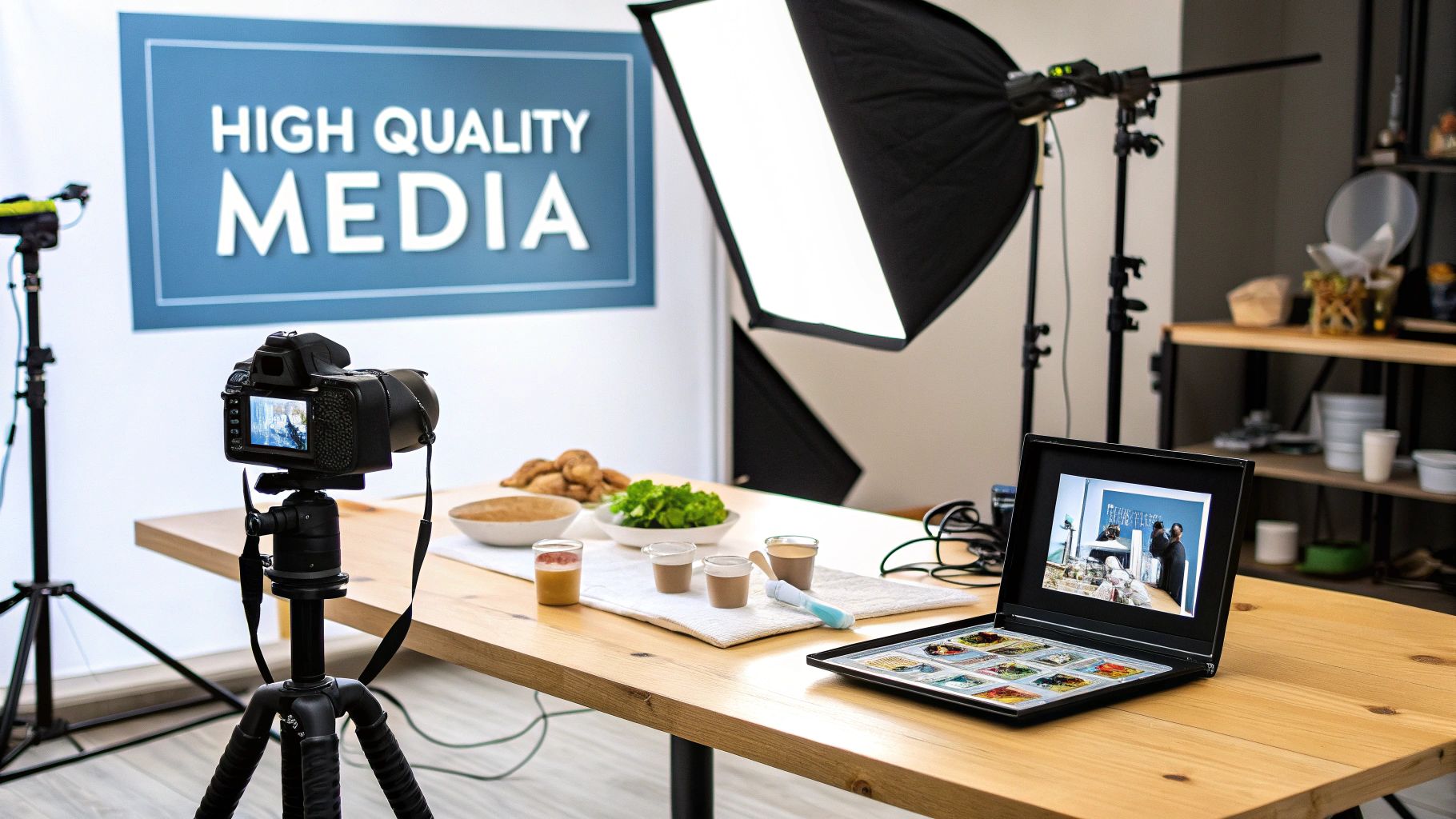
In online retail, your product photos and videos do the heavy lifting. They're your 24/7 salespeople, grabbing a browser's attention and building enough trust to convince them to click "buy." When your visuals are sharp, professional, and convincing, your entire AliExpress dropshipping business instantly looks more legitimate.
But here’s a roadblock almost every new dropshipper slams into: the media from AliExpress suppliers is often a mess. We’re talking low-resolution images, ugly watermarks, or videos stamped with a logo that has nothing to do with your brand. Plastering these all over your website is a surefire way to kill your credibility.
Think of it like this: if a customer lands on your page and sees a blurry, watermarked photo, they aren't just critiquing the product. They're judging your entire business. It screams "amateur," and they'll bounce to a competitor in seconds.
Trying to fix this manually is a soul-crushing time-waster. Saving each image one by one, hunting for clean versions, and then trying to keep it all organized is a tedious job. It’s the kind of busywork that keeps you from focusing on what actually grows your business, like marketing and talking to customers.
Streamlining Media Sourcing with AliSave Pro
This is exactly why dedicated tools exist, and AliSave Pro was built to solve this specific headache. It’s a simple browser extension that turns the chore of grabbing high-quality product media from AliExpress into a one-click job.
The idea isn’t just about saving time—it’s about upgrading your entire brand presentation. With clean, professional media, you can finally:
- Build a Cohesive Brand: Use consistently sharp, high-res images across your store to create a polished and trustworthy feel.
- Create Compelling Ads: Get your hands on crisp, watermark-free videos and photos that are perfect for making thumb-stopping ads for Facebook, Instagram, or TikTok.
- Improve Conversion Rates: Better visuals lead to more sales. It's that simple. In fact, studies show 75% of online shoppers rely on product photos to make a purchase decision.
How It Transforms Your Workflow
Bringing a tool like AliSave Pro into your process completely changes the game. A task that used to eat up your afternoon can now be done in seconds. The extension lets you download all main images, variant photos, and even the main video from a product page into one neat ZIP file.
This simple function has a massive impact. You can launch new products faster, refresh old listings with better visuals, and get back to the work that actually makes you money. If you want to see it in action, you can learn more about how to download images and videos from AliExpress in just a couple of clicks.
At the end of the day, getting your product media right is a non-negotiable step for building a successful dropshipping store. It’s a small tweak to your workflow that pays off big time in customer trust and, ultimately, your bottom line.
Marketing and Scaling Your Dropshipping Business
Getting your store live is a huge first step, but it’s just that—the first step. Now the real work begins. You have to turn that brand-new shop into a real, money-making business, and that comes down to smart marketing and even smarter scaling.
Think of it this way: launching your store is like building a high-performance race car. Marketing is the fuel that gets it moving, and scaling is like upgrading the engine so you can go faster without everything falling apart. Without both, you’re just a cool-looking car sitting in the driveway.
This is exactly where the AliExpress dropshipping model shines. The global dropshipping market was valued at a massive $155.6 billion in 2021 and is on track to hit $1.67 trillion by 2031. Platforms like AliExpress are the engine behind this growth, and if you want a piece of that pie, you need a solid plan. You can find more stats on the future of dropshipping on bloggingwizard.com.
Driving Traffic and Making Sales
Your first big hurdle is getting people to actually see your products. This isn't about just one strategy; it's about creating a mix that brings in both quick sales and long-term, loyal customers.
Here are the essentials for your marketing toolkit:
- Paid Advertising: Platforms like Facebook, Instagram, and TikTok are your go-to for immediate traffic. This is where all that high-quality, watermark-free media you sourced with AliSave Pro becomes your superpower. Use it to create stunning video ads and scroll-stopping carousels that get people clicking.
- Search Engine Optimization (SEO): This is the long game. By carefully optimizing your product descriptions, blog content, and store pages with the right keywords, you'll start climbing the ranks in Google search. This brings in a steady stream of free traffic from people actively looking for what you sell.
- Email Marketing: Don't sleep on this. Start building an email list from day one by offering a small discount for signing up. It’s the perfect way to build relationships, announce new products, and drive repeat sales—all without paying for more ads.
Building a Brand Through Customer Service
Let's be real: in dropshipping, you're not going to compete with Amazon on two-day shipping. Where you win is by building a brand people trust. And the foundation of that trust? Excellent customer service.
It all starts with managing expectations. Be crystal clear about shipping times on your product pages and in your store policies. A customer who knows their order will take two or three weeks is a happy customer. A customer who thought it would arrive in two days is a future headache.
Key Takeaway: Stop thinking of customer service as a cost. It's one of your most powerful marketing channels. A happy customer who feels heard and taken care of will tell their friends, giving you the best kind of advertising there is: word-of-mouth.
Create simple, easy-to-understand policies for returns and customer questions. When a problem pops up—and it will—a fast, helpful, and human response can turn a bad experience into a great one. That’s how you build a rock-solid reputation that pays off for years.
Scaling Your Business Intelligently
When the orders start pouring in, the manual work can get out of control fast. This is the inflection point where you have to shift from doing everything to building systems to handle the growth. The goal is to make more money without multiplying your workload.
Automation is your new best friend. The first thing you absolutely must automate is order fulfillment. Instead of manually typing every customer's shipping info into AliExpress, you can use tools to do it instantly. This not only saves you a ton of time but also cuts down on costly mistakes. To explore your options, check out our guide on the top dropshipping automation tools.
Finally, get comfortable with your data. Your e-commerce platform's analytics are a goldmine of information. Which products are flying off the shelves? Which ads are actually making you money? Answering these questions lets you double down on what works and cut what doesn't, allowing you to make smart, data-backed decisions that propel your business forward.
Common Questions About AliExpress Dropshipping
Jumping into AliExpress dropshipping is exciting, but it's totally normal to have a few questions holding you back. When you're on the verge of launching, those little "what if" scenarios can start to feel like big roadblocks.
This is where we clear the air. Let's tackle the most common questions and concerns that new store owners run into, so you can move forward with confidence.
Is AliExpress Dropshipping Legal and Safe?
Let’s get this one out of the way first: yes, dropshipping from AliExpress is 100% legal. At its core, dropshipping is just a retail model where you act as the storefront. You're the marketer and the retailer connecting customers to products—there's nothing shady about that.
But "legal" doesn't mean you can just set it and forget it. The real key to a sustainable business is transparency. Be completely upfront with your customers about everything, especially shipping times and your return policy. Honesty builds trust, and trust is what keeps a business alive and prevents headaches down the road.
As for safety, AliExpress has your back.
The platform's Buyer Protection program is a lifesaver. It’s a built-in safety net that ensures if an order never shows up or is completely different from the description, you can get your money back. This is huge, as it protects your cash when you're ordering products for your customers.
To add another layer of security, always use payment methods like credit cards that offer their own fraud protection. When you pair that with smart supplier vetting—like we talked about earlier, checking seller ratings and order history—you build a really secure foundation for your business.
How Do I Manage Long Shipping Times and Returns?
This is probably the biggest operational puzzle for any AliExpress dropshipper. But it's far from unsolvable. The secret isn't trying to hide the long shipping times; it's about mastering customer expectations from the get-go.
Your best tool here is, once again, transparency. Make your estimated shipping times impossible to miss. Put them on your product pages, at checkout, and in a dedicated shipping policy. A customer who knows their order will take two or three weeks is an informed customer, not an angry one.
Want to make the wait a little easier to swallow? Offer free shipping. It's a powerful psychological trade-off. In fact, one recent study found that 73% of shoppers are much more likely to buy something if shipping is free. And always, always provide a tracking number. It gives customers peace of mind and drastically cuts down on those "Where's my order?" emails.
When it comes to returns, you need a crystal-clear process. The standard best practice is to have customers send returns to your business address, not back to the supplier in China. This puts you in control. You can inspect the item, issue the refund promptly, and then deal with the supplier separately if the product was faulty. It keeps things professional and protects your brand’s reputation.
How Much Money Do I Need to Start?
While AliExpress dropshipping has a famously low barrier to entry, it's not completely free. The idea that you can start with $0 is a myth. The good news? The startup costs are a tiny fraction of what you'd need for a traditional retail business.
You can realistically get your store up and running with a budget of $100 to $500. This isn't a lot, but it covers the non-negotiable essentials that make your business look professional from day one.
Here’s a typical breakdown of where that initial investment goes:
- Ecommerce Platform Subscription: Think of this as your digital rent. A basic Shopify plan is a popular choice and starts at around $29 per month.
- Domain Name: A custom domain name (like
yourcoolstore.com) is a must for building credibility. It’ll run you about $15 a year. - Product Samples: You have to test what you sell. Budget $50-$100 to order a few of your potential bestsellers to check their quality firsthand.
- Initial Marketing Budget: This is your biggest variable. You’ll need at least $100-$300 to run your first few ad campaigns on platforms like Facebook or TikTok to see what works and start getting traffic.
The beauty of this model is that you can start small with your ad spend, test the waters, and only scale up when you've found a winning formula. It’s one of the most capital-efficient ways to start a business today.
What Are the Biggest Challenges I Will Face?
Knowing the potential pitfalls is half the battle. If you go in with your eyes open, you can build a business that’s resilient enough to handle the inevitable bumps in the road.
The main challenges in AliExpress dropshipping all circle back to one thing: your reliance on third-party suppliers. Here are the main hurdles to prepare for:
- Inconsistent Product Quality: You aren't handling the products yourself, so there's always a risk that a supplier's quality control could slip. The only defense is to order samples upfront and constantly monitor customer reviews.
- Supplier Communication Issues: An unresponsive supplier or a language barrier can turn a small customer issue into a full-blown crisis. Vet your suppliers for their communication skills before you even think about listing their products.
- Navigating a Competitive Market: Because it’s easy to start, it's a crowded field. You won’t win by being the cheapest. You win by building a better brand, offering amazing customer service, and carefully curating a product collection that stands out.
- Managing Shipping and Fulfillment: Long ship times are a given. The real challenge is communicating this effectively and handling the occasional lost package or delay with grace and professionalism.
The good news is that for every single one of these challenges, there's a solution. By focusing on building great supplier relationships, being radically transparent with your customers, and setting your store apart with strong branding, you can turn these potential weaknesses into your greatest strengths.
Ready to stop wasting hours on tedious manual work? AliSave Pro lets you download all the high-resolution, watermark-free images and videos from any AliExpress product page in a single click. Elevate your store, create killer ads, and get back to what matters—growing your business. Try AliSave Pro for free today!