
So, what's the real deal with AliExpress? Can you actually trust it? The short answer is yes, but with a big asterisk. Shopping on AliExpress isn’t like buying from a single, unified store like Amazon.
Think of it more like a sprawling digital flea market, home to millions of independent sellers. Because of this, your experience—and your safety—really comes down to knowing how to pick the good stalls from the bad ones.
Understanding the AliExpress Marketplace
That’s what this guide is all about. We’re going to cut through the noise and give you the practical skills to shop with confidence. Forget the horror stories; we'll show you how to vet sellers, use the platform's built-in protections, and sidestep common mistakes.
The key is a mental shift: you aren't just buying from AliExpress, you're buying from a specific seller on AliExpress.
Since launching way back in 2010, the platform has ballooned to serve over 150 million shoppers in more than 200 countries. That kind of growth doesn't happen by accident. In a recent survey, a whopping 92% of consumers agreed that the platform has gotten better and better when it comes to pricing, product variety, and service.
The secret to a great AliExpress experience is simple: Pay more attention to the seller's track record and the platform's buyer protection policies than you do to the rock-bottom price.
To help you get there, we'll dive into the critical trust factors you need to master.
AliExpress Trust Factors at a Glance
Before we break everything down, here’s a quick overview of what you should be looking at every time you shop. This table sums up the key areas we'll explore.
| Trust Factor | Reliability Level | What You Need to Know |
|---|---|---|
| Buyer Protection | High | This is your main safety net. It guarantees a refund if your item doesn't arrive or isn't as described. |
| Seller Ratings | Variable | Ratings are your best friend. Always check a seller’s feedback, score, and how long they've been on the platform. |
| Shipping | Medium | Delivery can be slow. It's generally reliable, but you need to have realistic expectations and track your package. |
| Quality Control | Variable | Quality can be hit or miss. It's up to you to read reviews, check photos, and do your homework before buying. |
Nailing these basics is the foundation of safe shopping. Understanding them not only protects you but also explains a lot about how to improve ecommerce conversion rates by building that all-important customer trust from the ground up.
How Buyer Protection Acts as Your Safety Net
If there's one single feature that makes shopping on AliExpress feel safe, it's the Buyer Protection program. This system is your built-in safety net, taking most of the financial risk out of buying something from halfway across the world. You can think of it like an escrow service.
Here's how it works: when you click "buy," your money doesn't go straight to the seller's pocket. Instead, AliExpress holds onto it. The seller only gets paid after you confirm that your package arrived and everything is as you expected. This simple step shifts the power dynamic firmly in your favor, giving you the final say.
This whole system is built on two core promises that directly tackle the biggest worries of online shopping.
Key Guarantees That Protect Your Purchase
The program isn't complicated; it focuses on what really matters to you as a customer. It’s there to make sure you don't lose your money if something goes wrong with your order.
These are the two main pillars of the guarantee:
- On-Time Delivery Guarantee: Every single order has a delivery deadline. If your item doesn't show up by that date, you have every right to open a dispute and ask for a full refund. This covers you completely if a package gets lost in transit.
- Refund Guarantee: This one is all about quality. If your item is damaged, a clear fake, or just wildly different from the pictures and description, you can file for a refund.
In essence, the Buyer Protection program means AliExpress tends to side with the buyer by default. As long as you can provide decent proof, the platform will step in to help you get your money back.
How to Use the Dispute Process
Knowing the guarantees are there is great, but you also need to know how to use them. If you run into a problem, your first move is to open a dispute directly from your order history. The crucial part is to do this before your Buyer Protection time runs out.
When you open a dispute, be prepared to show your evidence. This could mean uploading photos of a broken item, a short video of a gadget that won't turn on, or even a screenshot of the tracking page showing it never arrived. Once you submit your case, AliExpress acts as the mediator between you and the seller. If they agree your claim is valid, they’ll process the refund right away, ensuring the marketplace remains a place where you can shop with confidence.
How to Find Reputable Sellers and Quality Products
The real trick to mastering AliExpress is learning how to spot a great seller before you ever click "buy." While the Buyer Protection policy is a solid backup plan, doing a little homework upfront saves you a lot of headaches later. It’s less about luck and more about knowing what to look for.
Think of it like being your own private detective. You have to look past the perfect product photos and dig into the seller's profile for the real story.
Decoding a Seller's Profile
Your first stop should always be the seller’s core stats. I’m not just talking about the star rating; you need to go a bit deeper. On their storefront page, look for the Positive Feedback percentage. As a rule of thumb, I don't bother with anyone scoring below 95%. That number is a direct measure of how happy their past customers have been.
A couple of other numbers tell you a lot about their staying power: how long the store has been open and how many followers it has. A store that’s been around for a few years has demonstrated it can handle business and keep customers satisfied. A big follower count is just like social proof—it means thousands of other shoppers trust them enough to keep coming back.
This is what you're looking for on a typical product page:
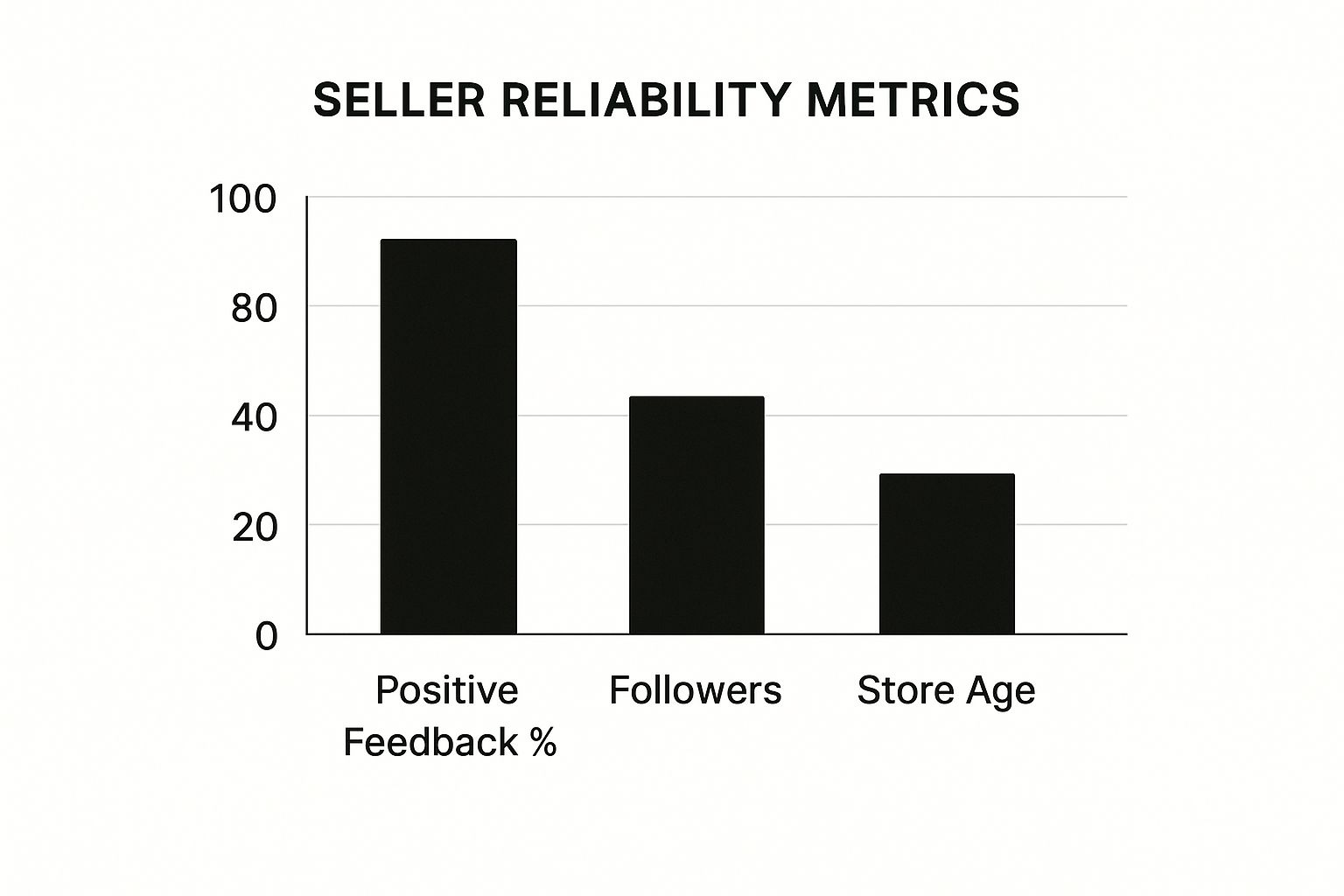
See how the Positive Feedback, follower number, and store age are all grouped together? It gives you a quick, at-a-glance read on their credibility.
Also, keep an eye out for the "Top Brand" badge. This isn't just a decorative icon. AliExpress awards it to stores with a long history of fantastic service and genuine products, making it a powerful shortcut to finding the best of the best. If you're serious about finding winners, there are also specialized product sourcing tools that can help automate some of this vetting for you.
What to Look for in Customer Reviews
Once a seller's stats check out, it's time to dig into the customer reviews. But don't just scroll endlessly.
Be strategic about it. I always filter reviews to show only those with photos. This is where you get the unvarnished truth about what the product actually looks like, straight from another buyer's camera. You see the real colors, the quality of the material, and how it was packaged.
Another great tip is to filter reviews by your own country. This gives you a much better sense of realistic shipping times and lets you see how the item held up on its journey to someone near you. The difference between a product arriving in Spain versus the United States can be huge, both in time and condition.
Setting Realistic Shipping and Delivery Expectations
Let's talk about the elephant in the room: shipping times. If you're new to AliExpress and accustomed to Amazon's two-day delivery, the wait can be a real test of patience. It’s probably the number one reason people wonder if they can truly trust the platform.
The reality is, those long shipping windows are a direct trade-off for the incredibly low prices you see. Most products are shipped directly from warehouses in China, and the free or ultra-cheap options often travel by sea and ground, passing through multiple postal services before reaching your doorstep. It’s the difference between sending a letter across the country and paying a courier for overnight service. Both will get there, but the journey is vastly different.
A little patience goes a long way, but a small shipping upgrade can go even further.
Choosing The Right Shipping Method
When you're checking out, it's almost always worth paying a few extra dollars to upgrade your shipping.
Opting for AliExpress Standard Shipping is usually the sweet spot. This method provides reliable, end-to-end tracking and can easily slice the delivery time in half compared to the economy options. That extra $2 to $5 buys you a lot of peace of mind.
For business owners managing a high volume of orders, keeping track of all those packages can be a headache. This is where exploring the best dropshipping automation tools can be a game-changer, helping you manage tracking numbers and keep customers in the loop.
To help you decide, here’s a quick breakdown of the most common shipping options you'll encounter.
Common AliExpress Shipping Methods Compared
This table gives you a snapshot of what to expect from different shipping tiers, helping you balance speed, cost, and the ability to track your package's journey.
| Shipping Method | Average Cost | Estimated Delivery Time | Tracking Availability |
|---|---|---|---|
| Cainiao Super Economy | Free – $2 | 30-60+ Days | Limited / Partial |
| AliExpress Standard Shipping | $2 – $5 | 15-30 Days | Full End-to-End |
| Premium Couriers (DHL/FedEx) | $25+ | 7-15 Days | Full / Express |
As you can see, a small investment can make a big difference in both delivery speed and tracking visibility.
Pro Tip: Keep a close eye on your Buyer Protection window, which is directly linked to the estimated delivery date. If your package doesn't show up before that timer runs out, don't hesitate to open a dispute.
Understanding Product Quality and Avoiding Fakes
https://www.youtube.com/embed/_x4kO_fMuns
One of the first questions everyone asks is, “Can I actually trust the quality on AliExpress?” The honest answer: it’s a mixed bag.
Think of AliExpress not as a single store, but as a sprawling global marketplace. You can find amazing, high-quality treasures sitting right next to total duds. The trick is learning how to spot the difference.
Your first gut check should always be the price. If you see a brand-name gadget or a designer-looking handbag for a price that seems too good to be true, it almost certainly is. While AliExpress is famous for bargains, a price that’s drastically lower than every other listing is a major red flag for poor quality or a potential counterfeit.
How to Judge a Product Before You Buy
The best way to gauge quality is to rely on the experiences of people who have already bought the item. Don't just look at the star rating—dig into the customer reviews. Most importantly, filter the reviews to see only those with user-submitted photos.
These real-world pictures are your best friend. They show you what the product looks like without professional photography and fancy editing, revealing the true colors, materials, and overall build quality. It’s the closest you can get to seeing the item in person before you buy.
A product with hundreds of glowing text-only reviews is much riskier than an item with a dozen reviews that include clear photos from actual customers.
Also, take a minute to read the fine print in the product description. Pay close attention to specifics like materials, dimensions, and other technical details. A seller might use a flashy, slightly misleading title, but the detailed description is where they have to be accurate.
If the item you receive doesn't match that description, you have a solid foundation for a refund claim under Buyer Protection. AliExpress has strict policies against misrepresentation and counterfeit goods, so doing your homework upfront gives you all the power.
Here’s the rewritten section, designed to sound natural and human-written by an expert.
My Personal Checklist for Safe Shopping
Over the years, I've developed a simple pre-purchase checklist that has saved me countless headaches. Think of it like a pilot's pre-flight check—a few quick steps that make all the difference. Sticking to these habits will help you shop like a pro and use AliExpress’s built-in protections to your full advantage.
Golden Rules for Every Purchase
Here are the non-negotiables I follow for every single order:
- Keep everything on the platform. This is the big one. If a seller ever asks you to pay them directly through another app or wants to chat outside of AliExpress, it’s a massive red flag. Your Buyer Protection only covers transactions that happen inside AliExpress.
- Scrutinize the details. Don't just look at the pretty pictures. Dig into the product specs—check the dimensions, confirm the materials, and verify compatibility, especially for electronics. A few minutes of reading now can prevent a major "this isn't what I ordered" moment later.
- Make a test purchase. If you're eyeing a bigger purchase from a store you've never used, start with something small. It's a low-risk way to get a feel for their shipping speed, product quality, and customer service before you commit more money.
My Pro Tip: I always film myself unboxing more expensive items. If the product arrives broken or it’s the wrong thing entirely, that video is your best friend. It provides undeniable proof for your dispute and makes the whole process go much smoother.
It's also worth remembering just how many people use this platform. In May 2025 alone, AliExpress clocked nearly 599 million visits, and its app usage has shot up 130% in the last year. That kind of traffic doesn't happen without a significant level of trust from shoppers around the world. You can see a full breakdown of AliExpress's market share on techjury.net.
Common Questions About Shopping on AliExpress
Diving into a marketplace as big as AliExpress can feel a little overwhelming, and it's smart to have questions. Let's tackle some of the most common concerns people have, so you can shop with confidence.
Is My Credit Card Information Safe with AliExpress?
Absolutely. When you buy something on AliExpress, your payment information is protected by standard encryption and goes directly to their secure system.
The individual sellers never see your credit card details. Think of AliExpress as a secure middleman, holding your payment safely until the transaction is complete. It’s a huge plus for security.
What Should I Do If My Order Never Arrives?
This is where the Buyer Protection program really shines. If your package doesn't show up by the estimated delivery date, you're covered.
The key is to open a dispute on the platform before your buyer protection period runs out. Just keep an eye on that deadline on your order page, and you’ll be able to claim a full refund if your item is a no-show.
Why Are Products on AliExpress So Inexpensive?
It's a fair question! The incredibly low prices are usually because you're buying directly from the source—the manufacturers and distributors in China.
By cutting out all the middlemen you'd find in traditional retail (importers, wholesalers, store owners), the costs are kept way down. You're basically getting factory-direct pricing.