
Your AliExpress tracking number is your lifeline for knowing where your package is. Think of it as your parcel's digital passport, generated by the shipping carrier the moment the seller sends your item out.
You can always find it in the "My Orders" section of your account as soon as the status changes to shipped.
Where to Find and Decode Your Tracking Number
Once a seller marks your order as shipped, AliExpress assigns that unique tracking ID. The first thing you'll want to do is head over to the "My Orders" page in your account. Right there, next to the details of your item, you’ll find this crucial string of characters.
The infographic below shows you exactly where to look on your order page, so you can't miss it.
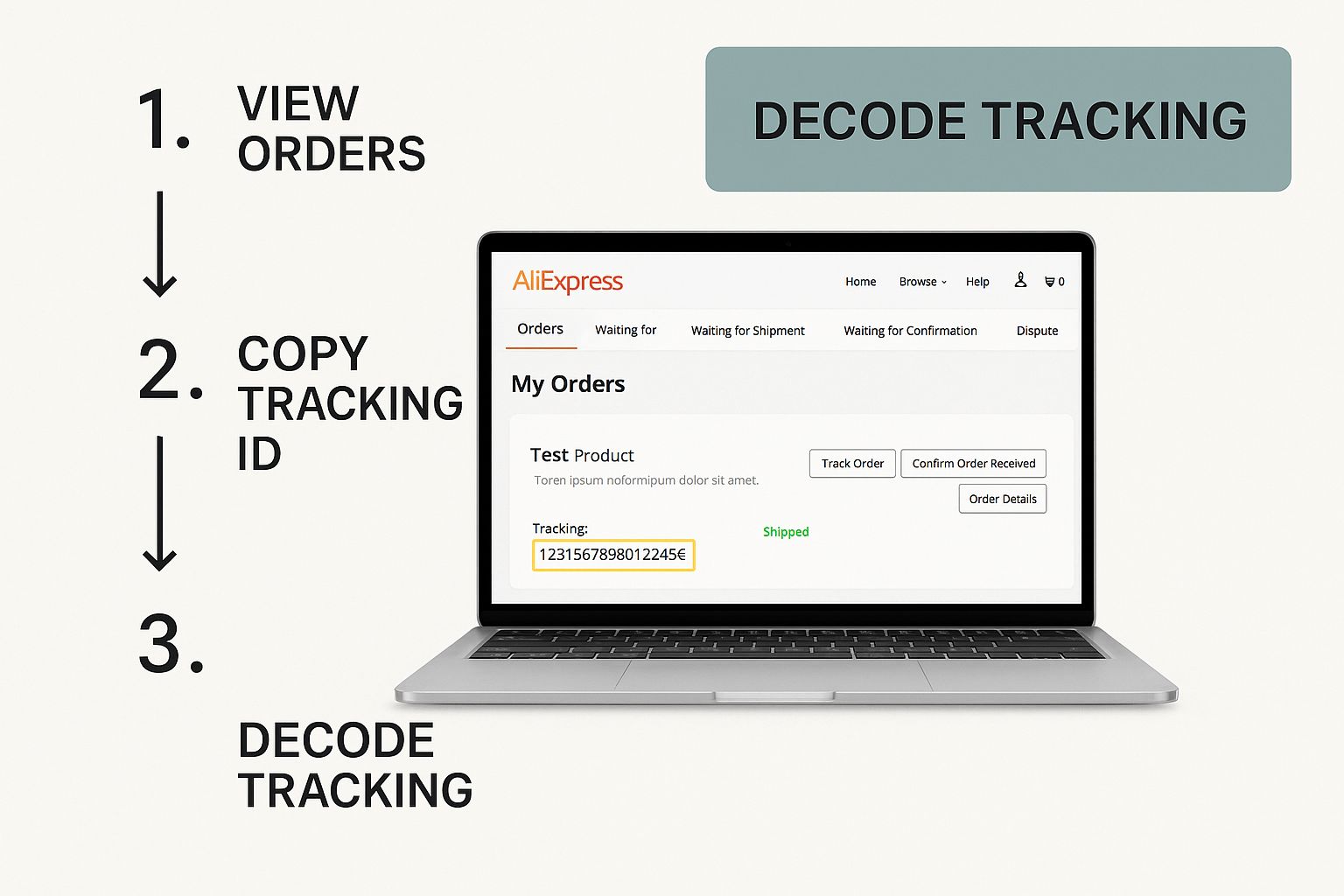
It’s your single source of truth for the entire shipment's journey, from the seller's warehouse all the way to your doorstep.
Understanding Different Formats
Here's where a little experience comes in handy: not all tracking numbers are created equal. The format of the number itself tells a story about who is handling your package and often how detailed the tracking will be.
The letters at the beginning are the biggest clue. They usually identify the shipping company, which helps you set realistic delivery expectations right from the start.
Here are a few common formats you’ll run into all the time:
- LP followed by numbers: This is a classic Cainiao Super Economy tracking number. It's an economy service, so you should expect limited tracking information, especially once the package leaves China.
- YT followed by numbers: This format belongs to Yanwen, another popular and very cost-effective shipping partner used by countless AliExpress sellers.
- ZA…HK or ZA…SG: The "ZA" prefix often indicates a special registered parcel type. The letters at the end—HK for Hong Kong Post or SG for Singapore Post—tell you which postal service is handling the final leg of the international journey. These usually offer more detailed tracking than the economy options.
By simply looking at the prefix of your AliExpress tracking number, you can get a good idea of the shipping speed and level of detail you can expect. An "LP" number will have a very different journey than a "ZA…HK" number.
Learning these little patterns is a game-changer for anyone who shops on AliExpress regularly. It removes the mystery and turns a confusing code into a valuable piece of information. For more smart shopping strategies, check out our other AliExpress tips.
Common AliExpress Shipping Carrier Tracking Number Formats
To make things even easier, I've put together a quick reference table. This will help you quickly identify the likely carrier just by glancing at your tracking number's format.
| Carrier Name | Typical Tracking Number Format | Common Prefixes/Structure |
|---|---|---|
| Cainiao | LP + 14 digits | LP00123456789012 |
| Yanwen | YT + 16 digits | YT1234567890123456 |
| China Post | R/C/E + letter + 9 digits + CN | RA123456789CN |
| Singapore Post | R + letter + 9 digits + SG | RB123456789SG |
| Hong Kong Post | letter + 9 digits + HK | A123456789HK |
| AliExpress Standard | Multiple formats | Often starts with numbers like 400 or 700 |
This isn't an exhaustive list, as new carriers and formats pop up, but it covers the vast majority of what you'll see. Knowing what to look for demystifies the shipping process and gives you a much clearer picture of how your package is making its way to you.
How to Actually Track Your AliExpress Order
Alright, you've got your tracking number, and you've figured out which carrier is handling the first leg of the journey. Now for the fun part: following your package as it makes its way from a warehouse in China all the way to your doorstep. The good news is, you've got a couple of solid options for this.
The easiest place to start is right inside your AliExpress account. It’s the most direct route—no need to open new tabs or copy-paste anything just yet. Just head to your "My Orders" page and hit the "Track Order" button next to the item you're waiting for. This will give you a pretty good high-level summary of your shipment's major checkpoints.
But here’s a pro tip: the built-in AliExpress tracker can sometimes lag. It’s not always the fastest to update, especially once your package leaves China and gets handed over to a different postal service. For a more detailed, real-time view, you'll want to turn to a universal tracking website.
Using Third-Party Tracking Websites for More Detail
Think of universal trackers as the ultimate detectives for your package. They can speak the "language" of hundreds of different global carriers at once. When you plug your AliExpress tracking number into a site like 17TRACK, ParcelsApp, or AfterShip, you often get a much richer, more complete story of your package's journey.
So, why are they so much better? It all comes down to the handoff. These platforms are masters at connecting the dots as your parcel moves between different systems.
- They start by tracking it with the initial Chinese carrier (like Cainiao or Yanwen).
- They can often see when it’s loaded onto a flight or cargo ship.
- Most importantly, they sync up with your local postal service (like USPS, Royal Mail, Canada Post, etc.) and start pulling data from them the second it gets scanned into their system.
This handoff is the exact point where most of the confusion happens. The AliExpress tracker might stall on a status like "Arrived in destination country," but a good third-party site will show you that it's clearing customs, provide the new local tracking number, and even tell you when it’s at your regional sorting center.
Remember, sellers on AliExpress will only generate a tracking number for shipping methods that have this kind of online visibility. This usually happens within 1 to 4 days after the seller marks your item as shipped. If you're curious about the process, you can see a visual guide on how these notifications work to get a better feel for the timeline.
Interpreting Key Tracking Statuses
No matter which tool you use, you'll see a series of status updates that can sometimes feel a bit cryptic. Here's a quick rundown of what the most common ones actually mean, so you don't have to stress.
- Accepted by Carrier / Shipment Confirmed: This is the starting gun. It means the seller has physically handed your package over to the shipping company.
- Departed from Country of Origin: Your package is officially on an airplane or ship and has left China. It's in transit.
- Arrived at Destination Country: It's landed in your country, but it's not at your local post office yet. First, it has to get through customs.
- Customs Clearance Started: The package is being inspected by your country's customs officials. This part can be quick (a few hours) or take a bit longer (several days), depending on volume and what you ordered.
- Out for Delivery: The best update of them all! Your package is on the local delivery truck and should be arriving at your home that very day.
Understanding Common Tracking Statuses and Delays
Once your package is in the mail, you'll start seeing a string of tracking updates. It's exciting at first, but some of the statuses can be confusing, vague, or even a little alarming if you're not familiar with them. Learning to speak the language of logistics is the key to telling the difference between a normal shipping pause and a real problem.
For example, a lot of people panic when their tracking gets stuck on "Hand over to airline" for several days. Don't worry—this is completely normal. It just means your package is sitting in a giant warehouse waiting its turn to get loaded onto a cargo plane. Depending on flight schedules and how much mail is moving, this can easily take a few days.
Translating Common Tracking Updates
Think of tracking updates as little postcards your package sends along its journey. They tell you where it's been, but the language can be a bit cryptic. A quick translation can save you a lot of stress.
Here are some of the most common—and often misunderstood—updates you'll see on your AliExpress orders:
- Departed Country of Origin: This one's straightforward: your package has officially left China. The next update you see will likely be when it lands in your country, and it's normal for a week or more to pass with no new scans during this time.
- Arrived at Linehaul Office: "Linehaul" is just industry-speak for the main transportation network connecting major cities or countries. This update means your package is at a big sorting facility, being prepped for the next major leg of its trip.
- Customs Clearance Started: Your package has landed and is now being processed by your country's customs agents. For most small parcels, this is a quick, automated step that passes without any issues.
A "Held at Customs" status might sound scary, but it's usually just a routine check. It could be a random inspection or a simple backlog at the facility, especially during a busy holiday rush. It rarely means there’s an actual problem with your order.
While most of these pauses are just part of the process, a really long stall or a series of strange updates can sometimes be a red flag. To get a better sense of what to watch for, check out our guide on common AliExpress scams and shipping issues.
Why Your Package Might Be Delayed
Delays are just a fact of life with international shipping. Your package might be passed between 5-7 different logistics companies before it reaches your door, and the most common bottleneck is the handoff from the Chinese carrier to your local postal service.
Another huge factor is sheer volume. During massive sales events like 11.11 (Singles' Day) or the holiday shopping season from November to January, the entire global shipping network gets backed up. A package that takes 15 days to arrive in June could easily take 30-40 days during these peak periods, so a little extra patience is key.
Solving Common AliExpress Tracking Problems
Sooner or later, you're going to run into an AliExpress tracking number that just doesn't cooperate. It happens to everyone. The real skill is learning to spot the difference between a normal shipping delay and a genuine red flag that needs your attention. Let's walk through the most common tracking headaches you'll face and how to handle them.

Probably the most frequent issue is the classic "Tracking Number Not Found" error. You get that exciting shipping notification, eagerly paste the number into a tracking site, and get nothing back. It's frustrating, but don't jump to conclusions just yet.
This is perfectly normal for the first 2-5 business days. The seller has generated the shipping label, but the package is likely sitting in a warehouse bin, waiting for the carrier to pick it up and scan it into their system. Until that first scan happens, the number won't be live. Just give it a few days.
When Your Tracking Goes Silent
What about when the tracking was working fine, but then it suddenly stops updating? You check it for a week straight, and the status is just stuck. This is another really common situation, especially when your package is making its long journey across the globe.
There are a couple of likely culprits here:
- The "In-Transit" Black Hole: A long pause often means your package is on a cargo ship or waiting in a container at an airport. There are simply no scanning points in the middle of the ocean, so it looks like it's gone dark.
- Customs Delays: Your package could also be sitting in a queue at your country's customs office. This can easily add a few days—or even longer during busy holiday seasons—to the timeline without a single new update.
If the tracking has been stuck for over 10-14 days and the estimated delivery window is getting close, that’s your cue to check in with the seller.
Pro Tip: When you message the seller, always be polite and include your order number right away. A simple, "Hi, I'm checking on order [Your Order Number]. The tracking hasn't updated in 12 days. Could you please check with your shipping partner for an update?" will get you much better results than an angry message.
Navigating Mid-Shipment Tracking Number Changes
Every once in a while, you might notice your tracking number changes completely halfway through its journey. This is most likely to happen if you chose an economy shipping method like Cainiao or Yanwen.
This is usually just a logistics handoff. The first tracking number follows the package within China. Once it leaves the country and is handed over to your local postal service (like USPS in the US or Royal Mail in the UK), they often assign it a new domestic tracking number for that final stretch.
The best third-party tracking sites, like 17TRACK, are pretty good at catching this switch automatically and will show you both the old and new numbers. If yours doesn't, a quick, friendly message to the seller is all you need to get the new ID.
While issues like these can feel a bit unnerving, they're usually just a normal part of the international shipping game. You can learn more about navigating the platform by checking out our guide on whether AliExpress can be trusted.
How Your Shipping Choice and World Events Can Mess With Your Tracking
The shipping method you click on at checkout is, without a doubt, the single biggest thing that will shape your entire tracking experience. It's what separates a detailed, play-by-play journey from a tracking number that goes completely dark for weeks. What you choose sets the stage for both how fast your package arrives and how much you'll know about it along the way.
Think of it like this: opting for a super-cheap service like Cainiao Super Economy for Global is the equivalent of sending a letter with a basic stamp. Sure, it’s in the mail, but you’ll get very few updates—if any—once it’s left China. These services are built to be dirt cheap, and they do that by cutting out detailed, door-to-door tracking.
On the flip side, something like AliExpress Standard Shipping is more like sending a registered package. It gives you a much clearer picture, with consistent scans as your item moves through international hubs and eventually gets handed over to your local postal service.
What Your Shipping Choice Actually Means
When you pick a shipping method, you're buying a certain level of information, not just speed. A premium carrier like DHL will give you updates that are practically in real-time, from the moment it's picked up to the second it hits your doorstep. But that level of service costs a lot more.
This is where you have to manage your own expectations. It’s incredibly common for people to get anxious when their Cainiao tracking number just stops updating after leaving China, but that’s often exactly how that service is designed to work.
The trade-off is simple: Economy shipping saves you a few bucks but costs you visibility. Standard shipping is a bit more expensive but buys you the peace of mind that comes with knowing where your package is.
Knowing this helps you make a smarter decision from the start. If you're buying a cheap gadget you don't need right away, economy shipping is probably fine. But if it's something more valuable or you need it by a certain date, spending a few extra dollars on AliExpress Standard Shipping is always a good investment.
When the Real World Intervenes
Even if you choose the best shipping option, global events can throw a monkey wrench into the most reliable delivery estimates. International logistics is a complex dance, and it doesn't take much to throw it off beat.
Here are a few things that can easily derail your shipment:
- Holiday Rushes: Huge sales events like Black Friday or the 11.11 Global Shopping Festival create massive logjams at sorting facilities and airports.
- Customs Changes: A sudden shift in import policies can create new bottlenecks. For example, AliExpress shipping to the US usually takes 8 to 20 business days with Standard Shipping, but new tax rules can cause unexpected delays at customs, making it even more important to watch your tracking. You can find more info on how regulations impact AliExpress shipping times.
- Logistical Nightmares: Things you’d never expect—like a major port closure or an airline strike—can stop packages in their tracks for days, causing your tracking to stall without warning.
Common Questions About AliExpress Tracking
Even when you know the ropes, some tracking situations can be a real head-scratcher. Let's tackle some of the most common questions I hear from AliExpress shoppers so you know exactly what to do when they pop up.
My Tracking Hasn't Updated in Over 10 Days. What Gives?
This is easily the number one worry for most people, but it’s usually not a sign of trouble, especially if you chose an economy shipping option. A long pause in tracking updates typically means your package has hit a "logistical black hole."
This is a period where no new scans are happening. Think of it sitting in a massive shipping container on a boat crossing the ocean, or waiting in a pile at a customs facility for its turn to be processed. There's just nothing to scan.
Before you start to worry, check the estimated delivery window on your order. If you're still well within that timeframe, the best thing you can do is just wait it out. However, if it's been radio silent for more than 14 days and your buyer protection is getting low, it's time to take action. A friendly message to the seller asking if they can get an update from their shipping partner often gets things moving.
Can I Just Use My Order Number to Track My Package?
In a word: no. This is a super common mix-up, but the order number and the tracking number are two totally different things.
Your order number is just an internal ID for the transaction itself—it’s how you and the seller keep track of the purchase on AliExpress. The tracking number, on the other hand, is the unique code given by the shipping company to follow the package's physical journey. That's the number that gets scanned at every stop along the way.
You’ll find the tracking number you need in the "My Orders" section on AliExpress, but only after the seller has actually shipped your item.
Key takeaway: The order number is for the purchase. The tracking number is for the package. You simply can't see where your shipment is without the tracking number.
The Tracking Says "Delivered," But I Don't Have My Package!
Okay, this one is stressful. Seeing that "Delivered" status when your hands are empty can be alarming, but don't panic. You just need to act quickly and systematically.
Here’s what I recommend:
- First, do a full sweep of your property. Check behind planters, on the back porch, or any other spot a delivery person might have left it. And don't forget to ask anyone else in your household if they grabbed it.
- Check with your neighbors. It happens all the time—a package gets dropped off one or two doors down by mistake. A quick knock might solve the problem right away.
- Call your local post office. Give them the tracking number. They often have more detailed delivery info, like GPS coordinates, that can pinpoint exactly where the final scan occurred.
- Notify the seller and get ready to file a dispute. While you're investigating, send the seller a message on AliExpress to let them know the situation. If a day or two goes by and the package is still missing, you need to open an "Item not received" dispute before your buyer protection runs out.
Tired of manually saving product images and videos for your store? AliSave Pro is a lifesaver. It lets you download all the media from an AliExpress product page in one click, perfectly organized for your dropshipping business. If you value your time, you need this tool. Download the free Chrome extension and see the difference it makes.