
So, can you dropship on eBay? The short answer is yes, but it comes with a massive "but" that trips up countless new sellers. eBay's official policy draws a very clear line in the sand, and understanding where that line is makes all the difference between building a thriving business and getting your account shut down.
What eBay Really Thinks About Dropshipping
Many hopeful sellers jump in thinking all dropshipping is the same, but eBay sees two very different models. The one they absolutely forbid is often called retail arbitrage. This is where you list an item on eBay that you plan to buy from another retailer—like Amazon or Walmart—and have them ship it directly to your customer.
Think about it from the buyer's perspective. They purchase from your eBay store but receive a box with Amazon Prime tape all over it. It's confusing, feels unprofessional, and instantly erodes trust. This is exactly why eBay cracks down on it. It creates a poor customer experience and puts their marketplace's reputation at risk.
The Right Way to Dropship on eBay
The legitimate, and frankly more profitable, way to do this is to source your products directly from wholesale suppliers or manufacturers. In this scenario, you’re not just a middleman flipping retail goods; you're operating like a genuine retailer. You have a formal relationship with a supplier who stores the inventory and agrees to ship it to your customers on your behalf.
This is the key difference: You are the seller of record. You take full responsibility for the entire process, from ensuring the product quality to guaranteeing it arrives on time. This is the model eBay fully supports.
To make this distinction crystal clear, here’s a quick breakdown of what’s allowed versus what will get you into trouble.
eBay Dropshipping Rules Allowed vs Disallowed Practices
| Practice | Allowed (Wholesale Dropshipping) | Disallowed (Retail Arbitrage) |
|---|---|---|
| Sourcing | You buy inventory directly from a wholesale supplier or manufacturer you have a partnership with. | You list an item and then purchase it from another online retailer (e.g., Amazon, Walmart) after you make a sale. |
| Accountability | You are fully responsible for order fulfillment and ensuring the item is delivered to the buyer. | The other retailer is responsible for shipping, creating a disconnect between you and the customer. |
| Shipping & Branding | The package arrives without a third-party retailer's branding, providing a consistent customer experience. | The package arrives in another retailer's branded box, which confuses the buyer and violates eBay policy. |
| Inventory | You have an agreement that guarantees stock availability from your wholesale partner. | You have no control over the retailer's stock levels; the item could be sold out when you try to buy it. |
As you can see, the allowed method is a structured business model, while the disallowed one is a risky workaround.
Building a Business That Lasts
By working with legitimate wholesalers, you're not just staying on the right side of eBay's rules; you're building a much stronger business.
- You Stay Compliant: First and foremost, you protect your seller account from flags, restrictions, or outright suspension.
- You Earn More: Wholesale pricing is designed for resale. Your profit margins will almost always be better than if you were buying at retail prices.
- You Control the Experience: You manage the listing details and all customer communication, building your brand, not someone else's.
This guide is all about helping you do it the right way. We'll show you how to sidestep the common retail arbitrage traps and build a solid foundation. With over 134 million active buyers on the platform, there's a huge opportunity waiting if you just follow the playbook.
Decoding eBay's Official Dropshipping Policy
Trying to make sense of eBay's official terms of service can feel like wading through legal jargon. So, let's cut through the noise and get straight to what it means for you. At its core, eBay's dropshipping policy is all about one thing: accountability. They have 134 million active buyers to keep happy, and that means ensuring every transaction is a good one.
So, when people ask, "Can you dropship on eBay?" the answer is a classic "it depends." The business model itself isn't the problem; it's how you go about it that makes all the difference.
Wholesale Sourcing: The eBay-Approved Method
The green light from eBay comes when you source your products from a genuine wholesale supplier. This is the model they fully support. In this scenario, you've established a real business relationship with the company that actually holds the inventory.
Think of yourself as the manager of a retail shop. You don't personally have all the products stacked in a back room, but you have a direct line to the warehouse. A customer places an order, you contact your warehouse partner, and they ship it out. Simple and professional.
From eBay’s point of view, you are the seller of record. That’s a key term. It means you are 100% on the hook for getting the item to the buyer safely, on time, and exactly as you described it. This is the legitimate way to do business on their platform.
Retail Arbitrage: The Fast-Track to Suspension
Now for the flip side: retail arbitrage. This is the method that eBay's policy explicitly bans, and it’s a huge red flag for your account. This is when a seller lists something on eBay, waits for a sale, and then turns around and buys that same item from another retailer—like Amazon or Walmart—to ship to their customer.
Just picture it from the buyer's perspective. They buy a coffee maker from your eBay store. A few days later, a box plastered with Amazon Prime tape shows up on their doorstep, complete with an Amazon receipt inside. It’s confusing, it feels deceptive, and it instantly shatters their trust. This is the exact customer experience eBay is fighting to prevent.
Why the Distinction is Crucial
The entire debate boils down to control and responsibility. When you work with a real wholesale supplier, you have an agreement. You have a direct point of contact. This gives you a much better handle on what's in stock, the quality of the products, and the entire fulfillment process.
With retail arbitrage, you have zero control. You’re essentially just an anonymous customer on another website, crossing your fingers that everything goes smoothly. You can’t verify stock, you can’t control the packaging, and you have no real say in the shipping. This hands-off approach is a massive liability and a clear violation of eBay's rules.
Dropshipping isn't some fringe idea anymore; it's a massive part of e-commerce. The global market is booming, and about 27% of all online retailers now use it as their main way of doing business. We've seen compliant eBay dropshippers scale to over $30,000 in monthly sales, which shows just how profitable this can be when you follow the rules. You can dig into more dropshipping statistics to see just how big the opportunity is.
To build a store that lasts, you have to operate like a real business and stick to the wholesale model. This isn't just about dodging a suspension—it's about building something sustainable and professional on one of the world's biggest marketplaces. Playing by the rules sets you up for long-term success, instead of taking a risky shortcut that could get your account shut down for good.
How to Build a Compliant Dropshipping Business on eBay
Knowing the rules is one thing, but actually putting them into practice is where a successful eBay dropshipping business is born. It's the difference between theory and reality. This roadmap will walk you through the essential steps, from finding the right partners to creating listings that not only follow eBay’s policies but actually get people to click "Buy Now."
The entire game hinges on who you choose as your supplier. Forget the risky retail arbitrage model of buying from another retailer. You need to connect with genuine wholesale suppliers. These are the real businesses—often found on platforms like AliExpress—that hold inventory and have programs specifically for resellers like you. They are the backbone of a legitimate dropshipping operation.
This is the only way eBay wants you to do it: you work directly with a wholesale source who ships to your customer.
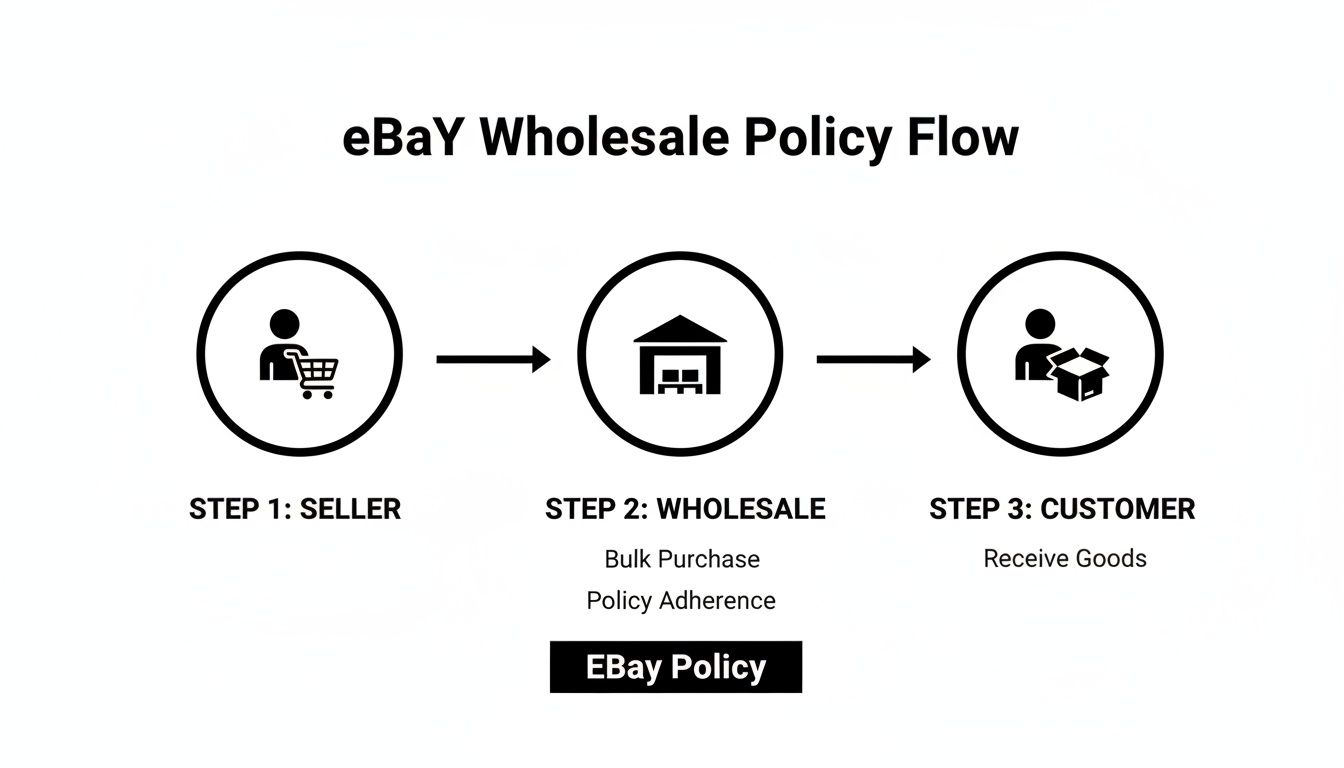
The key here is that professional relationship between you and your supplier. It creates accountability and keeps everything above board.
Finding and Vetting Wholesale Suppliers
Think of your supplier as your most important business partner, because they are. Don't rush this part. A fantastic supplier delivers quality products and ships on time, making you look great. A bad one? They can single-handedly destroy your eBay store with late shipments, shoddy items, and a wave of negative feedback.
As you hunt for the right partners, zero in on these key areas:
- Reputation and Reviews: Dig into their history. You want to see suppliers with tons of positive feedback over thousands of orders. That's your proof of reliability.
- Shipping Times and Methods: Make sure they offer trackable shipping that meets eBay’s delivery estimates. Be totally transparent about these shipping times in your listings.
- Communication: Shoot them a message before you commit. A prompt, professional reply is a green light. Silence or a sloppy response? That’s a massive red flag.
- Return Policies: Know their return process inside and out. On eBay, you're the one responsible for returns, so your policy has to be in sync with your supplier's.
Finding great partners is a real skill. For a much deeper look, our guide on how to find dropshipping suppliers gives you practical strategies to build a supply chain you can count on.
Setting Up Your eBay Business Foundation
With a few solid suppliers in your contacts, it's time to get your eBay store ready for business. This isn't just about signing up; it's about building a professional foundation from the start.
You'll obviously need an eBay seller account. While you can begin with a personal account, I'd strongly recommend upgrading to a Business Account as you start to grow. It just looks more credible and opens up more features. Next, you have to set your business policies for shipping, returns, and payments. They need to be airtight and perfectly match what your supplier can actually deliver.
Crucial Tip: Never, ever promise shipping times you can't guarantee. It is so much better to set a realistic delivery window of 15-20 days and have the item show up early than to promise 5-7 days and be late. Your seller metrics—which eBay's algorithm watches like a hawk—depend on it.
Building a compliant business on eBay is just one piece of the puzzle. To really scale, it helps to understand broader e-commerce growth strategies that can be applied across different platforms.
Creating High-Quality, Professional Listings
Your product listings are your digital storefront. A sloppy listing will kill sales, even for an amazing product. On the flip side, a sharp, detailed listing builds trust and gets people to buy. So many new sellers just copy and paste the supplier's lazy description, and it shows.
To make your listings pop, you need great product photos and videos. But manually saving dozens of images for every product and all its variations is a massive time-waster. It's a bottleneck that can seriously slow you down.
This is exactly where a tool like AliSave Pro comes in. Instead of the tedious right-click-and-save dance for every single image, you can download all product photos, variant images, and even videos from an AliExpress page with just one click. It completely automates the most mind-numbing part of creating a new listing.
Being this efficient means you can build rich, trustworthy listings in minutes instead of hours. That frees you up to do what really matters: finding more winning products and growing your store.
Common Pitfalls That Can Get Your Account Suspended
Making a good living on eBay is absolutely possible, but the path is littered with traps that can get your account restricted or shut down for good. I’ve seen it happen time and again. The difference between a thriving store and a banned one often boils down to avoiding a few critical, yet surprisingly common, mistakes.
Let's start with the big one: violating eBay's core dropshipping policy, sometimes without even knowing it. This is usually a classic case of retail arbitrage—you list an item from Amazon, Walmart, or another big retailer, and when you make a sale, you just have them ship it directly to your eBay customer. That’s a huge red flag for eBay. When a customer receives an Amazon-branded box for their eBay purchase, it creates a confusing and unprofessional experience, and eBay’s systems are built to catch this.
Using tracking numbers from another retailer is like leaving a breadcrumb trail right back to your non-compliant methods. It's one of the fastest ways to get your account flagged.
Poor Inventory and Order Management
Another surefire way to get into trouble is losing sync with your supplier's inventory. Since you aren't holding the stock yourself, you're completely at their mercy. If they run out of an item but your eBay listing is still live, you’ll be forced to cancel the sale.
A high order cancellation rate is poison to your seller metrics. To eBay, it screams unreliability. You'll not only get angry buyers leaving negative feedback, but you'll also damage your standing with the platform itself.
Every canceled order is a direct hit to your seller performance score. eBay's algorithm prioritizes sellers who consistently fulfill their promises, and a high cancellation rate tells the system you can't be trusted.
You absolutely cannot wing it with inventory management. You need a solid system to make sure you never sell a product you can't actually ship. For a deeper dive into getting this right, our guide on e-commerce order fulfillment covers the best practices.
Unrealistic Shipping Times and Ineffective Service
It’s tempting to promise lightning-fast shipping to close a sale, but it's a dangerous game. If your wholesale supplier is shipping from overseas, that package could take weeks to arrive. Listing a 5-7 day delivery window when the reality is closer to 20 days is just setting yourself up for failure.
Late shipments will torpedo your seller rating, bury your listings in search results, and make it incredibly difficult to attract new buyers. It's always better to be upfront about longer shipping times than to overpromise and underdeliver.
Here are a few other service-related headaches to watch out for:
- Slow Communication: When a customer asks a detailed question about a product you’ve never even touched, it’s tough to answer quickly. But in e-commerce, speed is everything.
- Difficult Returns: Juggling a return between a buyer in one country and a supplier in another is a logistical nightmare. A clunky returns process is a one-way ticket to negative feedback.
- Intellectual Property Issues: Listing branded items without the proper authorization can trigger a VeRO (Verified Rights Owner) program complaint. Sometimes, these claims are even baseless, forcing sellers to learn about addressing and fighting baseless IP right owner complaints.
Despite these hurdles, the opportunity on eBay is massive. We're talking about a platform with 134 million active buyers and 20 million sellers spread across 190 markets. With nearly 49% of sales coming from international buyers, the global reach is incredible—if you play by the rules. Steering clear of these pitfalls is the key to tapping into this audience without putting your entire business at risk.
Optimizing Your Listings for Maximum Sales

Just playing by eBay's rules will keep your store from getting shut down, but it won't make you any money. The real secret to success is moving beyond basic compliance and getting serious about optimization. This is how you shift from simply having a store to building a real, profitable business that actually stands out.
Your goal isn't just to get eyeballs on your products; it's to turn those lookers into buyers. That means learning to work with eBay’s search algorithm, pricing smart to protect your profits, and building a workflow that doesn’t burn you out. Without optimization, you're just another listing in a sea of millions. With it, you become a destination.
Mastering eBay's Search Algorithm
Think of eBay's search engine, known as Cassini, as a tough but fair bouncer. Its only job is to show buyers the best and most relevant products. To get past the velvet rope, you need to know the secret handshake—which, in this case, means using the right keywords and creating a top-notch listing.
Your product title is your first and most important handshake. It has to be loaded with the exact words a real person would use to find your item. Generic titles are a complete waste of digital real estate.
For example, don't just say "Nice Blue T-Shirt." A title like "Men's V-Neck T-Shirt Size Large Light Blue Cotton Athletic Fit" is infinitely better because it answers half a dozen potential searches at once.
Key Insight: eBay's algorithm is smart. It actively promotes listings that create a great experience for the buyer. That means clear titles, detailed descriptions, excellent photos, and a solid track record of positive feedback. A well-optimized listing is a signal to eBay that you're a pro.
Once a shopper clicks, your photos and description have to seal the deal. Use the description to add more detail, answer questions before they're asked, and sell the benefits. Use bullet points—they make your key features pop and are easy for people to scan.
The Power of High-Quality Visuals
When you’re selling online, your pictures are the product. A customer can't pick it up or feel the material, so your photos have to do all the work of building trust and showing off the quality. Using those grainy, generic photos from your supplier is one of the fastest ways to lose a sale.
This is where your workflow can give you a massive edge. If you're manually saving images one-by-one for every product, especially for items with tons of colors and styles, you're wasting hours. That's a huge bottleneck that stops you from getting more products listed.
This is where a specialized tool becomes a lifesaver. Something like AliSave Pro, for instance, lets you grab every single product image, variant photo, and even customer review picture from your supplier's page in one click. Suddenly, you have a full arsenal of high-quality visuals ready to build a compelling listing in a fraction of the time.
This isn’t just about speed. It’s about creating better listings that convert more shoppers, which frees you up to work on things that actually grow your business, like finding new products and suppliers. For a deeper dive into these strategies, check out our complete guide to eBay listing optimization.
Intelligent Pricing Strategies
Pricing products on eBay is a tightrope walk. Go too high, and your competition will crush you. Go too low, and you'll sell a ton of items while making zero profit after eBay takes its cut.
First, you have to know your break-even point. That number is made up of:
- Cost of Goods: What you actually pay your supplier.
- Shipping Costs: The fee your supplier charges to send it to the customer.
- eBay Fees: The insertion fee plus the final value fee, which is a percentage of the total sale (item price + shipping).
- Payment Processing Fees: Don't forget these little nibbles from payment gateways.
Once you have that total cost, you can add your profit margin. A good starting point is often a 15% to 30% margin, but that can swing wildly depending on your niche and how crowded it is.
And please, don't just set your price and walk away. Keep an eye on your competitors using eBay's Seller Hub. If the top seller runs out of stock, that's your chance to bump your price up a bit. If a new flood of sellers comes in low, you might need to adjust to stay in the game. Some tools can even automate this monitoring, making sure you stay competitive without being glued to your screen.
Your Top eBay Dropshipping Questions Answered
Even with a solid plan, a few nagging questions always seem to surface right when you're about to dive in. Let's tackle some of the most common ones I hear from sellers trying to figure out if dropshipping on eBay is the right move for them. Consider this a final gut-check to clear up any confusion about profitability, legal stuff, and the daily grind.
Is Dropshipping on eBay Still Profitable?
It absolutely is, but the game has changed. The old days of grabbing a random item from another retailer and flipping it for a quick buck are long gone. Today, making real money dropshipping on eBay is all about having a smart strategy.
The most successful sellers I see are carving out a niche for themselves. They find reliable wholesale suppliers and offer products that people are actually looking for. Instead of getting into a price war over the same trendy gadget everyone is selling, they're creating professional, high-quality listings for unique items that solve a real problem for their customers.
When you have a good supplier relationship and a smooth workflow, you can definitely see profit margins in the 15% to 30% range, sometimes even more. The trick is to keep a tight rein on your supply chain and maintain great seller metrics. That’s what keeps your listings visible and builds the trust you need to make sales.
Do I Need a Registered Business to Dropship on eBay?
When you're just starting out, you can operate as a sole proprietor using your own name and social security number. That's perfectly fine for getting your feet wet and seeing if this is for you.
But once you start seeing some real traction and your sales pick up, forming an LLC or another type of business entity is one of the smartest things you can do.
Why? It’s all about liability protection. It builds a legal wall between your business and your personal life. If something goes wrong with the business, your personal assets—like your house or your car—are protected.
Beyond the legal shield, having a registered business just looks more professional to suppliers. Many top-tier wholesalers won't even talk to you without one. It's also often a requirement for getting a resale certificate, which lets you buy inventory from them tax-free. That’s a huge deal when you're trying to scale.
How Should I Handle Returns and Refunds?
This is a big one. Your return process can either make or break your reputation on eBay. A simple, no-hassle process builds incredible trust and encourages repeat business. A confusing or difficult one is a fast track to negative feedback and account trouble.
First things first: your return policy needs to be crystal clear on every single listing, and it has to play by eBay's rules. Don't bury it in the fine print.
When a customer initiates a return, you’ll have to coordinate directly with your wholesale supplier. They'll give you a specific return address and any special instructions or authorization numbers. Some sellers choose to have returns sent to their own address first to inspect them, but be aware that adds an extra step and cost to the process.
- For expensive items: Always follow the supplier's return process to the letter. This is the only way to make sure you get your money back from them.
- For cheap items: Sometimes, it's honestly cheaper and easier to just refund the customer and let them keep the item. You avoid paying for return shipping, and it almost guarantees you'll avoid a negative review.
Is Using AliExpress for eBay Dropshipping Allowed?
Yep, sourcing from AliExpress is a very popular and perfectly legitimate way to dropship on eBay. The reason it works is that you're buying from wholesalers and manufacturers, not another retailer like Amazon. This model fits right into eBay's approved dropshipping policy.
The key to making this work is doing your homework on your AliExpress suppliers. You have to be meticulous. Check their store ratings, how many orders they've shipped, and what their customer reviews look like. You need to be confident they can ship quality products on time.
Also, be completely honest about shipping times in your eBay listings. If an item is coming from overseas, it's so much better to set a realistic 15-25 day delivery window than to promise a week and fail to deliver. Managing expectations is everything. This is where tools like AliSave Pro become invaluable—they let you quickly pull all the professional photos and videos from an AliExpress page so you can build a compelling and trustworthy eBay listing in just a few minutes.
Ready to create stunning, professional eBay listings in a fraction of the time? AliSave Pro lets you download all product images, variant photos, and videos from any AliExpress page with just one click. Streamline your workflow and build a better brand. Get the free AliSave Pro extension today!