
Here’s the simple truth when you ask, “what is the best selling item on Etsy?”: there is no single answer. The platform isn’t dominated by one magic product but by a few powerhouse categories where countless items consistently sell like crazy.
Finding success on Etsy isn't about stumbling upon one secret item. It’s about understanding the deep currents of demand that flow through these massive, evergreen markets.
What Are the Best-Selling Items on Etsy?
Instead of hunting for a needle in a haystack, your first job is to find the right haystack. Pinpointing the categories with the highest demand is the foundational step every successful seller takes.
You’re not guessing; you’re strategically placing your shop where the customers already are. By focusing on these core areas, you tap into a massive, built-in audience of buyers who are actively searching for products just like yours.
The Top-Performing Etsy Categories
So, where is all the action happening? Let's zoom out and look at the big picture. Three categories consistently stand out from the rest:
Craft Supplies & Tools: This is an absolute giant on Etsy. It's the engine that fuels the entire maker community, serving fellow creators, hobbyists, and small business owners who need the raw materials for their own projects.
Handmade Jewelry: A timeless classic. Jewelry is deeply personal and one of the most searched-for product types on the platform. It taps directly into our desire for unique pieces that tell a story.
Personalized Items: Customization is the name of the game. People come to Etsy specifically for one-of-a-kind items they can't find anywhere else, making personalized gifts for weddings, holidays, and birthdays a huge driver of sales.
This chart gives you a clear visual of just how dominant these categories are.
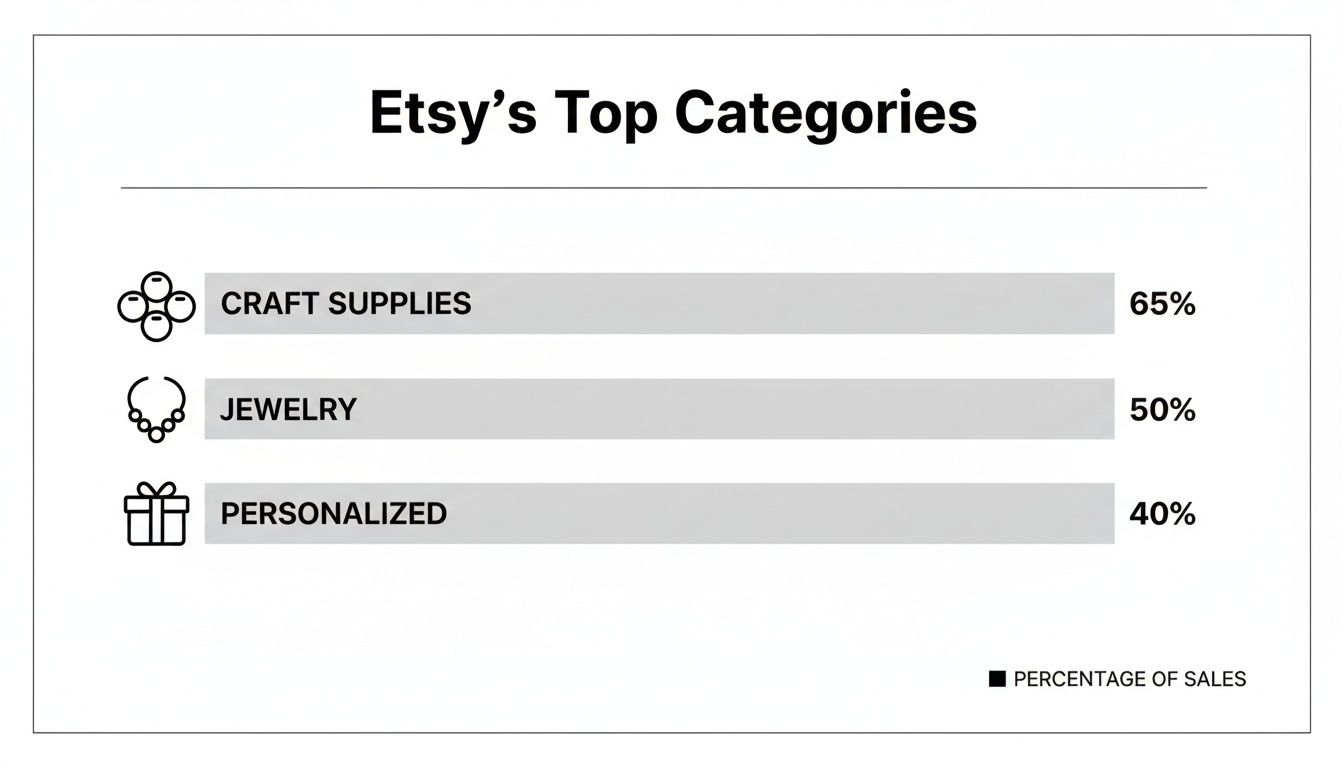
While handmade and personalized goods are immensely popular, the sheer scale of the Craft Supplies category makes it a true leader.
To give you a sense of the volume here, just look at beads. At one point, detailed analysis showed Etsy had over eight million active listings for beads alone, making it the single most-listed item on the platform by a landslide. Diving into more data on Etsy's best-selling items reveals just how powerful this niche really is.
Top-Performing Etsy Categories at a Glance
To make this even clearer, here’s a quick summary of the most popular categories, the kinds of products that do well within them, and who you’d be selling to.
| Category | Popular Product Examples | Primary Audience |
|---|---|---|
| Craft Supplies & Tools | Jewelry-making beads, yarn, fabric, digital patterns, stickers, candle-making kits | DIY enthusiasts, artists, hobbyists, and other Etsy sellers |
| Handmade Goods | Jewelry, candles, soap, pottery, art prints, unique home decor | Gift shoppers, home decorators, and consumers seeking unique, artisanal items |
| Personalized Items | Engraved necklaces, custom family portraits, monogrammed wedding gifts, pet accessories | Shoppers looking for meaningful gifts for major life events (weddings, birthdays, holidays) |
| Wedding & Party | Invitations, decorations, custom cake toppers, bridal party gifts, party favors | Brides, grooms, event planners, and hosts preparing for special occasions |
| Home & Living | Wall art, furniture, custom signage, decorative pillows, plants, and planters | Homeowners, renters, interior design lovers, and new movers |
These categories represent the most fertile ground on Etsy. By understanding what makes each one tick, you can start narrowing down your focus and find a product idea with proven, built-in demand.
Digging into Etsy's Most Profitable Categories
If you really want to know what the best-selling items on Etsy are, you have to look past the individual listings and into the booming ecosystems they belong to. Some categories consistently knock it out of the park, and it's not by accident. They tap into powerful consumer trends and the creative spirit that defines the platform.
These aren't just random buckets of products. They’re living, breathing markets driven by very specific customer needs. Let’s pull back the curtain on Etsy's heavy hitters and figure out what makes them so successful.
Craft Supplies: The Engine of Etsy’s Creator Economy
The Craft Supplies & Tools category is an absolute juggernaut. It’s the behind-the-scenes engine that powers countless other Etsy shops and fuels a worldwide community of makers, hobbyists, and DIY lovers.
Think of it like this: for every person selling a handmade necklace, someone else needs to buy the beads, wire, and clasps to create it. This dynamic creates a massive, self-sustaining loop of demand.
Selling craft supplies is like selling shovels during a gold rush. You're providing the essential tools that allow other creators to build their businesses, which means you have a built-in customer base that’s always on the hunt for new materials.
The creator economy is what makes this category thrive. Items that are always flying off the virtual shelves include:
- Jewelry Components: Beads, charms, chains, and unique stones are perennial favorites.
- Stickers and Ephemera: Essential for the exploding scrapbooking, journaling, and planner communities.
- Yarn and Fabric: The lifeblood for knitters, quilters, and independent clothing designers.
- Digital Patterns: Sewing, crochet, and cross-stitch patterns are a dream—instant delivery and zero inventory costs.
Handmade Goods: Where Personalization Is King
Handmade goods are the very soul of Etsy. This category taps into our deep desire for unique, meaningful things that you just can't find at a big-box store. Shoppers come here looking for products with a story and a human touch.
Personalization is the magic ingredient here. Items that can be customized with a name, a date, or a special message are instantly transformed from a simple product into a treasured keepsake. This makes them absolute gold for gift-giving.
Within this huge category, jewelry consistently reigns as Etsy's top performer. The shop CaitlynMinimalist is a perfect example, having racked up an incredible 3.2 million sales from minimalist necklaces and earrings. A single shop's success on that scale shows just how dominant jewelry is, especially when you consider Etsy's overall gross merchandise sales hit $13.2 billion. Top-seller data suggests jewelry is a massive piece of that pie. You can find more analysis of top Etsy performers to see how those numbers break down.
Digital Products: The Ultimate Low-Overhead Business
Finally, we have digital products, which represent one of the smartest and most profitable business models on Etsy. These are downloadable files that a customer gets instantly after they pay, completely cutting out the need for physical inventory, packaging, or shipping.
The profit margins can be astounding. Once you create a digital product, you can sell it an infinite number of times with almost no additional cost or effort.
Some of the most popular digital products are:
- Wedding Invitations & Stationery: Customizable templates are a lifesaver for brides and event planners.
- Digital Planners & Trackers: Files designed for apps like GoodNotes help people organize every aspect of their lives.
- Printable Wall Art: An affordable and instant way for people to refresh their home decor.
- Social Media Templates: Pre-made, professional-looking designs for other small business owners to use.
Getting a handle on the forces driving these three core categories—empowering creativity, enabling personalization, and offering incredible scalability—is the first real step toward finding a best-seller of your own.
How to Uncover Bestselling Trends Yourself
Instead of just taking a list of trending items at face value, you can learn to become a trend hunter yourself. Think of this as building your own repeatable playbook for validating any product idea. When you master a few simple research methods, you start to spot opportunities before everyone else does, giving your shop a massive head start.
The best place to begin is right on Etsy’s own digital turf. The platform leaves clues everywhere; you just need to know how to read them. Start by searching for a product idea and really pay attention to what pops up on the first few pages.
You'll want to look for listings with that coveted “Bestseller” badge. That's Etsy's direct signal that a product is an absolute top performer in its category. Beyond that, glance at the review counts. A high number of positive reviews, especially recent ones, is a great sign of consistent sales and happy customers.
Reading Etsy's Insider Reports
The good news is that Etsy doesn't keep all its data under lock and key. The company regularly publishes resources to give sellers a peek into what buyers are searching for. Honestly, these are goldmines of information that can point you straight toward a profitable niche.
Two key resources you should be watching are:
- Etsy Trend Reports: These come out seasonally and break down rising search terms, popular aesthetics, and big gift-giving trends.
- Editors' Picks: These are curated collections that show you what Etsy’s own style experts think is hot and appealing to shoppers right now.
Think of these official sources as a cheat sheet for what’s about to blow up. They give you a direct look into the platform's data, helping you align your products with what people are actively looking to buy in the coming months.
Validating Demand Beyond Etsy
A trend on Etsy is great, but a trend with worldwide demand is even better. This is where you can use powerful, free tools to see if your product idea has legs outside of the Etsy ecosystem.
Google Trends is absolutely essential for this step. It lets you see how search interest for a product has changed over time. You can compare different niches, spot seasonal peaks (like the holiday rush), and even discover related "breakout" terms you hadn't even thought of.
Here’s a look at the Google Trends interface, which gives you a clear visual of search interest for a topic.
This kind of data helps you confirm whether an Etsy trend is just a small, contained fad or part of a much larger, more sustainable market.
Leveraging Third-Party Analytics Tools
For an even deeper, data-driven advantage, many serious sellers turn to specialized third-party tools. These platforms tap directly into Etsy’s data to provide insights you simply can’t get from looking at the site on your own.
Think of these tools as your dedicated market research team. They analyze keywords, track competitor performance, and estimate sales volume, turning guesswork into a calculated business strategy.
Popular options include eRank and Marmalead. While they often have a subscription fee, the features they offer—like keyword difficulty scores, listing grades, and deep analysis of top shops—can be invaluable. This information helps you find underserved niches and optimize your listings to climb higher in search results.
For an even broader perspective, you can also explore trending dropshipping products to see how e-commerce trends are taking shape across the wider internet.
Carving Out Your Niche in a Crowded Market
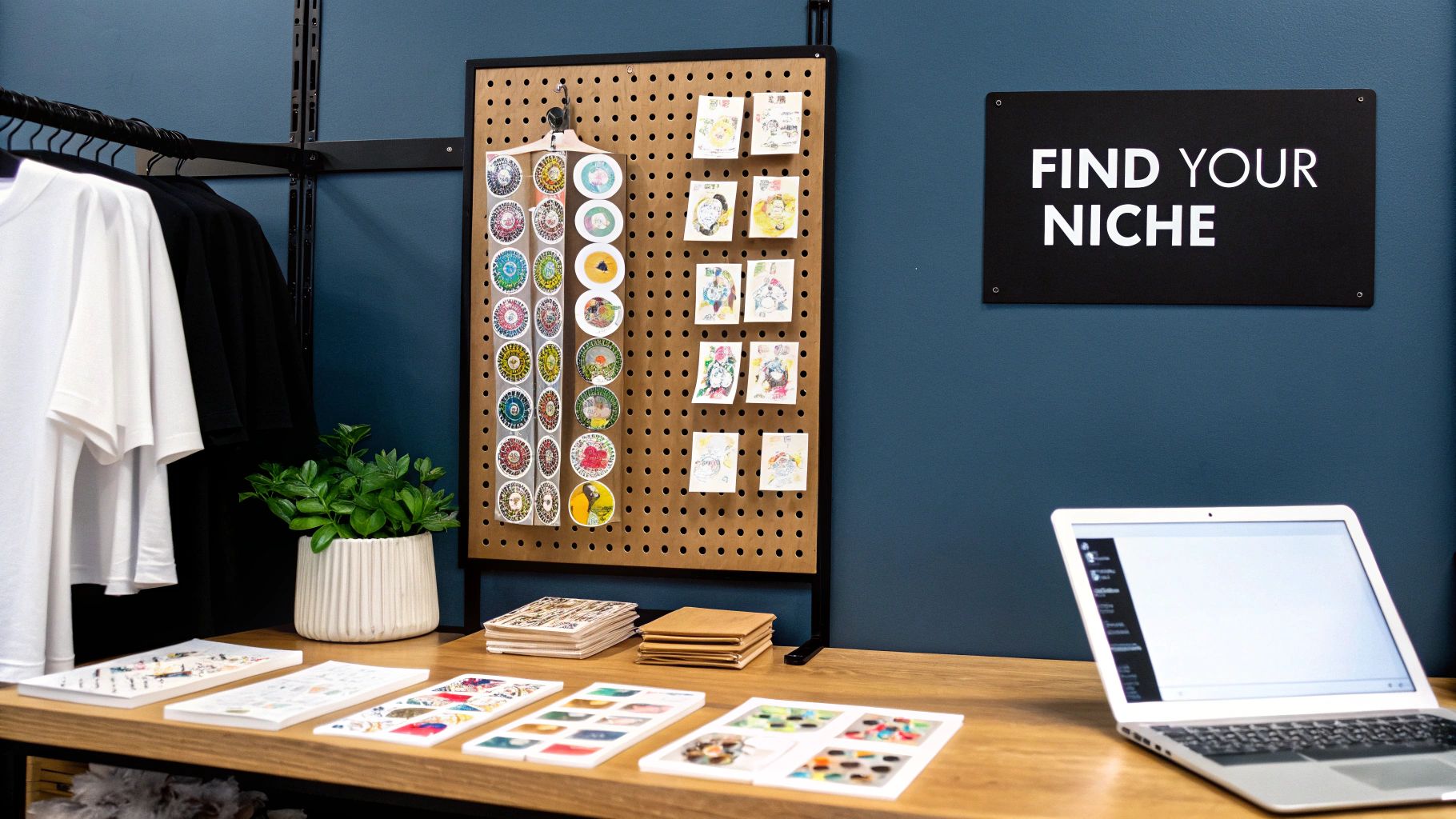
Trying to break into a huge category like "handmade jewelry" or "craft supplies" can feel like shouting into a hurricane. With thousands of other shops all fighting for the same eyeballs, just having a great product simply isn't enough to get noticed. The real secret to standing out is to stop trying to sell to everyone.
Success on Etsy isn’t about being a giant, faceless department store with a little something for everybody. It’s about becoming a small, curated boutique that serves a very specific group of people better than anyone else. This is the art of niching down.
When you narrow your focus, you go from being a generalist to a specialist. Your products suddenly become more memorable, your marketing gets a whole lot easier, and you start building a real following of customers who feel like you truly get them.
Finding Your Unique Angle
So, how do you discover this profitable little corner of the market? It all starts by layering specific characteristics onto a broad category until you’ve created something special. You want to move from a fuzzy idea to a razor-sharp product that solves a real need for a specific audience.
You can tackle this from a few different angles:
- Focus on an Aesthetic: Don't just sell "wall art." Specialize in "dark academia-themed literary quote prints."
- Serve a Dedicated Audience: Instead of generic "gifts," create "personalized retirement gifts for nurses."
- Master a Unique Material: Go beyond "handmade candles" to something like "beeswax candles scented with locally sourced botanicals."
This kind of specificity turns your shop from just another search result into a destination.
When a shopper stumbles upon a store that perfectly nails their unique interest—whether it's a love for corgis, a passion for 1970s sci-fi, or a need for eco-friendly baby toys—they stop scrolling and start buying. You become their go-to expert.
A Practical Example of Niching Down
Let's walk through what this looks like in practice. The "stickers" category is one of the most popular and saturated markets on Etsy. Trying to sell generic stickers is an uphill battle. But watch what happens when we start adding layers.
- Broad Category: Stickers
- Add a Material: Vinyl Stickers
- Add a Style: Holographic Vinyl Stickers
- Add an Audience: Holographic Vinyl Stickers for Plant Lovers
- Final Niche Product: Holographic vinyl stickers featuring witty sayings for indoor plant enthusiasts.
Just like that, you’re not competing with every sticker shop on the platform anymore. You are now the number one spot for a passionate group of buyers looking for that exact thing. This strategy is critical across all e-commerce, and you can see how the principle applies everywhere by exploring the best niches for drop shipping. By carving out your own space, you find the best selling item on Etsy for your business.
Creating a Listing That Actually Sells
Coming up with a brilliant product idea is only half the battle on Etsy. Pinpointing a potential best-seller for your shop is a huge first step, but a poorly executed listing can sink even the most promising item before it ever has a chance. This is where all that market research you did really starts to pay off, turning your validated idea into a listing that actually converts.
Think of your listing as your product's one and only salesperson. It’s the only thing a customer sees, so every single element—from the title to the last photo—has to work together to stop their scroll, earn their trust, and convince them to buy. Without a compelling presentation, you're pretty much invisible in a sea of other products.
Master Your SEO with Titles and Tags
Your title and tags are the backbone of your Etsy visibility. They’re how the Etsy algorithm figures out what you’re selling and who it should show your product to. The trick here is to get inside your customer's head.
What specific words would they actually type into that search bar? Ditch the generic, single-word descriptions. You want to use long-tail keywords that capture exactly what a buyer is looking for.
- Bad Title: "Beaded Necklace"
- Good Title: "Dainty Gold Seed Bead Choker, Minimalist Layering Necklace for Women, Custom Length Beaded Jewelry Gift"
See the difference? That detailed title hits multiple potential search terms all at once. Your 13 available tags work the same way. Use every single one of them. Describe the style, materials, occasion, and who it's for. Each tag is another little road leading a buyer straight to your shop.
Capture Attention with Compelling Photos
In the world of e-commerce, your product photos are your most powerful tool. They're the very first thing a shopper notices, and they can make or break a sale in a split second. Your images have to be bright, clear, and show off your product from every important angle.
Your main photo has one job: to stop the scroll. It needs to be so eye-catching and clear that it pops off a busy search results page, making someone feel like they have to click for a closer look.
Don't just show your product floating in a white void. Show it in context. If you sell home decor, stage it in a room. If you sell jewelry, show someone wearing it. These lifestyle shots help customers imagine the item in their own lives, which is a crucial part of making a purchase decision.
Write Descriptions That Persuade
Okay, they’ve clicked! Now your description has to seal the deal. Don't just list the features; sell the benefits. Instead of just saying a candle has a "lavender scent," you could explain how it "creates a calming, spa-like atmosphere to help you unwind after a long day."
Make your description easy to scan and digest:
- Hook them with a story: Briefly share the inspiration behind the item or what makes it special.
- Use bullet points: Quickly list key details like materials, dimensions, and care instructions.
- Answer questions upfront: Address common concerns about shipping, customization, or anything else they might wonder about.
When you focus on the customer's experience, you build an emotional connection that goes far beyond a simple transaction. A well-crafted listing isn't just about getting seen; it's about turning browsers into buyers. If you'd like to dive deeper, you can learn more about how to improve ecommerce conversion rates to really maximize your sales. Beyond a compelling listing, driving traffic and converting sales requires a broader understanding. Discover a practical guide to increasing online sales that covers more advanced strategies.
Frequently Asked Questions About Selling on Etsy
Alright, let's talk about those nagging questions that pop up right when you're about to jump in. Even after you've pinpointed a great category and have a niche in mind, a little bit of doubt can creep in. That’s totally normal.
Think of this section as a quick chat to clear up those final uncertainties. We'll tackle everything from how much you can really make to the common slip-ups that trip up new shop owners. Getting these things straight now will help you start your Etsy journey with confidence.
What Is a Realistic Income for an Etsy Seller?
This is the million-dolar question, isn't it? The honest answer is that it's all over the map. Some folks are happy making a few hundred dollars a month to fund their hobby, while top sellers in popular niches can absolutely pull in a six-figure income. It all comes down to your product, how you price it, your marketing hustle, and the niche you choose.
Instead of dreaming about a specific dollar amount, aim for your first 100 sales. That’s a huge milestone. It proves you have a product people actually want to buy. Once you hit that, you can start strategically reinvesting your profits to scale up.
How Does Print-on-Demand Fit into Bestselling Categories?
Print-on-demand (POD) has completely changed the game for sellers in some of Etsy's biggest categories. It lets you sell wildly popular products—think t-shirts, mugs, posters, and tote bags—without ever touching a single piece of inventory. When an order comes in, your POD partner prints it, packs it, and ships it directly to your customer.
This model is a perfect fit for creative niches where the design is the real star. So, instead of just selling a generic "t-shirt," you can create designs for die-hard book lovers, obsessive plant parents, or nostalgic video game fans. You're tapping into a passionate, proven market with almost zero financial risk.
Print-on-demand bridges the gap between digital creativity and physical products. It lets you test hundreds of ideas and find what is the best selling item on Etsy for your specific audience without ever buying a blank shirt or a roll of poster paper.
What Are the Most Common Mistakes New Sellers Make?
So many promising shops stumble right out of the gate by making the same few mistakes. If you can sidestep these common pitfalls, you'll be way ahead of the curve. The biggest blunders usually boil down to three things.
- Poor Quality Photos: Dark, blurry, or just plain boring photos are the fastest way to get a shopper to click away. Your images are your storefront; they need to be bright, sharp, and make your product look irresistible.
- Ignoring Etsy SEO: If you don't use the right keywords in your titles and tags, your products are basically invisible. You have to learn to think like a buyer. What exact words would they type into the search bar to find what you're selling?
- Giving Up Too Soon: Building a successful Etsy shop takes time and patience. It’s so common for new sellers to get discouraged after a few quiet weeks and throw in the towel, often right before things were about to take off. Consistency is everything.