
If you've ever felt like a faceless middleman in the world of e-commerce, you're not alone. Standard dropshipping can often feel like that—a constant race to the bottom on price, selling the exact same generic products as thousands of other stores.
But what if you could combine the low-risk, no-inventory model of dropshipping with the power of building a real, memorable brand? That’s exactly what private label dropshipping is all about. It’s a business model where a third-party manufacturer produces items that you sell under your own custom brand, shipping them directly to your customers. You get control over the branding, the packaging, and the price, all without ever touching the inventory yourself.
The Power of Building Your Own Brand
Let's be honest, standard dropshipping is a tough game. You're essentially just reselling someone else's product, and customer loyalty is practically nonexistent. Private label dropshipping completely flips that script. Instead of just being another reseller, you're building a genuine brand—a real asset with long-term value.
This model lets you put your unique stamp on a product. You find a great supplier who can manufacture an item, and they'll handle putting your logo, custom branding, and unique packaging on it before it ever reaches your customer. The end result is a premium, cohesive experience that feels intentional and trustworthy, not like some random gadget shipped from an anonymous warehouse.
Why Go Private Label?
The real magic of this business model is how it blends control with convenience. You get all the perks of having a custom product line without needing the massive upfront investment that usually comes with manufacturing and holding tons of inventory.
Here’s where it really shines:
- Healthier Profit Margins: When you’re selling a unique branded product, you immediately step out of the brutal price wars. You can set prices based on the value your brand brings, which almost always means better margins.
- Real Brand Loyalty: A customer who loves your branded product and the experience you provide is far more likely to come back. Consistent branding builds trust and makes your business the one they remember.
- Total Control Over Your Image: Every single touchpoint, from the logo on the product to the design of the shipping box, is a chance to reinforce your brand. This is a level of control standard dropshippers can only dream of.
- Built-In Exclusivity: You are the only person selling your branded product. Sure, competitors might sell a similar base item, but they can't replicate your logo, your packaging, or the story you tell.
The real advantage here is simple: you’re not just selling a product, you’re selling a brand. This model lets you build something unique without the traditional headaches of inventory and manufacturing, as your supplier handles all the backend logistics.
A quick look at the differences makes the choice pretty clear for anyone serious about building a long-term business.
Private Label vs Standard Dropshipping
| Feature | Standard Dropshipping | Private Label Drop Shipping |
|---|---|---|
| Branding | None; you sell generic, supplier-branded products. | Full control; you sell products under your own unique brand. |
| Competition | Extremely high; you compete on price with many others. | Low; you are the exclusive seller of your branded product. |
| Profit Margins | Generally lower due to intense price competition. | Significantly higher, as you set the price based on brand value. |
| Customer Loyalty | Very low; customers are loyal to the product, not the store. | High potential; a strong brand builds repeat business. |
| Perceived Value | Low; often seen as cheap or generic. | High; branded products feel more trustworthy and premium. |
| Barrier to Entry | Very low; easy to start but hard to sustain. | Higher; requires more effort in branding and supplier relations. |
Ultimately, while standard dropshipping is a great entry point, private labeling is how you build a sustainable, scalable e-commerce asset.
Meeting Modern Consumer Demands
Today’s shoppers are smart. They’re over the endless sea of generic, unbranded junk and are actively looking for unique brands that resonate with them. They want to buy from businesses that feel authentic and have a clear point of view.
Private label dropshipping puts you in the perfect position to meet this demand. The numbers back this up, too. For instance, the global private label market for beauty and cosmetics is expected to grow at a CAGR of 5.2% from 2025 to 2030. This trend highlights a major shift in how people shop. If you want to dive deeper, you can explore more data about the private label market's growth and see just how big the opportunity is.
Finding Products and Partners You Can Trust
Your private label dropshipping business will live or die based on two things: the products you choose and the partners who make them. Forget the fluffy advice to "follow your passion." Building a brand that actually makes money comes from smart, data-driven decisions and rock-solid relationships with your suppliers.
You need a repeatable system. It starts with digging into product categories that have real branding potential and healthy profit margins. Then, you have to be ruthless in vetting the suppliers who can bring that vision to life. Get this foundation right, and you're set up for the long haul.
This infographic breaks down the basic flow—it's your brand connecting a reliable supplier with a happy customer. Simple, right?
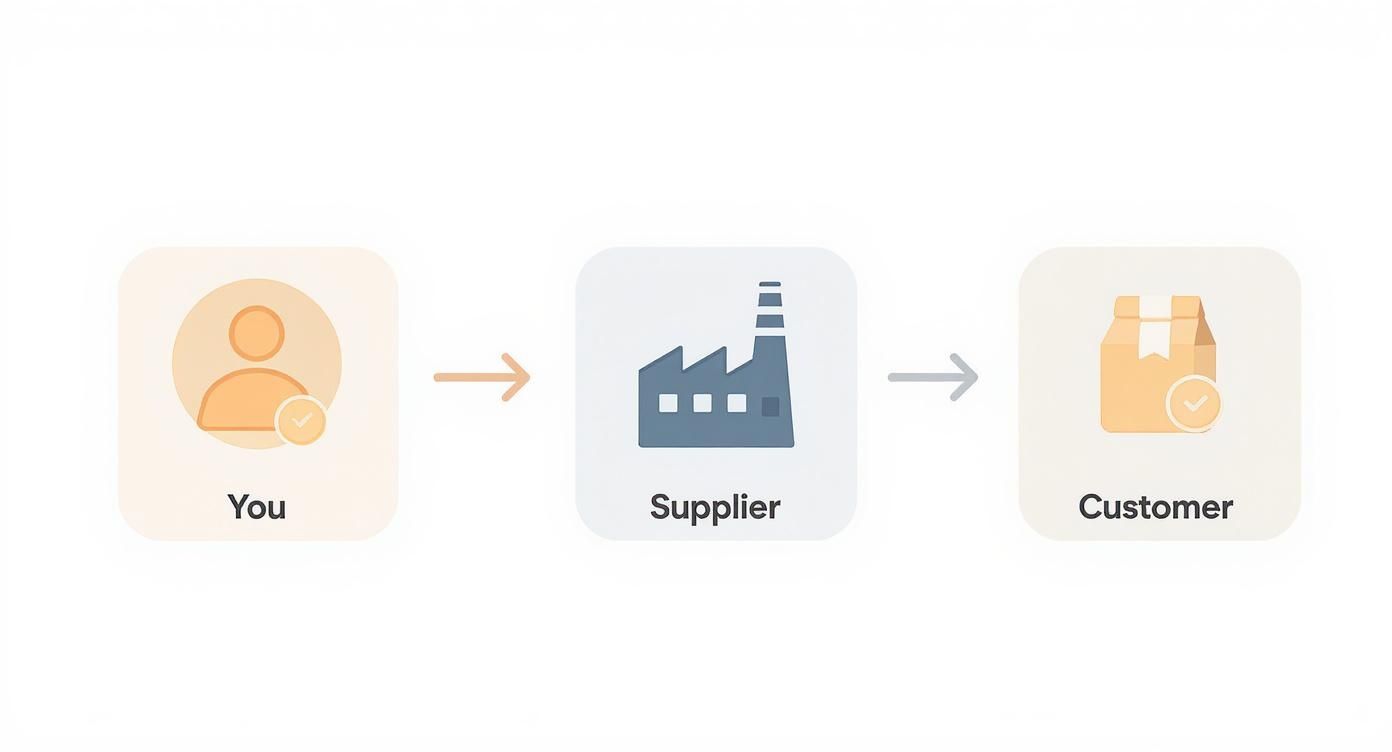
Ultimately, your job is to be the master of the brand and the customer experience. Your supplier handles the nitty-gritty of production and getting the product out the door.
Identifying Your Profitable Niche
Before you spend a single second thinking about logos or custom boxes, you have to find a market worth entering. The sweet spot for a private label niche is where consumer demand, beatable competition, and branding opportunity all collide.
Look for products with staying power, not just a flash-in-the-pan trend. A quick search on Google Trends can show you search volume over time, helping you spot the difference between a fad and a stable market. You want to see a steady upward trend or a consistently high level of interest.
Next, go spy on the competition. Are the top sellers on Amazon or other big marketplaces just generic, unbranded junk? That's your opening. If you can swoop in with a professionally branded product and a better story, you can carve out your space almost immediately.
Key Takeaway: The best private label products are often simple, evergreen items that branding can elevate. Think bamboo toothbrushes, high-quality yoga mats, or sleek stainless steel water bottles. These are all products where a strong brand perception can justify a higher price tag.
Let's look at the numbers for a second. The private label model is a piece of the massive global dropshipping pie, an industry valued somewhere between $434 billion and $470 billion. And it's not slowing down; projections show it could hit over $1.2 trillion by 2030. While fashion leads the pack, specialized niches in wellness or personal care are where entrepreneurs are finding profit margins of 30–50%.
Vetting Your Private Label Suppliers
Your supplier isn't just a vendor; they're your partner in crime. Their reliability, communication, and quality control directly reflect on your brand. Picking the right one is probably the single most important decision you'll make.
Platforms like Alibaba or CJdropshipping are great places to start your search, but don't just sort by "lowest price." A cheap supplier who sends out shoddy products will end up costing you a fortune in refunds, chargebacks, and a trashed reputation.
Create a shortlist of potential suppliers and start digging in. If you're feeling overwhelmed, you can even work with sourcing agents in China who can do the heavy lifting of verifying factories and negotiating for you.
Here are the non-negotiable questions you need to ask every single potential supplier:
- Minimum Order Quantity (MOQ): Do they require an MOQ for private labeling? Most do. Make sure it's a number you can actually afford.
- Customization Capabilities: Can they put your logo on the product? What about custom packaging, thank-you card inserts, or labels? Ask for specifics and, more importantly, pictures of work they've done for other brands.
- Production Lead Time: How long will it take them to produce a batch of your branded products after you place an order?
- Sample Policy: Never, ever skip this. Ask how much a sample costs and get one shipped to you. You have to see and touch the product for yourself.
Vetting your partners is everything. For a much deeper look at this process, we've put together a full guide on https://alisavepro.com/how-to-find-dropship-suppliers/ that you can trust. Seriously, ordering and physically inspecting a sample is the only way to know what your customers will experience. This one step will save you from a world of pain later.
Creating a Brand People Actually Remember
Alright, you’ve locked in a solid supplier. Now for the fun part. This is where you stop being just another person selling a product and start building a real brand—something with a story and a personality that makes customers choose you.
In the world of private label dropshipping, your brand is everything. It’s what lets you step away from the race to the bottom on price and build a base of loyal fans who come back again and again.
Forget just slapping a logo on something. A memorable brand is the whole experience, from the name and logo all the way to the feeling a customer gets when they finally open that box. This is what separates a store that lasts a few months from a business that thrives for years.
Building Your Brand Identity from Scratch
So, what is a brand identity? It's the whole vibe. It’s the collection of visuals, words, and feelings you create to connect with your ideal customer.
Before you pick a single color or font, you need to know exactly who you're talking to. Are they outdoorsy adventurers? Busy urban professionals? Figure out what they care about, and let that guide you.
Once you know your audience, you can start putting the pieces together:
- Brand Name: Keep it short, catchy, and easy to say. Before you fall in love with a name, do a quick search to make sure the domain and social media handles are free.
- Logo Design: Your logo has to work everywhere—on your website, stamped on the product, and printed on a tiny box. Simple, versatile, and instantly recognizable is the name of the game.
- Visual Style: Pick a color scheme and a couple of fonts that match your brand’s personality and stick with them. Consistency is what makes a brand feel professional and trustworthy.
Think about it: a brand selling high-tech gadgets will have a completely different look and feel from one selling handmade leather goods. Every choice you make tells a part of your story.
The Power of Custom Packaging
In ecommerce, the "unboxing experience" is one of the only physical interactions you get to have with your customer. Don't waste it. A fantastic unboxing can turn a first-time buyer into a raving fan who posts about you on Instagram.
Most private label suppliers offer custom packaging options. Yes, it adds a little to your cost per item, but the bump in perceived value is well worth it. You're not just shipping a product; you're delivering an experience.
Pro Tip: Ask your supplier about adding small branded inserts, like a thank-you card. A simple card with a 15% off code for their next purchase can do wonders for customer loyalty and makes your brand feel much more personal.
Just make sure the packaging is as protective as it is pretty. Nothing kills the vibe faster than a beautiful box with a broken product inside.
Creating Standout Product Media
Let's be blunt: your product photos and videos are your virtual storefront. People can't pick up and touch your product, so your media has to do all the work. The generic, low-res images from your supplier’s catalog just won't cut it if you want to be seen as a premium brand.
You've got a couple of solid options here:
- Have Your Supplier Do It: Many top-tier suppliers have photo studios and can create professional shots for you, either on a clean white background or in a lifestyle setting. It'll cost you, but it saves a ton of hassle.
- Order Samples and Do It Yourself: This is my preferred method because it gives you total creative control. You don't need a pro studio—a simple light box, a modern smartphone, and a good editing app can get you surprisingly great results.
For private label dropshipping, unique and professional images are non-negotiable. If you're struggling to get started, you might even leverage an AI product photo generator to create realistic lifestyle shots without ever having the product in hand. It's a massive time and money saver.
The quality of your website’s visuals is directly tied to your sales. To dive deeper into making your store look incredible, check out our guide on the best ecommerce website design practices. Investing in great product media isn't an expense; it's an investment in your brand's credibility.
Launching Your Store and Finding Your First Customers
You've nailed down your brand identity and have a supplier lined up. Now for the exciting part: building your digital storefront and actually starting to make sales. This is where the rubber meets the road—where your branding and product quality are put to the ultimate test.
Let’s be real: a fantastic product on a clunky, poorly designed website is dead on arrival. The same goes for a beautiful store selling a subpar product; that's just a fast track to a bad reputation.
Success in this game is all about creating a seamless customer journey. We're talking about everything from the moment they land on your site to the ad that catches their eye in their social media feed. We'll stick to practical, budget-friendly tactics you can use right away to get some momentum going. That means building a store that converts and then using smart, targeted marketing to bring the right people in the door.
Setting Up a High-Converting Shopify Store
There’s a reason everyone recommends Shopify. It’s powerful, but it’s also incredibly user-friendly, which is exactly what you need when launching a new brand. Just remember, simply having a store isn't enough. It needs to be a well-oiled machine designed to turn curious visitors into paying customers.
Your main goal here is to build trust and make the shopping experience feel completely effortless. Here’s how you do it:
- Go for a Clean, Professional Design: Start with a simple, mobile-friendly theme. Your site's look and feel should be a direct extension of your brand's aesthetic. Don't clutter the page—let your professional product photos be the star of the show.
- Write Persuasive Product Descriptions: Don't just rattle off features. Tell a story. You need to explain exactly how your product solves a problem or makes your customer's life better. Use bullet points to break down the key benefits so people can scan them easily.
- Showcase High-Quality Media: This is where you put those awesome product photos and videos to work. Show the product from every angle, show it in use, and highlight any of the unique details that your private labeling adds.
- Make Your CTAs Obvious: Your "Add to Cart" and "Buy Now" buttons should pop. Make them prominent and use a contrasting color that naturally draws the eye.
Social proof is another absolute must-have. As soon as you get a few sales under your belt, start adding customer reviews and testimonials to your product pages. Seeing that other people have already bought and loved your product is one of the most powerful conversion tools you have.
Marketing Your New Brand
With your store live, it's time to get some eyeballs on it. As a new brand, you need a smart mix of strategies—some that build long-term value and others that generate those all-important first sales. Trust me, just throwing money at ads without a solid plan is the fastest way to burn through your budget.
A much better approach is to combine community building with highly targeted advertising. This creates a sustainable marketing engine that will power your private label dropshipping business for the long haul.
The old idea of private label products being cheap, generic knock-offs is long gone. Today, shoppers are actively looking for unique brands that resonate with their values and offer a more personal, curated experience.
This shift in how people shop is your single greatest marketing advantage. A 2023 study found that over 80% of US shoppers now view private-label products as being just as good, if not better, than the big national brands. With 84% of buyers craving personalized shopping experiences, your unique brand story becomes your most effective sales tool. You can read the full research on modern consumer trends to really dig into this opportunity.
Build an Authentic Community on Social Media
Platforms like TikTok and Instagram are goldmines for telling your brand’s story in an authentic way. The key is to stop just posting product pictures. Instead, create content that actually provides value to your ideal customer.
For instance, if you’re selling private-labeled yoga mats, your feed could be full of short videos on:
- Quick morning yoga routines to start the day.
- Tips for properly cleaning and caring for a yoga mat.
- Fun behind-the-scenes clips that show off your brand's personality.
Talk to your followers, reply to comments, and focus on building a real community. This organic approach fosters deep brand loyalty and creates a base of customers who trust you before they even think about making a purchase.
Drive Immediate Sales with Meta Ads and SEO
While organic social media builds your brand for the future, paid ads can bring in sales right now. Meta Ads (across Facebook and Instagram) are incredibly effective for zeroing in on specific demographics and interests.
Start with a small daily budget to test out different ad creatives and audiences. Use compelling videos or carousel images that clearly showcase your product's benefits. The goal isn't to reach everyone; it's to reach the right people—the ones most likely to buy what you're selling.
At the same time, you should be laying the groundwork for long-term traffic with Search Engine Optimization (SEO). This means optimizing your product pages and maybe even writing a few blog posts around keywords your customers are searching for. SEO is definitely a marathon, not a sprint, but the "free" organic traffic it generates over time is invaluable for sustainable growth.
Scaling From First Sale to Full-Fledged Business
https://www.youtube.com/embed/yjJR_SBRlpA
Getting those first few sales feels amazing, right? It's a huge milestone, but honestly, it’s just the starting line. The real work begins now: turning that initial spark into a business that can actually grow and last. This is where you shift from just selling a product to running a real operation.
Your new daily reality is all about creating a seamless workflow that connects your customer, your supplier, and you. When an order hits your store, the process of getting it to your supplier has to be absolutely airtight. Any hiccup or delay there is a fast-track to an unhappy customer and a frustrating support ticket.
Mastering Daily Operations and Quality Control
Think of yourself as the new chief of operations and customer happiness. You have to nail customer service—it's not optional. That means responding to questions quickly, being upfront about shipping times, and having a fair, easy-to-understand policy for returns or problems. A single positive support experience can easily turn a one-time buyer into a loyal fan.
Of course, you can't offer great support if you're not confident in what you're selling. That's why keeping a close eye on quality is so important.
Don't assume your supplier will maintain the same quality forever. You absolutely have to order your own product, shipped to your own address, on a regular basis. I'd say at least once a quarter. It's the only way to see exactly what your customers are experiencing, from the moment they open the box to when they use the item.
Is the packaging still solid? Is the product itself as good as that first sample you approved? Doing this simple check-in is your best defense against "quality fade," which happens when suppliers slowly start cutting corners to save a few cents.
Using Data to Fuel Smart Growth
As sales start coming in, you're gathering one of the most powerful tools you have: data. Stop looking at just the top-line revenue number. You need to dig into your analytics to figure out what's really going on.
- Find Your Winners: Which specific products or even variants are bringing in the most sales and have the best margins? These are the items you want to pour your marketing budget into.
- Listen to Your Customers: Pay close attention to reviews, emails, and social media comments. Are people constantly asking for a new color? A different size? This feedback is pure gold for figuring out how to expand your product line.
- Reinvest Smartly: The brands that truly take off don't just cash out their early profits. They pour that money right back into the business, mostly into marketing, to build a growth loop that just keeps accelerating.
Once your manual processes are running smoothly, it's time to think about automation. As order volume picks up, you'll need the right systems to keep up without burning out or hiring a team too early. To learn more, check out our guide on the top dropshipping automation tools that can free up a ton of your time.
Solidifying Your Business Foundation
As the money starts to flow more consistently, you have to get serious about the legal and financial side of things. Running as a sole proprietor is fine when you're just testing an idea, but it's not a long-term solution for a growing business.
Seriously look into registering your business as an LLC (Limited Liability Company). This is a critical step because it creates a legal wall between your personal assets (like your house and car) and your business debts or liabilities. It’s a layer of protection you’ll be glad to have.
You also need to get a handle on your financial responsibilities. This means figuring out sales tax for the states or countries you sell in and making sure you're setting aside money for income taxes. I strongly recommend talking to an accountant. They can make sure you're staying compliant and help you manage your money effectively. Building a legit, legally sound business isn't the most exciting part, but it's the final piece of the puzzle for turning your side project into a real, lasting brand.
Got Questions? Let's Talk Specifics
Even with the best roadmap, you're bound to have some questions pop up. It's totally normal. This business model is a unique mix of branding and logistics, and it’s smart to get a handle on the details before you dive in. Let's clear up some of the most common hurdles I see new entrepreneurs face.
Think of this as the practical, no-fluff part of the conversation. We'll cover how much cash you actually need to get started and what rookie mistakes can sink your business before it even has a chance to float. Getting these answers now will help you make much smarter decisions from day one.
How Much Money Do I Realistically Need to Start?
This is always the first question, and for good reason. The honest answer? It varies, but it's a world away from the cost of traditional retail. You’re not sinking thousands into a warehouse full of inventory, which is a huge advantage. But don't mistake "low startup cost" for "no startup cost."
One of the biggest reasons I see new stores fizzle out is that they're underfunded. They burn through their cash before their marketing even starts to work its magic. To give your private label dropshipping brand a fighting chance, you need to budget for a few key things.
Let's break down what a realistic starting budget looks like, separating the one-time setup costs from the monthly bills you'll need to cover.
Getting a handle on your startup costs is crucial for planning your launch. This table gives you a realistic look at what to expect, covering both initial investments and the recurring expenses that will keep your store running.
Estimated Startup Costs for Private Label Dropshipping
| Expense Category | Estimated Cost (One-Time) | Estimated Cost (Monthly) |
|---|---|---|
| Product Samples & Design | $100 – $300 | $0 |
| Shopify Plan | $0 (during free trial) | $29 – $39 |
| Domain Name | $15 – $25 (per year) | ~$2 |
| Logo/Branding Assets | $50 – $250 | $0 |
| Initial Marketing Budget | $300 – $500 | Varies |
| Apps & Tools | $0 – $50 | $20 – $75 |
This breakdown should help you see that while you don't need a fortune, you do need a solid financial plan to get off the ground and sustain your business through the initial growth phase.
The Bottom Line: I'd recommend having a starting budget between $500 and $1,000. This gives you enough breathing room to set up your store properly, get your hands on samples, and fund that first critical marketing campaign without constantly worrying about money.
What Are the Most Common Mistakes to Avoid?
Over the years, I've seen new sellers make the same handful of mistakes over and over. Knowing what they are ahead of time is like getting a cheat sheet. The absolute biggest one? Choosing a supplier just because they have the lowest price.
Going cheap on your supplier almost always backfires. You end up with shoddy products, shipping that takes forever, and communication that’s basically nonexistent. This will absolutely demolish your brand's reputation. Your supplier is your partner in this, so vet them like you're hiring a key team member.
Here are a few other classic blunders to steer clear of:
- Skipping the Sample Order: I can't stress this enough. Never, ever sell a product you haven't held in your own hands. What looks amazing in a supplier’s slick photo can feel cheap and flimsy in reality. Test everything.
- Forgetting About Customer Service: When a customer has a problem, they're talking to you, not some faceless supplier. Slow replies, a convoluted return process, or getting defensive will send shoppers running to your competitors.
- Lazy, Generic Branding: Just slapping a logo on a generic product isn't a brand. A real brand has a story, a personality, and a look that’s instantly recognizable. Put in the effort here.
- Impatience with Marketing: So many people expect to turn on ads and see sales flood in overnight. It just doesn't work that way. It takes time and money to test your ads, find your audience, and figure out what messages actually convert. Be patient.
Dodge these common pitfalls, and you'll already be way ahead of the curve.
Is Private Label Dropshipping Legal?
Yes, one hundred percent. Private label dropshipping is a completely legitimate and widely practiced business model. Thousands of successful brands are built this way. At its core, you're just creating your own brand and then hiring a manufacturer to produce the goods for you—that's standard practice in almost every industry on the planet.
That said, you are still a business owner with real legal responsibilities. You'll need to register your business (an LLC is a popular choice for liability protection), get a handle on your income and sales tax obligations, and make sure your products meet the safety standards in the countries you're selling to. It's always a good idea to have a quick chat with a local accountant or a business lawyer to make sure all your ducks are in a row from the get-go.
Ready to create stunning product listings and ads without the hassle of manual downloads? AliSave Pro is the ultimate tool for grabbing high-quality product images and videos from AliExpress in a single click. Join over 20,000 sellers who use AliSave Pro to build better stores, faster. Download the free Chrome extension and get started today!