
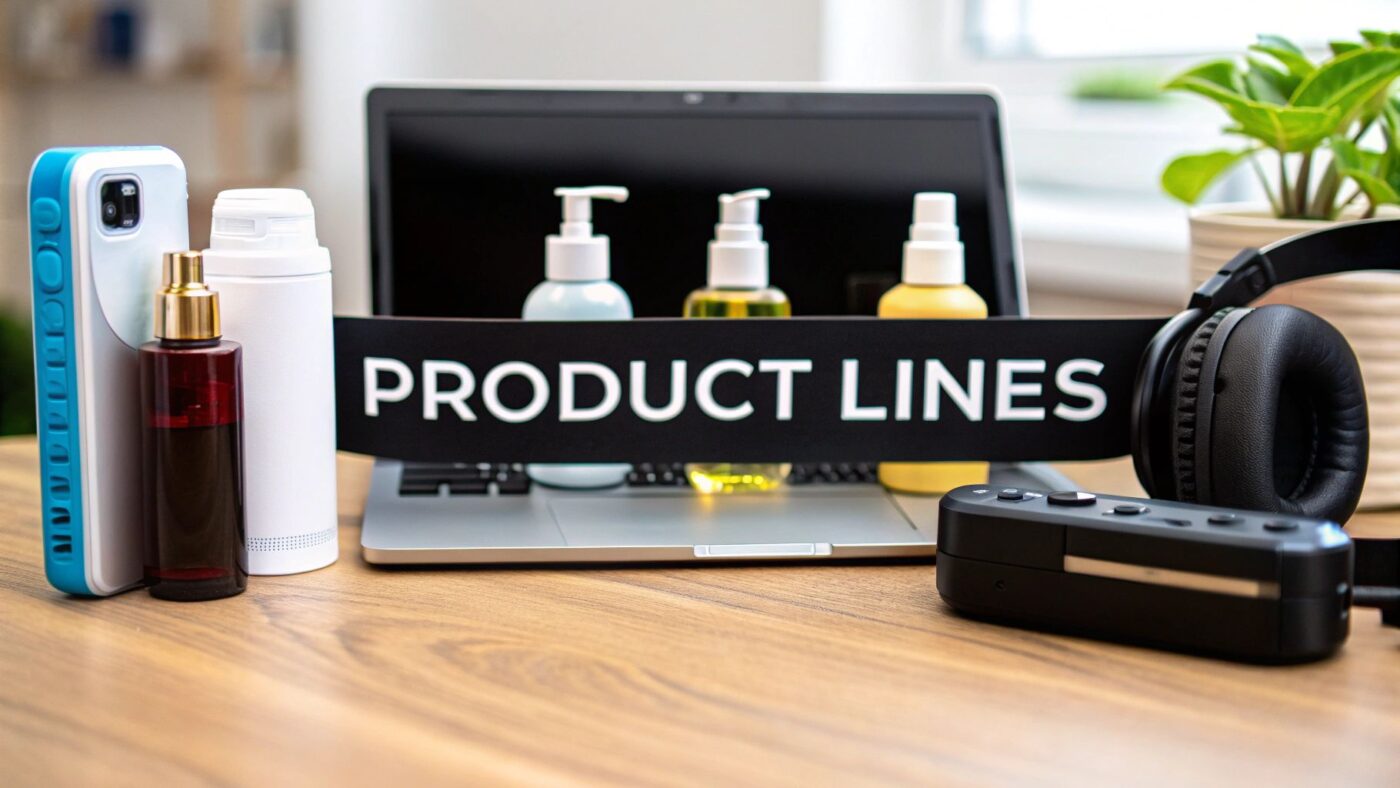
A product line is essentially a family of related products sold under a single brand. These items are connected—they might share similar features, be marketed to the same group of people, or fall within a similar price range.
Good examples are all around us. Think about Apple's iPhone series (iPhone 15, 15 Pro, 15 Pro Max) or Nike's iconic Air Jordan collection. Each is a distinct product line filled with different models that all share a common identity and purpose.
What Is a Product Line in E-commerce
Before diving into more examples, let's get a really clear picture of what a product line is and, just as importantly, what it isn't.
Imagine a chef's tasting menu. Every dish stands on its own, but they're all connected by a central theme—a key ingredient, a specific cooking style, or a seasonal focus. Together, they create a complete, cohesive experience. A product line does the exact same thing for your online store.
It’s a carefully selected group of related items that share a clear, logical connection. This connection is what turns a random collection of products into a powerful brand-building tool that guides your customers and makes shopping feel intuitive.
Product, Line, and Mix Explained
To really get it, you need to understand how all the pieces fit together. Let's break down the hierarchy.
- Single Product: This is the most basic building block—one individual item or SKU. For a skincare brand, this could be a single bottle of their popular Vitamin C serum.
- Product Line: Now, group related products together. That same skincare brand might create a "Radiance" line. This line would include the Vitamin C serum, a brightening cleanser, and a glow-enhancing moisturizer. They all target the same goal: a brighter complexion.
- Product Mix: This is the big picture—the entire portfolio of all product lines a company sells. The skincare brand's full product mix might include the "Radiance" line, an "Acne Control" line, and an "Anti-Aging" line.
A well-defined product line isn't just about keeping your catalog tidy; it’s a powerful marketing strategy. It simplifies shopping, making it easy for customers to find items that work together, which naturally boosts upselling and cross-selling.
Ultimately, organizing your products into clear lines brings clarity to your brand. It tells a story about who you are and helps customers browse your store with confidence. This is the foundation for building loyalty and increasing your average order value.
Real-World Examples of Successful Product Lines
Theory is one thing, but seeing how real brands put it into practice is where it all clicks. The best product lines aren't just random groupings; they’re the result of a clear strategy designed to win over customers and drive sales.
Let's look at how successful companies—from tech giants to beauty innovators—do this so well.
This simple diagram breaks down the hierarchy, showing how a brand's entire offering is organized.
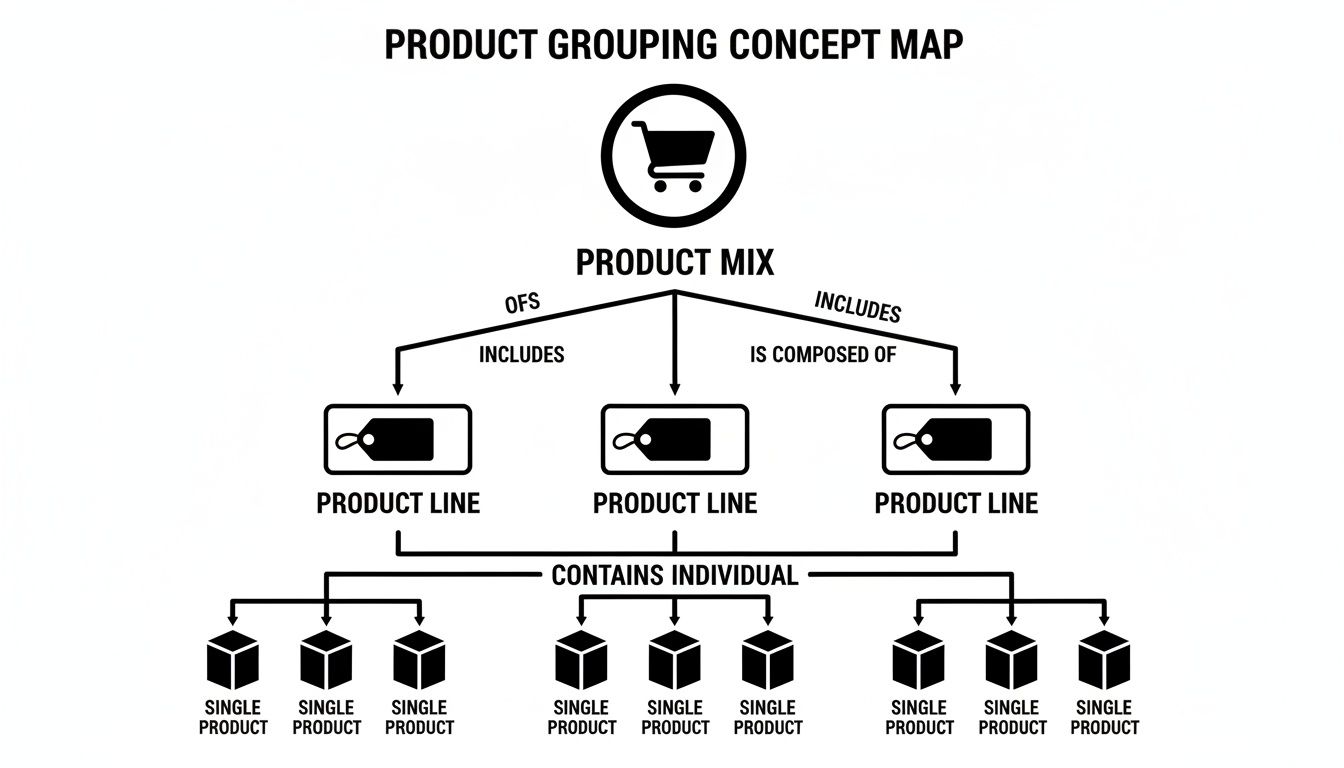
Think of it this way: your Product Mix is everything you sell. Your Product Lines are the curated collections within that mix, and each line is made up of individual Single Products (or SKUs).
Tech and Electronics Product Lines
Nowhere is this clearer than in the tech world, where product lines are often built around features, performance, and price. Anker, the king of charging accessories, is a fantastic case study.
Their PowerCore line is all about portable power banks. That’s it. Within that line, you can find small, pocket-friendly chargers for a quick phone top-up or massive, high-capacity bricks that can power a laptop. Every product does the same basic job, but they are neatly differentiated by capacity (mAh), size, and price. This makes it incredibly easy for a customer to find the exact solution for their needs.
By creating a focused line like PowerCore, Anker cemented its reputation as the brand for portable charging. A happy customer who buys one PowerCore is very likely to stick with that same line when they need a different size or an upgrade.
Apple does something similar with the iPhone. Each year’s release is a product line with clear tiers:
- iPhone 15: The standard model for most people.
- iPhone 15 Pro: A step up for photography buffs and power users who want more performance.
- iPhone 15 Pro Max: The top-of-the-line model with the biggest screen and all the best features.
This approach lets them hit multiple customer segments with a single, powerful marketing push.
Beauty and Skincare Product Lines
The beauty industry often organizes product lines around solving a specific problem. The brand The Ordinary is a master at this.
Instead of just listing a hundred different serums, they group their products into intuitive lines like "Hydration Support" or "Pigmentation Solutions." If you have dry skin, you know exactly where to go. You’ll find a curated set of serums, moisturizers, and cleansers that all work together. It turns a potentially confusing shopping trip into a guided, solution-focused experience.
And this isn't just for skincare. Think about LEGO. They have LEGO City for kids who love building realistic scenes, LEGO Star Wars for franchise fans, and the more complex LEGO Technic line for aspiring engineers. Each line has its own unique appeal while still being unmistakably LEGO.
This table shows how different types of stores build their product lines around specific goals.
Product Line Strategy Breakdown by Niche
| E-commerce Niche | Common Product Line Strategy | Core Customer Benefit | Example |
|---|---|---|---|
| Consumer Electronics | Tier-Based (Good, Better, Best) | Clear choice based on budget and features | A "Pro" camera line for professionals and a "Creator" line for hobbyists |
| Skincare & Beauty | Solution-Based | Easy to find products for a specific concern | An "Anti-Aging" line with cleanser, serum, and moisturizer |
| Fashion & Apparel | Collection-Based | Creates a cohesive look or seasonal style | A "Summer Getaway" collection featuring swimwear, cover-ups, and sandals |
| Home Goods | Style- or Room-Based | Helps customers decorate with a consistent aesthetic | A "Modern Farmhouse" kitchen line with matching utensils, towels, and decor |
| Hobby & Craft | Interest- or Skill-Based | Caters to specific communities and expertise levels | A "Beginner's Knitting Kit" product line vs. an "Advanced Weaving" line |
Seeing these strategies laid out helps you pinpoint which approach might work best for your own store and customer base.
Product Lines in Dropshipping
This powerful strategy isn't just for massive corporations. It's actually a game-changer for dropshippers trying to build a real brand.
For example, the Computers category is a huge market on AliExpress, representing 5.6% of all stores. With over 557 active stores in that niche alone, a new dropshipper needs to stand out. Instead of selling random gadgets, you could create a curated product line like the "Ultimate Home Office Setup" or a "Portable Productivity Kit."
By bundling related items—like an ergonomic mouse, a portable monitor, and a quality webcam—you create a cohesive brand story. This encourages customers to buy more in a single order, boosting your average order value, which is crucial for any dropshipping business to succeed. You can dig into more stats on top-performing categories at Store Leads.
How to Structure and Name Your Product Lines
Alright, so you're ready to graduate from a random jumble of products to a collection that actually makes sense and is easy for customers to shop. This is where structuring your product lines comes in. Think of it as creating logical groups that guide your customers straight to what they need, making their buying decision a whole lot simpler.
A thoughtful structure instantly elevates your store, giving it a curated, professional feel instead of looking like a digital garage sale.

This doesn't have to be some complex, drawn-out process. Most successful examples of product lines you see out there stick to a few tried-and-true frameworks.
- Group by Function: This is the most straightforward approach. Every product in the line does the same basic job. For a store selling coffee gear, a "Morning Ritual" line might feature a grinder, a pour-over dripper, and a gooseneck kettle. Simple.
- Group by Target Audience: Here, you're zeroing in on a specific type of customer. A tech accessories shop could create a "Pro-Gamer" line packed with a high-DPI mouse, a mechanical keyboard, and a noise-canceling headset—all built for that one audience.
- Group by Price or Quality Tier: This is all about creating clear value steps. A common tactic is the three-tier system: a budget-friendly "Essentials" line, a solid mid-range "Signature" line, and a premium "Luxe" collection. This lets customers immediately find the tier that fits their wallet and expectations.
Naming Your Product Lines for Impact
Once your groups are sorted, it’s time to name them. A good product line name is so much more than a label; it’s a tiny marketing message that spells out value and builds your brand. A vague or clunky name can sink an otherwise brilliant product strategy before it ever sets sail.
A strong product line name should be memorable, descriptive, and consistent with your brand's voice. It sets expectations and can even boost your SEO by hitting on the right search terms.
Just look at how LEGO does it. "LEGO City" and "LEGO Technic" immediately tell you who they’re for and what kind of building experience you're in for. Their names are direct, effective, and stick in your head. To get that same power, you need to blend clarity with a bit of creativity.
Here are a few naming styles that consistently work well:
- Benefit-Oriented Names: Focus on the outcome the customer gets. A skincare line could be named "Radiant Glow" or "Clear Complexion." You're selling the result, not just the bottle.
- Thematic Names: Build a story or an aesthetic around the products. A home decor brand might launch a "Coastal Living" line for beachy items or an "Urban Minimalist" collection for sleek, modern pieces. This helps customers imagine the products in their own space.
- Ingredient-Focused Names: This is a huge one in the beauty and wellness world. A brand might create a "Vitamin C Boost" line or a "Charcoal Detox" collection, putting the star ingredient and its benefits front and center.
For anyone building a dropshipping business, this kind of organization is non-negotiable. If you want to take it a step further, our guide on private label drop shipping explores how a strong brand identity really begins with smart product curation. At the end of the day, the right structure and names make your store a breeze to navigate and much harder to forget.
Building a Product Line for Your Dropshipping Store
As a dropshipper, making your brand feel cohesive can be a real challenge. You're pulling products from all sorts of different suppliers, but your customers need to see a unified, trustworthy collection. The secret isn't just about selling random items—it's about selling a story through a thoughtfully curated product line.
This is what elevates your store from a simple catalog of products into a guided shopping experience. You're not just listing things for sale; you're creating thematic collections that feel right together. It’s a crucial strategy for cutting through the noise and building a brand that people actually remember and come back to.
Strategically Selecting Your Products
Your first move is to put on your brand curator hat. The goal is to pick products that complement each other, solving a specific problem or catering to a particular lifestyle, even if they ship from entirely different warehouses. This means shifting your mindset from hunting for single "winning products" to building a whole winning collection.
For example, instead of just selling a desk lamp, you could build out a "Work-from-Home Essentials" product line.
This collection might feature:
- An ergonomic mousepad from Supplier A.
- A sleek, minimalist desk organizer from Supplier B.
- A blue-light-blocking screen protector from Supplier C.
Each product is valuable on its own, but together, they form a complete solution. This approach doesn't just make your store look more professional; it naturally nudges customers to buy multiple items, giving your average order value a healthy boost. If you're just getting started with this business model, getting the fundamentals down is key. You can learn more about this in our detailed guide on how to start dropshipping.
Bundling and Price Anchoring
Once you've gathered your complementary products, you can package them into irresistible bundles. A "Beginner's Yoga Kit" that includes a mat, blocks, and a strap is far more appealing and convenient than making a customer hunt for each item individually. Bundling takes the guesswork out of shopping and instantly communicates higher value.
Another smart tactic you can use is price anchoring. This is all about creating different tiers within the same product line. For instance, your "Work-from-Home Essentials" line could offer a basic, standard, and premium version of a key item, like a webcam.
By placing a high-end "Pro" webcam right next to a more affordable "Standard" model, the standard option suddenly looks like an incredible deal. It’s a classic psychological pricing strategy that gently guides customers toward the exact purchase you want them to make.
A crucial part of building any product line for a dropshipping store is finding suppliers you can count on for quality and shipping. If you're in the accessories niche, for example, partnering with dedicated dropshippers for jewelry is essential to keep your brand consistent and your customers happy.
Testing and Refining Your Product Lines
The best part about dropshipping is how little risk is involved, which makes it the perfect playground for testing out product line ideas. You don't have to sink cash into inventory just to see what clicks with your audience. I always recommend starting small with a focused line of just 3-5 products.
Let your sales data be your guide. Are customers constantly buying two items from your line together but always leaving the third one behind? That’s gold. It’s direct feedback that the third product might not fit the theme as well as you thought.
Use that data to continuously refine your collections. Swap out the products that aren't selling, experiment with new combinations, and always pay attention to what your customers are saying. Over time, this iterative process is how you build powerful and profitable examples of product lines that turn first-time buyers into loyal fans.
Creating Powerful Visuals for Your Product Line
Let’s be honest: a brilliant product line strategy is worthless without visuals that actually sell. In ecommerce, your customers can't touch or feel the products. Your images and videos have to do all the heavy lifting, building trust and showing off the real value of your entire collection.
The aim here is to build a unified visual identity. You want your product line to look professional, cohesive, and just plain desirable. This goes way beyond simple product shots. It's about telling a consistent story everywhere your brand shows up, from collection pages to your Instagram ads.
Sourcing High-Quality Media Efficiently
If you’re a dropshipper, you know the headache of gathering all the media you need. You're hunting down primary photos, variant images for every color and style, customer review photos, and maybe even a few promo videos. Saving every single file manually is a massive time sink.
This is exactly where a tool like AliSave Pro changes the game. It lets you download every single media asset from an AliExpress product page with one click, neatly packing it all into an organized ZIP file. This grabs everything you need:
- Primary Product Images: The main hero shots that grab attention.
- Variant Images: Absolutely essential for showing customers all their options.
- Review Photos: Powerful social proof that builds a ton of trust.
- Product Videos: Engaging content that’s perfect for ads and landing pages.
By making this part of the process automatic, you can spend your time on what really matters—curating the best assets and presenting them beautifully. That kind of efficiency is a lifesaver when you're building out multiple examples of product lines for your store.
Establishing a Consistent Aesthetic
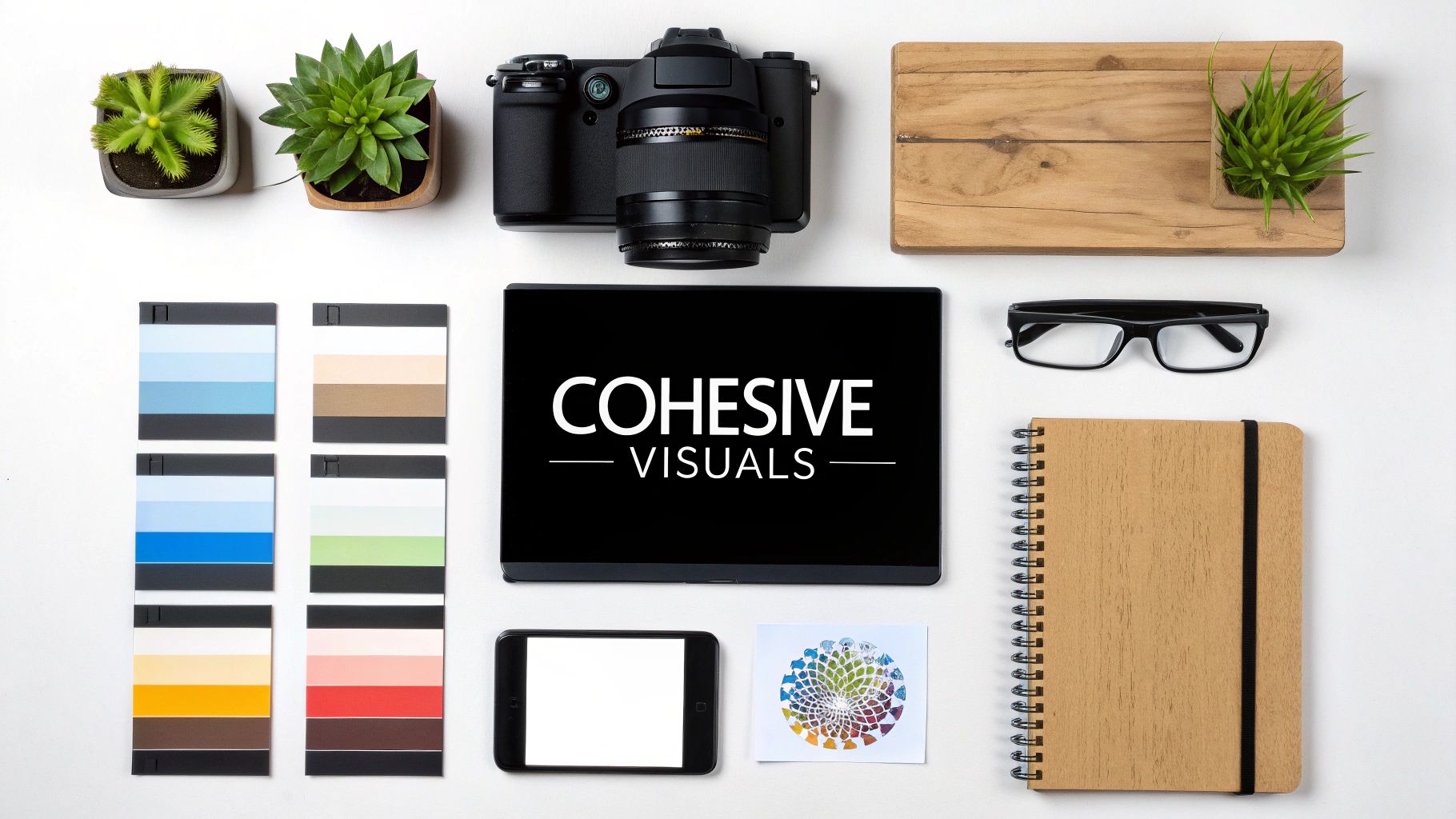
Once you've got all your media, it's time to create a consistent visual theme. This aesthetic is the visual glue that holds your collection together, and it should perfectly match your brand and the specific line you're pushing.
A cohesive aesthetic does more than just look good—it simplifies the shopping experience. When visuals are consistent, customers instantly recognize that products belong together, making cross-selling and upselling feel natural and intuitive.
Whether you're doing your own photography or using supplier images, knowing the basics of how to take better product photos is crucial. For example, a "Minimalist Home Office" line needs clean backgrounds, neutral colors, and simple lighting in every photo. On the flip side, a "Bohemian Summer" fashion line would look amazing with warm, natural light and outdoor backdrops.
This consistency needs to be everywhere your product line is seen, including your website banners, email newsletters, and social media posts. The goal is a seamless visual story that pulls customers in and makes them want to explore the whole collection. For a deeper dive, check out our guide on the principles of the best ecommerce website design.
When you combine smart media gathering with a strong visual strategy, you can transform a simple group of products into a compelling, must-have collection.
Answering Your Top Questions About Product Lines
As you start mapping out your own product strategy, a few questions inevitably pop up. They're the same ones most store owners wrestle with. Let's clear up these common sticking points so you can move forward with confidence.
Product Line vs. Product Category
So, what's the real difference between a product line and a product category? It's a common point of confusion, but the distinction is pretty simple when you think about it.
A product category is the big, broad bucket everything falls into. Imagine the "Skincare" aisle in a department store. It's a general grouping that helps people find what they're looking for.
A product line, however, is a curated family of products living within that category. Inside that "Skincare" aisle, you might find Drunk Elephant's "The Littles" line—a specific collection of travel-sized products designed to work together. Categories help organize your store, but product lines are what you build your marketing stories around.
How Many Products Should Be in a Line?
There's no golden rule here, but for anyone just starting out, the sweet spot is usually three to five products. This gives customers a real choice without paralyzing them with too many options—a phenomenon often called decision fatigue.
Honestly, a small, thoughtfully chosen line almost always beats a huge, scattered collection of random items. It lets you craft a super-focused marketing message and see what your audience actually connects with before you even think about adding more.
Can I Sell Multiple Product Lines?
Absolutely. In fact, most successful brands do. Think about a store selling home goods. They could have a sleek "Minimalist Kitchen" line right alongside a cozy "Bohemian Living Room" collection. Each one speaks to a different vibe or customer, but they both fit under the brand's overall identity as a go-to for stylish decor.
The trick is making sure everything feels connected. Even if your lines are distinct, they should all feel like they came from the same brand. That consistency across your entire store is what builds a strong, memorable e-commerce business.
The real power of product lines is their ability to make upselling and cross-selling feel natural and helpful. They guide customers to complementary items, simplify marketing campaigns, and increase average order value by encouraging the purchase of a complete solution rather than a single item.
Once you get these concepts down, you're on your way to building a much more intuitive and profitable shopping experience for your customers.
Ready to build powerful visuals for your new product lines without the manual hassle? With AliSave Pro, you can download all product media—high-resolution photos, variant images, and videos—from any AliExpress page in a single click. Streamline your workflow and create stunning, professional listings today by adding the free extension from AliSave Pro.