
So, is dropshipping dead? Let's cut right to the chase: absolutely not. But the lazy version of dropshipping? The one that promised a six-figure income overnight with zero effort? That’s dead and buried, and frankly, good riddance.
What we're seeing isn't an extinction event; it's an evolution. The business model has grown up. It's shifted from a get-rich-quick gimmick into a legitimate retail strategy that demands real work, smart branding, and a genuine focus on the customer. If you want to succeed today, you have to play by a new set of rules.
The Real Verdict on Dropshipping
If you've spent any time in e-commerce forums or on YouTube, you’ve heard the doom and gloom: "Dropshipping is dead." More often than not, this comes from people who tried the old 2017 playbook—slapping a generic product from AliExpress onto a basic Shopify store, running a few ads, and wondering why the sales didn't roll in.
When your business plan relies on selling the same fidget spinner as 10,000 other stores and making customers wait three weeks for it to arrive, you're not going to last long. It’s easy to see why they think the model is broken.
The truth is, the problem isn't the fulfillment model. It's the outdated, low-effort approach. The market matured, and so did customers. They expect more now, and you have to deliver.
A Story of Evolution, Not Extinction
Think of dropshipping like the early days of the internet. Back then, a basic website with a few pages of text was revolutionary. Today, that same website would be completely ignored. To get noticed now, you need a slick design, engaging content, and a user experience that just works. The internet isn't dead; it just grew up.
Dropshipping has walked the exact same path.
This evolution means that just finding a "winning product" isn't enough anymore. You have to build a legitimate brand—something people recognize, trust, and feel a connection with. This requires a completely different mindset, focusing on:
- Strategic Branding: You need a name, a logo, a story, and a personality that speaks directly to a specific audience.
- Curated Product Selection: Forget generic junk. The winners today are sourcing unique, high-quality products that solve a real problem or tap into a genuine passion.
- Exceptional Customer Experience: This is non-negotiable. It means fast, clear communication, helpful support, and shipping times that don’t feel like a relic from the dial-up era.
To see just how much things have changed, here’s a quick breakdown of the old, saturated methods versus the new, sustainable approach.
Dropshipping Then Versus Now
This table highlights the fundamental shift from a low-effort, volume-based game to a high-value, brand-centric strategy.
| Aspect | The 'Old' Way (Saturated & Ineffective) | The 'New' Way (Sustainable & Profitable) |
|---|---|---|
| Product Sourcing | Generic, trending items from AliExpress | Unique, high-quality products from private suppliers |
| Branding | Non-existent; generic store names and logos | A strong, memorable brand with a clear identity |
| Marketing | "Get-rich-quick" ads with hyped-up claims | Value-driven content and authentic social proof |
| Customer Service | Slow, outsourced, or completely ignored | Fast, in-house support focused on satisfaction |
| Shipping | 3-4 week ePacket from China | Faster, reliable shipping (7-14 days) from local agents |
| Mindset | Quick cash grab; short-term thinking | Building a long-term, sustainable asset |
The key takeaway is that the barrier to entry is still low, but the barrier to success is much higher. You have to treat it like a real business, because it is one.
The Numbers Tell the Real Story
Despite the naysayers, the data paints a picture of a healthy, growing industry. The global dropshipping market exploded from $1.336 billion in 2014 to $6.169 billion by 2023. A lot of that growth was fueled by the e-commerce boom in 2020, but the momentum hasn't stopped.
In fact, market projections show this trend continuing, with sales expected to hit $7.385 billion by 2025. This isn't the sign of a dying industry. It's the mark of a resilient model that continues to be a massive part of global e-commerce. You can dig into even more dropshipping statistics to see how the market is performing for yourself.
So, the question isn't whether dropshipping is dead. The real question is: Are you willing to adapt to what it has become? The low-effort, copy-paste model is gone for good. But the opportunity to build a real, sustainable brand using the dropshipping fulfillment method is more alive than ever.
In this guide, we're going to tear down the old myths and give you the modern playbook—the actionable strategies that are actually working right now to build profitable businesses that last.
Why So Many Dropshipping Stores Fail
Let's be honest. The whole "dropshipping is dead" argument usually comes from a place of pure frustration. It's the go-to conclusion for entrepreneurs who tried to follow an old, worn-out map and ended up completely lost. The business model isn't the problem—the low-effort, copy-paste approach that worked years ago is now a guaranteed recipe for failure.
Think of it like the old gold rushes. The first people on the scene could literally pick up gold nuggets off the ground. But once the word got out, the place was swamped. Suddenly, finding gold required real tools, a solid strategy, and a lot of digging. Dropshipping has gone through the exact same change. The easy, surface-level opportunities are long gone, and success today means you have to dig a whole lot deeper.
Let’s break down the common traps that sink new stores and keep that "dropshipping is dead" myth alive. Once you see them, you'll realize they aren't signs of a dead industry, but challenges that simply demand a smarter, more modern approach.
The Problem of Extreme Market Saturation
The single biggest hurdle for any new dropshipper is swimming in a sea of sameness. When thousands of stores are all selling the exact same handful of products from the same suppliers on AliExpress, they stop being competitors. They just become background noise. This creates a cutthroat environment where it feels almost impossible to stand out.
This saturation inevitably leads to the next big problem: price wars. If your product, your photos, and your descriptions look identical to a hundred other stores, the only thing you can do to get a customer's attention is to lower your price. This starts a race to the bottom where profit margins get shredded until the business just isn't worth running anymore. You end up working for pennies instead of actually building a brand.
The old dropshipping model forces you into a commodity trap. If the only thing separating you from the competition is a lower price, you’ve already lost the game before it begins. Success today requires differentiation, not just a lower price tag.
Abysmal Customer Experience and Shipping Times
Another leftover from the old days is the shockingly bad customer experience it often creates. This usually comes down to two massive failures.
First, there's the non-existent customer service. So many new store owners treat support like an afterthought, relying on generic email templates or, worse, just ignoring customer questions altogether. We live in a world where people expect fast, helpful answers. Taking this approach absolutely demolishes trust and ensures you'll never get a repeat customer.
Second, and maybe the most damaging issue of all, are the abysmal shipping times. Telling a customer in 2024 that they have to wait three or four weeks for an order is a death sentence for your store. Amazon has trained us all to expect speed and constant updates. Long, untrackable shipping from overseas suppliers just creates anxiety and frustration, which leads directly to angry emails, chargebacks, and abandoned carts. We actually have a whole guide on how to reduce shopping cart abandonment that tackles this.
The Hard Numbers Behind the Struggle
This high failure rate isn't just a feeling—the data paints a pretty stark picture. While dropshipping is still a hugely popular model—over 27% of online retailers use it as their main fulfillment method—making it work is a different story.
Industry stats show that only about 10% of dropshippers actually find success in their first year. Even more telling is that a tiny fraction, around 1.5% of stores, ever break $50,000 in monthly revenue. This massive drop-off rate proves that without the right strategy, new sellers are very likely to join the chorus claiming the model is broken. You can dig into more detailed dropshipping statistics to get a better feel for the current market.
These failures aren’t proof that dropshipping is dead. They're proof that the lazy, outdated approach is. The stores that crash and burn are almost always the ones built on a shaky foundation of generic products, price-slashing, and a total disregard for the customer.
How Smart Dropshippers Are Winning Today

The idea that dropshipping is dead usually comes from people who've seen it fail firsthand. But here's the thing: they saw a tactic fail, not the entire business model. While the low-effort, copy-paste stores are absolutely fading away, a new wave of entrepreneurs is building real, profitable businesses. They're not just getting by; they're thriving because they treat dropshipping like a serious retail operation.
These successful sellers get it. They know you can't win a race to the bottom on price. You win by being different, by being better, and by creating something people actually remember. They pour their energy into three core areas that lift them above the noise.
Building a Memorable Brand
The single biggest shift I've seen in successful dropshipping is the move from running a generic "store" to building a legitimate "brand." A brand is so much more than a logo. It’s an identity, a story, and a promise you make to a very specific group of people. It’s the gut feeling that makes a customer choose you over ten other stores selling the exact same thing.
Think about it. Anyone can dropship a plain coffee mug. But a brand like "Wanderlust Mugs" connects with travelers by creating designs that scream adventure. Their customers aren't just buying a mug; they're buying a small piece of who they are. That's modern branding in a nutshell.
A brand gives you the power to compete on more than just price. It builds trust, fosters loyalty, and turns one-time buyers into repeat customers who feel connected to your mission.
Smart dropshippers invest real time into nailing their brand voice, crafting a compelling story, and designing a professional look that resonates with their niche. This creates a powerful moat around their business that lazy competitors simply can't cross.
Curating a Unique Product Catalog
The days of just scraping the top 50 trending products from AliExpress are long gone. The dropshippers who are crushing it today act less like resellers and more like expert curators. They meticulously source and vet products that not only align with their brand but also meet genuinely high-quality standards. This often means looking beyond the obvious suppliers.
Their curation process looks something like this:
- Finding Reliable Suppliers: They build actual relationships with private agents or smaller, specialized suppliers who offer better products and faster, more reliable shipping. This step is non-negotiable for dodging the classic pitfalls of month-long delivery times and shoddy quality.
- Offering Unique Items: Instead of selling the same old LED light strips everyone's seen a million times, they find niche-specific variations or discover cool complementary products that make their catalog feel special.
- Prioritizing Quality Over Hype: They order samples. They test the products themselves. They comb through real customer feedback to make sure what they're selling is actually good, not just a passing fad.
This careful selection process turns their store into a destination—a place people trust for cool, quality items, not just another pit stop for cheap junk.
Delivering an Unforgettable Customer Experience
Finally, modern dropshippers win by engineering a customer journey that's surprisingly good. They understand that in a crowded market, the experience is often the only thing that sets you apart. This customer-first mindset goes way beyond just answering support emails.
They obsess over the key touchpoints:
- Transparent Communication: They're upfront and honest about shipping times. They provide clear tracking info and have a return policy that’s easy to find and understand. No one likes feeling like they've been left in the dark after they've spent their money.
- Responsive Support: When a customer reaches out, they get a fast, helpful, and human response. This alone can build incredible trust and even turn a potential complaint into a rave review.
- Post-Purchase Engagement: The relationship doesn't end at checkout. They follow up to ask for feedback, offer discounts on future purchases, and create loyalty programs that make customers feel valued. The sale is just the beginning.
By mastering these three pillars—brand, product, and experience—today's top sellers are proving that dropshipping is far from dead. The reality is that it now requires the same strategic thinking and dedication as any other "real" business. To keep things running smoothly, many also use various dropshipping automation tools to handle routine tasks like order fulfillment and customer updates, which frees up their time to focus on these critical growth areas.
Finding Your Niche in a Crowded Market
In a world where everyone seems to be selling the same trending gadgets, the single most powerful move you can make is to find your own corner of the market. This is where the argument that “dropshipping is dead” completely falls apart. It’s not dead; it’s just too crowded for generic, all-for-everyone stores.
The antidote to saturation is specialization.
Instead of trying to appeal to everybody, your goal is to become the go-to expert for a very specific group of people. Think about it like this: a general hardware store sells hammers, but a specialty woodworking store sells Japanese hand-saws for master carpenters. The second store thrives because it serves a passionate audience with curated, high-quality tools.
That’s the mindset you need to adopt. Forget selling "kitchen gadgets." Instead, build a brand around "specialty coffee brewing tools for home baristas" or "sourdough baking supplies for beginners." This is the art of niching down, and it's your best defense against the competition.
Spotting Passion and Problems
A great niche sits at the intersection of what people are passionate about and the problems they need to solve. Your job is to become a detective, uncovering these opportunities before everyone else does. Fortunately, you have some powerful clues at your disposal.
Start by listening to online communities. Dive into subreddits, Facebook groups, and TikTok hashtags related to hobbies you find interesting. What are people constantly asking for recommendations on? What frustrations do they share? These conversations are goldmines for product ideas that have built-in demand.
Another fantastic tool is Google Trends. It gives you a direct look at what the world is searching for, helping you validate interest over time. You can compare different niche ideas to see which ones have steady, growing interest versus those that are just temporary fads.
For example, here’s a look at Google Trends data comparing the search interest for "sourdough starter" and "air fryer" over the past five years in the United States.
The graph clearly shows how "air fryer" had a massive spike and has since stabilized, indicating a mature market. Meanwhile, "sourdough starter" shows consistent, seasonal interest, suggesting a dedicated hobbyist niche with long-term potential.
The Power of Niching Down
Once you have a broad idea, the real magic happens when you narrow your focus even further. This process, known as "niching down," lets you carve out a space where you can truly dominate.
Let’s break down how this works with an example:
- Broad Niche: Pet Supplies
- Sub-Niche: Dog Supplies
- Micro-Niche: Products for Large Dog Breeds
- Hyper-Niche: Orthopedic Beds for Senior Golden Retrievers
By targeting a hyper-niche, you stop competing with massive pet supply chains. You start speaking directly to a customer with a very specific, urgent need. This focused approach makes your marketing more effective, builds stronger brand loyalty, and allows you to command better prices.
The goal isn’t to find a product nobody has ever heard of. It’s to find an audience that feels completely underserved by the current market and build a brand that speaks their language.
Validating Your Niche Idea
Before you invest a single dollar, you need to validate that people will actually buy what you’re planning to sell. A passionate audience is great, but you need to confirm they are also willing to spend money.
You can use a simple scoring system to quickly vet your ideas and compare their potential side-by-side.
Niche Potential Scoring Matrix
Use this matrix to rate your niche ideas on a scale of 1 to 5, where 1 is low potential and 5 is high potential. The higher the total score, the more promising the niche is likely to be.
| Niche Idea | Audience Passion (1-5) | Market Competition (1-5) | Profit Margin Potential (1-5) | Supplier Availability (1-5) | Total Score |
|---|---|---|---|---|---|
| Example: Orthopedic Beds for Senior Golden Retrievers | 5 | 3 | 4 | 4 | 16 |
| Your Idea #1 | |||||
| Your Idea #2 | |||||
| Your Idea #3 |
Tallying up the scores gives you a data-driven way to choose a winner, not just an emotional one.
Beyond a simple score, a quick validation checklist can save you from costly mistakes down the line:
- Analyze the Competition: A little competition is a good sign—it proves the market exists. But is there room for you? Look for competitors with weak branding, poor websites, or bad customer reviews. These are all gaps you can fill.
- Check for Supplier Availability: Can you find reliable suppliers who offer high-quality versions of the products you want to sell? A great niche idea is useless without a good product to back it up.
- Gauge Profitability: Research potential product costs and selling prices. Is there a healthy enough margin to cover marketing expenses and still make a profit? To get a head start, you can explore guides on trending dropshipping products to see what’s currently working in various markets.
The Undeniable Growth of the Dropshipping Market
To really get to the bottom of the "dropshipping is dead" myth, we have to look past the stories of failed stores and focus on where the industry is headed. The data tells a compelling story of an industry that isn't just hanging on—it's gearing up for a huge expansion. Anyone thinking they've missed the boat is wrong; they're stepping into a maturing market that's ripe with new opportunities.
So, what's driving this? It's a perfect storm of global trends. E-commerce continues its explosive growth, creator-led brands are turning loyal audiences into customers, and the technology behind logistics and supply chains is getting smarter every day. Together, these forces are creating a seriously fertile ground for anyone willing to innovate.
Market Projections and Hard Data
The numbers don't lie, and they paint a picture of an industry on the rise. Major market research paints a very optimistic picture for the global dropshipping world. After being valued at roughly $365.67 billion in 2024, the market is projected to grow at a compound annual growth rate (CAGR) of 22.0% between 2025 and 2030.
Let that sink in. This isn't slow, steady growth. This rapid expansion means the market could balloon to over $1.25 trillion by 2030.
Regions like North America are a huge piece of this puzzle, accounting for a 33% revenue share in 2024. The U.S. market alone is expected to grow at a CAGR of 20.2%. While fashion is still the king, holding over 34% of the revenue, other niches like food and personal care are catching up fast. These numbers show just how baked-in dropshipping has become to the future of e-commerce. You can dig into the specifics in the full market analysis on Grand View Research.
The takeaway is clear: the market isn't shrinking; it's evolving and expanding at an accelerated pace. The opportunity isn't gone—it's simply changing shape for those ready to adapt.
New Avenues for Innovation
Winning at dropshipping today isn't just about spotting a viral gadget on TikTok. It's about building a real brand that connects with modern consumer values and uses today's technology to its advantage. This opens up some exciting ways to stand out.
- Sustainability and Ethical Sourcing: More and more shoppers care where their products come from. They want eco-friendly materials and brands they can trust. If you can partner with suppliers who focus on sustainable or ethically made goods, you're tapping into a powerful and growing demand.
- AI-Powered Marketing and Operations: Artificial intelligence has gone from a sci-fi concept to a practical tool for small businesses. You can use AI to help with everything from writing compelling product descriptions and creating ad campaigns to personalizing the entire shopping experience. It's a massive leg up.
This chart breaks down how to think about finding a winning niche by weighing audience passion, the level of competition, and how much money you can actually make.
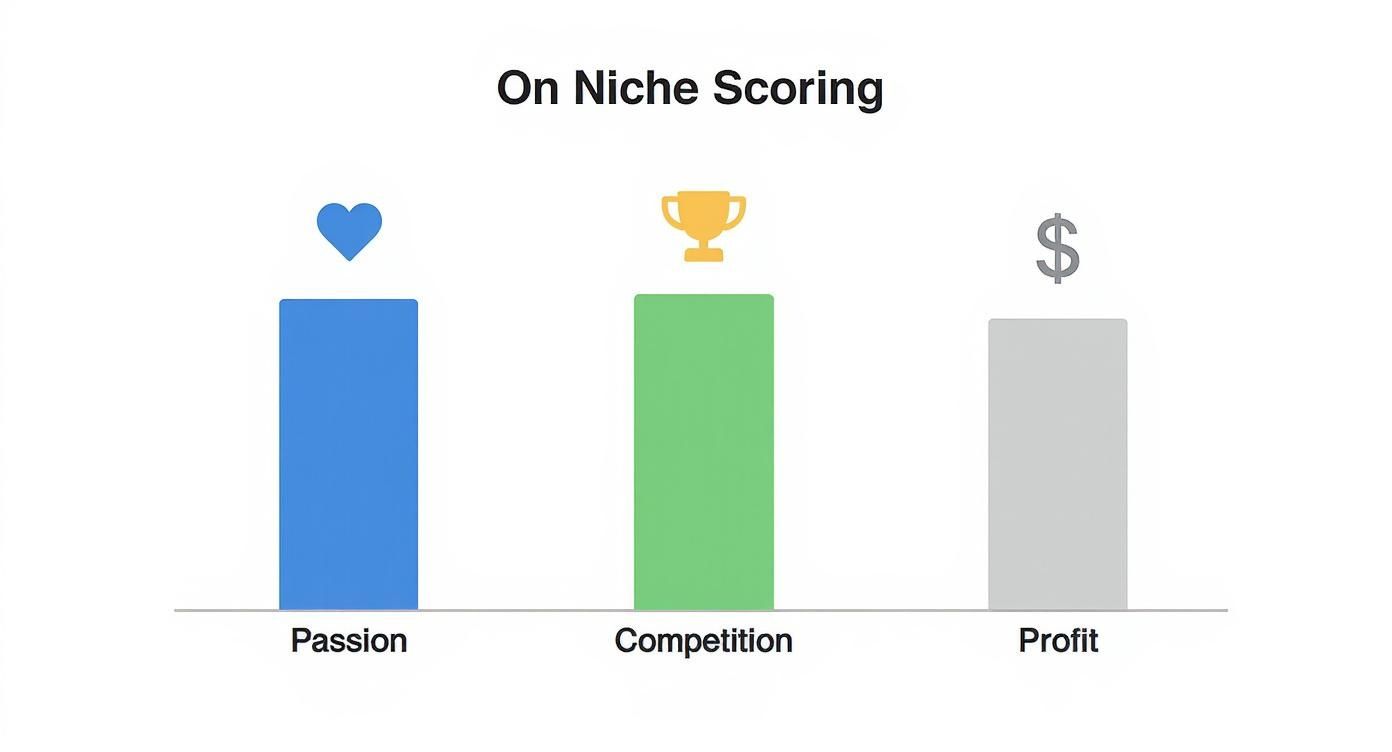
As you can see, the sweet spot is where high passion and strong profit margins meet manageable competition. The industry's growth isn't just about more people selling online; it's about smarter people building better, more focused businesses.
Your Action Plan for a Modern Dropshipping Business

Alright, we’ve picked apart the whole "dropshipping is dead" myth and laid out what it really takes to win today. But knowing isn't the same as doing. So, let's get down to business and turn all that strategy into a concrete plan.
This is your roadmap. It’s not about learning new theories; it’s about putting the key pieces together in the right order. Whether you're starting from scratch or giving an old store a much-needed overhaul, following these steps will be the difference between a thriving brand and just another failed experiment.
Phase 1: The Foundation
Before you even think about a logo or a website, you have to get the groundwork right. This first phase is all about making smart, strategic decisions that will set your course and save you from making expensive mistakes later. Get this right, and everything else becomes easier.
- Niche Discovery and Validation: Forget chasing hot trends. The real money is in finding a specific audience with a clear problem or passion you can serve. Use tools like Google Trends and just listen to conversations on social media to see if people are actually looking for what you plan to sell. You want real demand, not just temporary hype.
- Rigorous Supplier Vetting: Your supplier isn't just a vendor; they're your business partner. It’s time to look past the usual suspects on AliExpress and find private agents or specialized suppliers who offer better products and, crucially, reliable shipping. Always order samples. You need to feel the quality for yourself before you ask a customer to pay for it.
A great brand idea with a poor supplier is a recipe for disaster. Your supply chain is the backbone of your customer's experience, so invest the time to nail it from the very beginning.
Phase 2: Building Your Brand and Storefront
With a solid niche and a supplier you can count on, it’s time to build the part of your business the world will actually see. This is where you bring your vision to life, creating a brand that people connect with and a store that makes it easy for them to buy.
- Build a Real Brand Identity: Come up with a memorable name, a professional logo, and a clear story. Who are you? Who are you for? Your branding should speak directly to your target audience, making them feel like they've found their people—not just another faceless online shop.
- Create a High-Converting Storefront: Your website is your 24/7 salesperson. Keep the design clean and simple. Invest in high-quality product photos and write descriptions that sell the benefits, not just the features. Most importantly, make the checkout process smooth, fast, and trustworthy to keep cart abandonment low.
Phase 3: Marketing and Customer Service
You've built it—now you need them to come. This final phase is all about bringing in customers and, more importantly, turning them into repeat buyers who rave about your brand. This is how you build a business that lasts.
- Develop a Customer-Centric Marketing Plan: Stop just running ads. Start creating content that actually helps or entertains your audience. Whether it's through engaging videos, useful blog posts, or an active social media presence, give them a reason to follow you and trust you.
- Engineer an Unforgettable Service Experience: This is your secret weapon. Be brutally honest about shipping times. Respond to every email and comment quickly and with a human touch. A little bit of care goes a long way in turning a one-time buyer into a lifelong fan.
Still Have Questions? Let's Clear Things Up
After digging into what modern dropshipping really looks like, you probably have a few practical questions spinning around in your head. It's totally normal. Things like startup costs and how much you can actually make are big deals, especially with so many old myths still floating around.
Let's tackle the most common questions I hear from entrepreneurs trying to figure out if this business is the right move for them.
How Much Money Do You Really Need to Start Dropshipping?
Let's get one thing straight: the idea that you can start a serious dropshipping business with $0 is a dangerous myth. Forget about it. Realistically, you should have a starting budget of somewhere between $500 to $1,500. That’s the sweet spot for giving your store a legitimate shot at success, not just treating it like a weekend hobby.
So, where does that money go?
- E-commerce Platform Fees: You'll need a monthly subscription for a platform like Shopify.
- Domain Name: This is for your store's branded, professional URL. Don't skip this.
- Product Samples: You absolutely must order samples. This is non-negotiable for checking quality and taking your own photos.
- Initial Marketing Budget: This is the big one. Without a budget for ads, even the most beautiful store is just a ghost town.
Investing properly from the get-go is how you get traction. It’s the single biggest factor that separates those who succeed from those who end up believing the "dropshipping is dead" narrative.
Is Dropshipping Still Profitable?
Yes, absolutely. But the way you become profitable has completely changed. The gold rush days of slapping a huge markup on cheap, generic junk are long gone. Today, profit comes directly from building a real brand and carefully curating unique products.
A strong brand lets you charge what you're worth. Unique products mean you aren't stuck in a race to the bottom on price with a hundred other sellers.
Profitability in modern dropshipping isn’t about being the cheapest. It’s earned by creating a premium customer experience that justifies a healthy margin.
Most successful dropshippers I know aim for a net profit margin between 15% and 30%. Getting there means you have to be smart and keep a close eye on your product costs, shipping fees, and ad spend.
Can I Do Dropshipping as a Side Hustle?
You can definitely start dropshipping on the side, but please, treat it like a real business from day one—not some passive income fantasy. When you're just getting started, plan on dedicating a solid 10-15 hours per week. That time will be filled with researching your niche, building your store, talking to suppliers, and getting a handle on digital marketing.
Once things get rolling, you'll need to check in daily to handle customer questions and make sure orders are flowing smoothly. It's flexible, for sure, but scaling a dropshipping store is an active job that demands real, consistent effort.
Ready to stop wasting time manually downloading product images and videos? AliSave Pro is the free Chrome extension that helps over 20,000 dropshippers save all AliExpress media in a single click. Speed up your workflow and build a better-looking store today. Get AliSave Pro for free.