
The biggest thing to remember when you're deciding between a Story and a Reel is this: Stories are for nurturing the audience you already have, while Reels are for reaching a brand new one.
Think of it like this: Stories are the casual, daily conversations you have with your followers. Reels are your brand's big, splashy showcase meant to grab the attention of people who don't even know you exist yet.
Decoding Stories and Reels for E-Commerce
If you’re running an online store, getting the hang of how Instagram Stories and Reels work is non-negotiable for a solid social media plan. It’s not really about "Stories vs. Reels" anyway—the real magic happens when you use each one for what it's best at.
Stories vanish after 24 hours, which is actually a good thing. It creates a low-stakes, no-pressure vibe that’s perfect for showing off authentic, behind-the-scenes moments. This is how you build a real connection with the people who have already hit that follow button.
Reels, on the other hand, are permanent. They stick around on your profile and get a major push from the Instagram algorithm to a massive audience. They’re your top tool for growth, acting like quick, fun commercials that can hook potential customers who have never even heard of your brand. A great way to get started is by using AI for stunning Instagram Reels to make your content pop.
Core Strategic Differences
The clearest way to see the difference between a Story and a Reel is to look at them side-by-side. Each format gives you different tools and helps you hit different marketing goals.
| Feature | Instagram Stories | Instagram Reels |
|---|---|---|
| Primary Goal | Connect with and engage your existing followers. | Reach new people and attract new followers. |
| Lifespan | Temporary. They disappear after 24 hours. | Permanent. They live on your profile forever. |
| Audience | Mostly your current followers. | Your followers plus a wide non-follower audience. |
| Key Tools | Interactive stickers like polls, quizzes, and Q&As. | Trending audio, AR effects, and remixing features. |
| Best For | Daily updates, flash sales, behind-the-scenes content. | Product demos, tutorials, and jumping on viral trends. |
Here’s the main takeaway for e-commerce brands: Use Stories to talk to your community. Use Reels to create content that speaks for your community, bringing new people into the conversation.
At the end of the day, what you choose depends entirely on your immediate goal.
Are you running a flash sale that only lasts for 24 hours? A Story is the perfect tool for that. Are you trying to show a huge new audience how your product can solve a common problem? A Reel is absolutely your best bet. To really get the most out of your videos, take a moment to learn the specifics of the https://alisavepro.com/instagram-reels-format/.
To really nail your Instagram strategy, you first have to understand how Stories and Reels work on a fundamental level. Think of them as two completely different tools in your marketing toolbox. One is a megaphone for reaching new people, and the other is a private conversation with your loyal fans.
Choosing the right one at the right time is the difference between nurturing a long-term customer and finding a brand new one.
Here’s a great visual that sums it up perfectly.
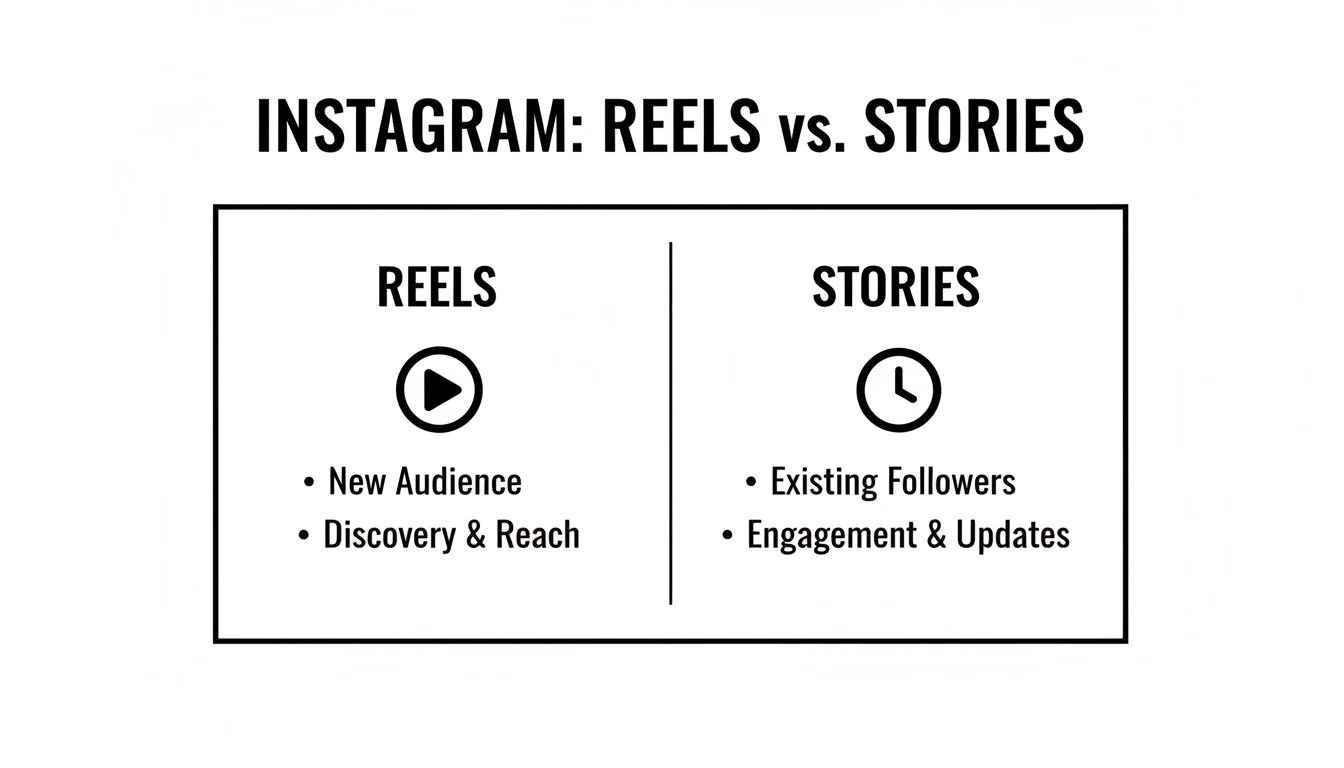
As you can see, Reels are built to attract a crowd, while Stories are all about keeping your current community engaged.
Audience and Algorithmic Purpose
The biggest difference between a Story and a Reel comes down to who Instagram shows it to. The algorithm has a very specific job for each one.
Stories are designed almost exclusively for your current followers. They pop up in that top bar of the feed, making them perfect for strengthening the relationships you've already built. It's your inside track with your community.
Reels, on the other hand, are engineered for pure discovery. Instagram pushes them hard on the Reels tab and the Explore page—the places people go to find new accounts. The algorithm's main goal here is to show your Reel to people who don't follow you yet but might like your content based on what they already watch.
This gives Reels a massive advantage in sheer visibility. Data shows Reels hit an average reach rate of 30.8%, a number that completely overshadows the follower-gated reach of Stories. You can dig deeper into how these formats stack up against others by checking out the latest insights on Instagram content performance from Stackinfluence.
Content Lifespan and Placement
The next key difference is how long your content sticks around.
Stories are intentionally fleeting. They vanish after 24 hours unless you decide to save them to a Highlight on your profile. This temporary nature creates a natural sense of urgency, encouraging people to watch immediately. It's the perfect format for flash sales, daily updates, or behind-the-scenes glimpses that don't need to live forever.
Reels are permanent. They get their own dedicated tab on your profile, just like a classic grid post, and can keep racking up views for weeks, months, or even years. This long-term value makes them ideal for showcasing your core products, creating evergreen tutorials, or posting brand-defining content you want every new visitor to see.
Use Stories to nurture your current customers and Reels to find your next ones.
Put simply: A Story is a conversation. A Reel is a billboard.
Format and Creative Tools
Finally, the creative tools and length constraints for each format are tailored to their specific purpose.
Story Format: Stories are made up of 15-second photo or video clips you can string together. Their real power comes from the interactive stickers—polls, quizzes, question boxes, and countdown timers—all designed to get your existing followers to tap, vote, and reply.
Reel Format: Reels are polished videos that can run up to 90 seconds. The creative tools here are all about entertainment and going viral. You get access to massive trending audio libraries, AR effects, and features like Remix that encourage other users to engage with your content and share it with a wider audience.
For an e-commerce seller, this means a countdown sticker in a Story is the perfect way to hype a limited-time offer. A Reel using trending audio, however, is a much better bet for a "how-to" video that shows off your product's value to people who’ve never even heard of your brand before.
To help you decide which format to use and when, here’s a quick-glance comparison of their core features.
Stories vs Reels At a Glance
| Feature | Instagram Stories | Instagram Reels |
|---|---|---|
| Primary Audience | Current followers | New and existing audiences |
| Lifespan | 24 hours (unless saved to a Highlight) | Permanent (lives on your profile's Reels tab) |
| Discoverability | Low (mostly seen in the top bar of the feed) | High (pushed on the Reels tab and Explore page) |
| Video Length | Up to 60 seconds per clip | Up to 90 seconds |
| Key Features | Interactive stickers (polls, quizzes, links, questions) | Trending audio, AR effects, Remix, advanced editing |
| Best For | Daily updates, behind-the-scenes, flash sales, Q&As | Product showcases, tutorials, brand storytelling, trends |
| Main Goal | Engagement and Nurturing | Reach and Discovery |
Ultimately, this table reinforces the core idea: Stories are for building deeper connections with the audience you have, while Reels are your best bet for growing that audience in the first place.
Strategic Use Cases for Online Sellers
Knowing the technical difference between a Story and a Reel is one thing. But for an online seller, the real magic happens when you can turn that knowledge into a content strategy that actually grows your community, drives traffic, and makes sales. It all comes down to picking the right tool for the job.
Think of it this way: Stories are your direct line to your warmest audience—the people who already follow you. Their fleeting, interactive nature makes them perfect for building relationships and creating a bit of urgency.
Reels, on the other hand, are your brand’s growth engine. They’re built for discovery, making them your best shot at getting your products in front of thousands of potential customers who've never even heard of you.
When to Use Instagram Stories for Your Store
You'll want to use Stories when your main goal is to engage, nurture, and convert your current followers. This format is brilliant for creating authentic, in-the-moment connections that build loyalty and trust. It's like having a daily conversation with your community.
Here are a few specific scenarios where Stories really shine:
- Gauging Product Interest: Pop up an interactive poll and ask followers to vote between two new product colors or designs. This isn't just great market research; it makes your audience feel like they have a say in your brand.
- Driving Urgent Sales: Slap a countdown sticker on a flash sale or a limited-time offer. That little visual timer creates a powerful sense of FOMO (fear of missing out) that can push people to act immediately.
- Building Social Proof: Directly share user-generated content (UGC) to your Story. When a customer tags you, reshare it. Seeing real people love your products is way more persuasive than any ad you could run.
- Fostering Transparency: Post some quick behind-the-scenes videos of your team packing orders or a casual tour of your workspace. It humanizes your brand and builds a much deeper level of trust.
The core strength of Stories is their ability to generate immediate, direct interaction. Every poll response, question answered, or link clicked is a signal of high intent from someone already interested in your brand.
When to Use Instagram Reels for Growth
Turn to Reels when your primary goal is to reach new people, boost brand awareness, and pull in new followers. These short, snappy videos are engineered to be shared and discovered by users who fit your ideal customer profile.
Consider these powerful ways to use Reels:
- Problem-Solution Content: Create a quick video that highlights a common problem your audience faces and then smoothly positions your product as the perfect fix. This approach adds value first, which makes the eventual sale feel completely natural.
- Aesthetic Unboxing Videos: Film a visually pleasing unboxing or "pack an order with me" video set to trending audio. This kind of content is incredibly shareable and shows off your product and packaging in an aspirational light.
- Educational "How-To" Guides: Show off three creative ways to use your product. This kind of evergreen content provides lasting value and establishes your brand as an expert, attracting people searching for tips and tutorials.
- Compiling Video Testimonials: Edit short clips from happy customers into a dynamic montage. This is social proof on a massive scale, building instant credibility with a cold audience.
Ultimately, the strongest strategies use both. You can create a fantastic Reel to bring in a wave of new followers, and then use Stories to nurture those new connections and guide them toward a purchase. Integrating these formats is crucial, especially once you learn how to create a shop on Instagram and make the buying process seamless.
How to Maximize Engagement and Drive Sales
Knowing the technical specs of a Story versus a Reel is just the starting line. The real magic happens when you understand which engagement metrics matter for each format and how to turn those clicks, shares, and saves into actual sales.
For Stories, success looks like direct interaction from your warmest audience—the people who already follow and trust you. Think DMs, poll votes, and clicks on your link sticker. These aren't just vanity metrics; they signal high intent and are your best bet for driving immediate sales.
Reels are playing an entirely different ballgame. The algorithm loves seeing shares, saves, and comments. These actions tell Instagram your content is a hit, prompting it to show your video to a much broader audience of people who haven't discovered you yet.
High Reel engagement is your ticket to explosive follower growth. Strong Story interaction, on the other hand, builds deep customer loyalty and pushes those quick, decisive sales. You need both, but they play very different roles in your strategy.
Sparking Action in Stories
The fleeting, 24-hour nature of Stories makes them the perfect tool for creating urgency and starting conversations. Your main objective here is to get your followers to do something—tap, vote, reply—anything that turns them from a passive viewer into an active participant.
This is where interactive stickers are your best friend. A question sticker can pull in priceless customer feedback, while a quiz can be a fun way to test your audience’s knowledge about your product. And, of course, the link sticker is the ultimate tool for sending engaged followers straight to a product page or a new blog post.
Creating Viral Potential with Reels
With Reels, you have about three seconds to stop the scroll. That’s it. You need a powerful hook right at the start—a bold claim, a jaw-dropping visual, or a question they can’t resist. If you don't grab their attention instantly, they’re gone.
Once you have them hooked, your content needs to deliver real value. Whether you’re entertaining, educating, or inspiring, the goal is to create something worth sharing or saving. It's these actions that trigger the algorithm and get you seen. The data backs this up, too. Recent stats show Reels pull in an average engagement rate of 1.23%, blowing other formats out of the water and making them a powerhouse for product discovery. You can dive deeper into these Instagram Reels statistics on teleprompter.com.
A single strong Reel can introduce your brand to thousands of new potential customers. Once you have their attention, you can use powerful persuasive advertising techniques to guide them from awareness to purchase. By focusing on the right actions for each format, you'll build a complete strategy that doesn't just boost your numbers but grows your business.
Building an Efficient Content Workflow

Knowing the difference between a Story and a Reel is one thing, but actually building a system to feed both is what separates the brands that thrive from those that just get by. If you’re constantly scrambling for something to post, you’re on a fast track to burnout and inconsistent results. The real trick is to stop thinking reactively and start building an efficient workflow that turns one piece of media into several strategic posts.
Think about it this way: you get your hands on a fantastic video of your top-selling product. Instead of just posting it once and calling it a day, you can use that single video as the cornerstone for a full week of content. This kind of systematic approach saves a massive amount of time and keeps your brand's voice consistent across every format.
A smart content workflow isn’t just about saving time—it's about maximizing the value of every single photo and video you own, ensuring each piece works as hard as possible to grow your business.
From a Single Asset to Multiple Posts
Let's walk through a real-world example for a product seller. You start with a great product video—maybe from a supplier or even a customer.
Create Your Reel: Snip the best clips from the video and stitch them together into a dynamic, 30-second Reel. Add some trending audio, and you’ve got a polished, attention-grabbing asset perfect for reaching new people and showing your product at its best.
Craft Your Stories: Pull shorter, 10-second clips from that same video. Post them to your Story throughout the day, maybe with a poll sticker asking, “Thinking about getting this?” It’s a low-pressure way to engage your current followers and start a conversation.
Showcase Social Proof: If you’ve collected photos or videos from happy customers, you’re sitting on a goldmine. A quick Reel montage of customers using your product is incredibly powerful social proof. You could also feature one customer photo per day in your Story to build community and show how the product fits into real life.
This "create once, publish everywhere" mentality is the secret to staying active and relevant on social media without chaining yourself to your phone.
Streamlining Your Media Sourcing
Of course, to keep this content engine running, you need a steady supply of high-quality media. Manually saving images and videos from supplier sites is a slow, frustrating process. This is where a tool like AliSave Pro can be a game-changer. It lets you download all product photos, variants, and videos from an AliExpress page with a single click, instantly giving you an organized media library to work with.
With a bank of assets ready to go, planning your content calendar becomes a much calmer, more strategic task. It's also worth checking out guides on how to make reels with existing video to get the most out of what you already have. This turns your social media strategy from a series of last-minute scrambles into a well-oiled, intelligent operation.
Answering Your Top Questions
Once you start digging into the differences between Stories and Reels, a few practical questions always pop up. This is especially true if you're running an online store and trying to get the most bang for your buck. Let's clear up some of the most common ones so you can build a smarter Instagram strategy.
Can I Post the Same Video to Both Stories and Reels?
Technically, yes. But should you? Absolutely not.
Simply copy-pasting the same video to both formats is a huge missed opportunity. Think about it: each format is built for a different purpose and a different mindset. A Reel is your polished, high-impact shot at getting discovered, while a Story is a casual, behind-the-curtain update for people who already follow you.
Instead of just cross-posting, get smart about repurposing.
- Reel to Story: Just dropped an awesome new Reel? Share it to your Story immediately. Add a poll sticker like, "New Reel is live! What do you think?" or a "Tap here" GIF. This pushes your most loyal audience to the new content, giving it that crucial early engagement the algorithm loves.
- Story to Reel: Did a raw, behind-the-scenes Story get a surprising amount of love? That's gold. Stitch those clips together into a "day in the life" or "how it's made" Reel. It’s a fantastic way to introduce your brand's personality to a whole new audience.
What Is the Ideal Posting Frequency for My Store?
The golden rule is consistency over sheer volume. That said, the cadence for each format is different. For Reels, think quality. For Stories, think frequency.
Here’s a practical schedule that works well for most online stores:
- Stories: Aim for 3-5 Story frames per day. This is the sweet spot to stay top-of-mind without annoying your followers. Use them for daily updates, sharing customer photos, running quick polls, or announcing a flash sale.
- Reels: Post 3-5 high-quality Reels per week. Reels are your growth engine, so it’s far better to create three amazing videos than ten mediocre ones. Focus your energy here.
Can My Reels Succeed with a Small Follower Count?
Yes. 100%. This is the magic of Reels and a core difference between a Story and a Reel. The Reels algorithm is built to reward great content, not a big follower count.
Your Reel's success isn't determined by how many followers you have, but by how much people engage with it. A killer video from an account with 100 followers can absolutely go viral and reach thousands, even millions.
To give yourself the best shot, zero in on making content your target customer actually wants to see. Solve a problem, show them a cool way to use your product, or just make them laugh. And don't forget to hop on trending audio—it’s like a free algorithmic boost.
Ready to build an amazing content library for your Reels and Stories? With AliSave Pro, you can download all product images, variants, and videos from any AliExpress page in a single click. Stop wasting time with manual saves and start creating stunning social media content faster. Try it for free today at alisavepro.com.