
Building an email list is probably the most valuable thing you can do for your e-commerce store. Why? Because it’s a sales channel you completely own. You're not at the mercy of some unpredictable social media algorithm or rising ad costs. This list is your direct, reliable line to your customers—it's an absolute must-have for real, sustainable growth.
Why Your Email List Is Your Best Sales Channel
If you're dropshipping, putting all your eggs in the social media or paid ads basket is a huge gamble. We’ve all seen it happen: algorithms change, ad accounts get slapped with a ban, and a sales channel that was crushing it yesterday can disappear overnight. That’s why having an audience you own is so critical. An email list is a stable, predictable asset that no third-party platform can take away from you.
This direct line to your customers is gold. It lets you build genuine loyalty and drive repeat business in a way other channels just can't touch. You're not just another post in a crowded feed; you're having a personal conversation right in their inbox.
Predictable Revenue and an Unbeatable ROI
The return on investment is what really seals the deal. The data doesn't lie—for every dollar you put into email marketing, the payoff is massive. This simple diagram breaks it down perfectly.
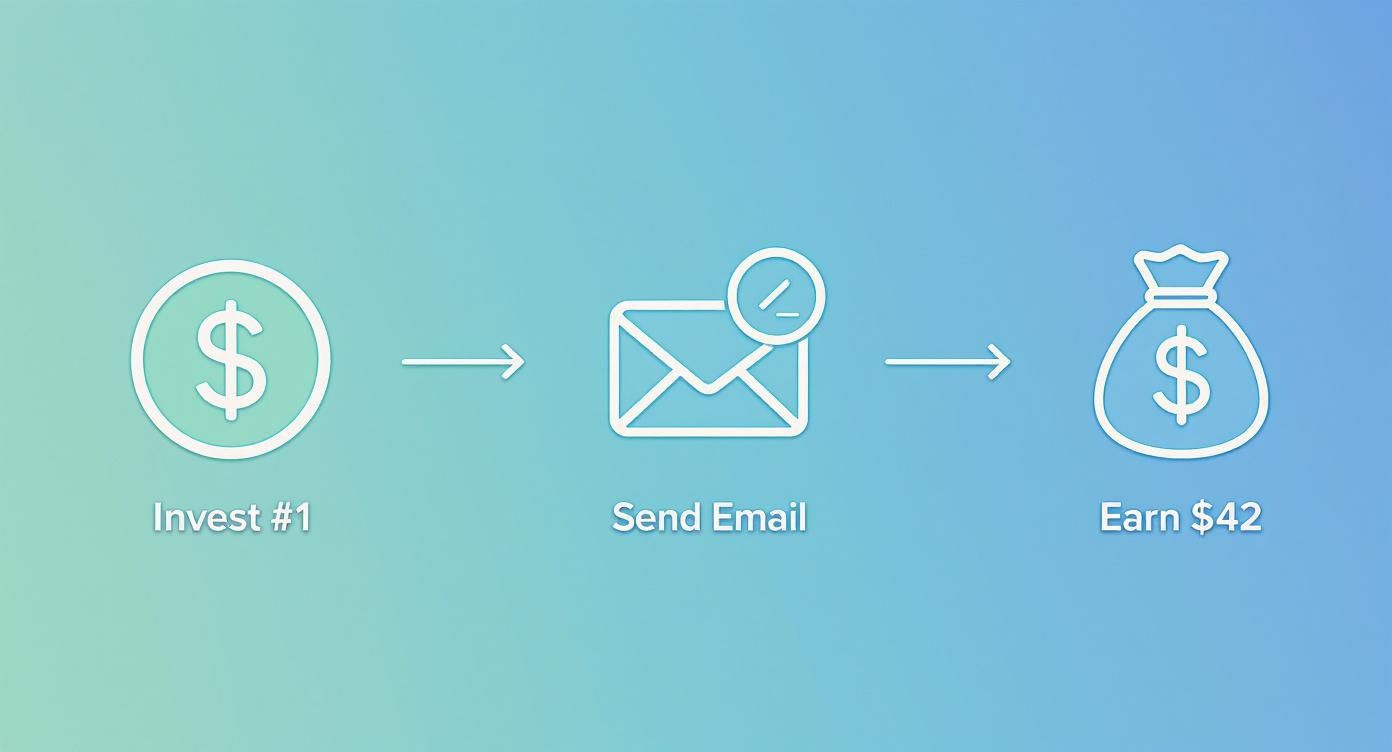
For dropshippers running on tight budgets, this is a game-changer. A small investment in your email strategy can bring in serious revenue. On average, the return on investment (ROI) for email marketing is a staggering $42 for every $1 spent. It’s easily one of the most profitable things you can do.
Build Loyalty and Get More Repeat Buyers
Beyond just making sales, your email list is where you build a real brand. It's your space to share your story, flash some great customer reviews, and give subscribers that exclusive, insider feeling. This is how you turn first-time shoppers into loyal fans who come back again and again.
A well-managed list isn't just a sales tool; it's a community-building engine. It transforms transactional relationships into long-term brand advocacy, which is the ultimate goal for any sustainable ecommerce business.
With targeted email campaigns, you can announce new products to a crowd that’s actually waiting to hear from you. You can run special deals just for your subscribers or win back sales that were about to slip away. For example, setting up automated follow-ups is a proven tactic for slashing your shopping cart abandonment rates and directly boosting your revenue.
An engaged email list gives you the power to generate sales on demand. That kind of control and predictability is something other channels simply can't offer.
Crafting Lead Magnets People Actually Want
Let's be honest: people guard their inboxes like a fortress these days. The tired, old "Sign up for 10% off" offer just doesn't cut it anymore. To earn a spot in that sacred space, you have to offer something genuinely valuable in return.
This is your lead magnet.
Think of it as the beginning of a conversation, a friendly trade. They give you their email, and you give them something that solves a problem, grants exclusive access, or makes them feel smarter. This first interaction is critical—it sets the tone for your entire relationship and starts building trust right from day one.
Move Beyond the Basic Discount
While a simple discount can sometimes work, it’s become wallpaper in the e-commerce world. Shoppers are so used to seeing it that they barely register it. Your goal is to create an offer that feels special, something perfectly aligned with what your specific customer actually wants or needs.
For dropshippers, this means getting creative. Here are a few powerful ideas to get you started:
- Exclusive Access to New Products: Create a VIP list that gets first dibs on new arrivals or limited-edition items. Scarcity and exclusivity are powerful motivators.
- In-Depth Buying Guides: If you sell tech gadgets, a guide like "The 5 Things You Must Check Before Buying a Drone" is incredibly useful. It positions you as a trusted expert, not just another seller.
- High-Value Giveaways: Offer entry into a contest to win one of your best-selling products. The high perceived value of the prize makes signing up a no-brainer for interested shoppers.
Pinpoint Customer Pain Points First
The very best lead magnets offer a direct solution to a real problem. Before you design anything, put yourself in your customer's shoes. What are they struggling with?
Are they confused about which product is right for them? Worried about making a bad purchase? Maybe they're just looking for inspiration on how to use the things you sell.
For example, if you sell home decor, a common pain point is figuring out how to style a room without breaking the bank. Your lead magnet could be a beautifully designed lookbook titled, "5 Designer Looks for Your Living Room (All Under $100)." This provides instant value while naturally showcasing your products.
A great lead magnet doesn't just offer a reward; it offers a resolution. It solves a specific problem your ideal customer is grappling with right now, making the decision to subscribe an easy one.
This approach transforms your effort to build an email list from a simple marketing tactic into a genuine act of customer service. For a deeper dive into developing resources that truly connect, check out this guide on how to create a lead magnet that actually converts.
Choosing the Right Lead Magnet for Your Store
Your lead magnet must be a natural bridge to your products. The goal isn't just to collect random emails; it's to attract people who are genuinely interested in what you sell. An irrelevant offer might grow your list count, but it won’t grow your sales.
To help you decide what will work best for your store, I've put together a quick comparison of some popular lead magnet types.
| Lead Magnet Type | Best For | Pros | Cons |
|---|---|---|---|
| Checklists & Cheatsheets | Stores selling complex or multi-step products (e.g., DIY kits, skincare regimens). | Quick to consume, highly practical, positions you as helpful. | Can be perceived as low-value if not well-designed. |
| Exclusive Video Content | Fashion, fitness, or tutorial-based niches (e.g., how-to style a scarf, a workout routine). | High perceived value, engaging, builds a personal connection. | Requires more effort and resources to produce. |
| Quizzes & Assessments | Stores with a wide product range (e.g., "Find Your Perfect Coffee Blend"). | Interactive, fun, provides personalized recommendations. | Can be technically more complex to set up. |
Ultimately, the most successful lead magnets are specific, actionable, and deliver on their promise instantly. By focusing on providing real value upfront, you’ll not only build a bigger email list but a much more engaged and profitable one.
You've crafted the perfect lead magnet. Fantastic. But now comes the moment of truth: designing the gateway that actually gets it into the hands of your audience. An opt-in form isn't just a box to collect an email; it’s a critical handshake, a point of conversion that can either fill your list with eager subscribers or push them away for good.
The best opt-in forms feel like a natural part of the user experience, not some jarring interruption. They're persuasive, seamless, and almost invisible. Getting this right comes down to nailing a few core elements.
It all starts with the headline. Be brutally clear and communicate the value instantly. "Get Your Free 5-Step Guide to Perfect Product Photos" crushes a vague "Subscribe to Our Newsletter" every single time.
Then, keep your copy short and laser-focused on the benefits. Don't list features; explain the outcome. What will they achieve with your lead magnet? Finally, make your call-to-action (CTA) button impossible to ignore. Ditch the generic "Submit" and go for something that creates excitement, like "Send My Free Guide!" or "Unlock My Discount."
Strategic Placement for Maximum Impact
Where you put your forms is just as crucial as what they say. Relying on a single form buried in your website’s footer is a recipe for a tiny email list. A smart strategy uses a mix of form types to catch potential subscribers at different stages of their journey.
Here are the heavy hitters for e-commerce stores:
- Popups (Lightbox): Yes, they can be annoying if done wrong. But when used as exit-intent popups—triggering only when a visitor is about to leave your site—they become incredibly powerful for capturing leads you would have otherwise lost forever.
- Embedded Forms: These are your subtle workhorses. Place them directly within your content, like at the end of a blog post or on a product page. They feel less disruptive and are perfect for converting people who are already engaged.
- Welcome Mats: This is the aggressive, full-screen overlay that greets a new visitor. It's a bold move, but for a high-value offer you want everyone to see, it can be incredibly effective.
Think about the user’s mindset. A shopper on a product page is laser-focused on a potential purchase, so a subtle embedded form offering a discount on that specific item is a no-brainer. Someone reading a blog post about home decor might be far more receptive to a popup offering a free style guide.
The goal is to make signing up feel like the next logical step, not a roadblock. When you match the form type and offer to the user's context, your conversion rates will thank you.
The Power of Simple Design and Trust
In a world of visual chaos, simplicity is your superpower. Your opt-in forms need to be clean, on-brand, and dead simple to use, especially on a phone. This is non-negotiable. With nearly 60% of emails projected to be opened on mobile devices in 2025, the entire experience, starting with the signup, has to be mobile-first. A responsive form isn't just a nice-to-have; a great mobile experience can boost clicks by 15%. You can find more of these eye-opening email marketing statistics on Inboxally.com.
A streamlined design also inspires trust. Keep your form fields to the absolute minimum—email address is usually all you need. Every extra field you ask for creates friction and kills conversions. In fact, research shows that just by cutting the number of fields from four to three, you can boost sign-ups by as much as 50%.
Finally, bake trust-building elements right into the form itself:
- Social Proof: A quick line like, "Join 5,000+ savvy shoppers!" instantly adds credibility.
- Clear Privacy Statement: Something as simple as "We respect your privacy. No spam, ever." goes a long way.
- High-Quality Visuals: Show, don't just tell. Use a sharp image of your lead magnet or a real customer photo featuring your product. For dropshippers, this is where using a tool like AliSave Pro to grab high-resolution images and authentic review photos can dramatically elevate the perceived value of your offer.
These design fundamentals are key to building a store that not only looks professional but converts like a machine. To make sure your entire site is optimized for success, dive into our complete guide on the best e-commerce website design principles.
Finding Subscribers On and Off Your Website
If you really want to build an email list that grows month after month, you can't just slap a sign-up form in your footer and call it a day. That's just hoping for the best. A smart strategy involves creating a web of opportunities to capture potential customers wherever they are, both on your website and across the wider internet.
Think of it this way: your strategy needs two fronts. First, optimizing your own digital real estate (on-site). Second, tapping into the platforms where your audience already hangs out (off-site). This two-pronged approach ensures you're constantly turning passive browsers into engaged subscribers.
Maximize On-Site Subscription Opportunities
Your website is your home turf, and it's full of prime spots for opt-in forms. The trick is to place them in high-traffic, high-intent areas without getting in the way of the shopping experience. Put yourself in your visitor's shoes and figure out where your offer makes the most sense.
Here are some of the most effective places to put your forms:
- Homepage Header or Hero Section: This is your most valuable real estate. A clean, compelling call-to-action right at the top guarantees every single visitor sees your offer the moment they land.
- Within Blog Posts: Someone reading your content is already engaged. Embedding a form directly inside a relevant article is a seamless way to convert that reader into a subscriber.
- The Checkout Page: A customer who is already giving you their details to buy something is a hot lead. A simple, unchecked box that says "Get exclusive offers and product news" can capture some of your most qualified subscribers.
Don't make people hunt for a way to subscribe. The goal is to make signing up so convenient and contextually relevant that it feels like the natural next step in their journey with your brand.
Venture Off-Site to Capture New Audiences
While your site is critical, a huge chunk of your potential audience is scrolling through other platforms right now. Tapping into those channels is essential for driving fresh traffic and new subscribers into your world. This is how you go from waiting for subscribers to actively finding them.
Your off-site strategy should funnel traffic from different sources back to a dedicated, high-converting landing page. This page should have one single purpose: getting that email address by showcasing your awesome lead magnet. No distractions.
Leverage Social Media and Paid Ads
Social media is an absolute powerhouse for list building when you use it right. It’s not just about posting pretty pictures; it’s about creating direct pathways for your followers to join your list.
Here’s how to make it work:
- Optimize Your Social Profiles: Your bio is a key piece of real estate. Use a tool like Linktree or just pop a direct link to your lead magnet's landing page in your Instagram, TikTok, and Facebook bios. Make the call-to-action crystal clear, like, "👇 Get our free style guide!"
- Run Targeted Lead Ads: Platforms like Facebook and Instagram have lead generation ad formats that are brilliant for this. They let users subscribe right inside the app, which removes the friction of sending them to another website. You can target users based on interests that perfectly match your products, making these ads incredibly efficient.
- Collaborate with Influencers: Find influencers in your niche and partner with them to promote your lead magnet. When an influencer gives their audience a compelling reason to download your guide or enter your giveaway, it can send a massive wave of targeted traffic and sign-ups your way.
By weaving together a strong on-site presence with a savvy off-site acquisition plan, you build a robust system that feeds your email list from all directions. This diversified approach means you're not overly reliant on one traffic source, ensuring a steady, sustainable flow of new subscribers.
Turn Subscribers Into Customers With a Killer Welcome Automation
Getting that email address is a big win, but let's be real—it's just the beginning. The first few emails you send are your handshake, your first impression. They decide whether a new subscriber sticks around to become a loyal customer or hits the unsubscribe button without a second thought. This is where a smart, automated welcome sequence makes all the difference.
Forget sending a single, boring "thanks for signing up" email. A welcome series is a short, automated chain of emails designed to make an incredible first impression. It’s your chance to deliver the goods you promised, introduce your brand's personality, and gently nudge that new lead toward their first purchase. When you get this right, this one automation can easily become your hardest-working sales tool.
The Anatomy of a High-Converting Welcome Series
A solid welcome sequence usually runs for 3 to 5 emails over the first week. The goal isn't to spam them; it's to build a relationship, step by step. Each email has a specific job to do, moving the conversation forward.
Here’s a proven framework I've seen work time and time again. Feel free to tweak it for your store:
Email 1 (Sent Immediately): Deliver what you promised, and do it fast. This email needs to land in their inbox instantly with the lead magnet they signed up for. Make the subject line dead simple, like "Here's Your 15% Off Code!" Fulfilling that initial promise right away builds immediate trust. It shows you're reliable.
Email 2 (Sent 1 Day Later): Now, tell your story. They've got what they came for, so it's the perfect time to share what your brand is all about. What’s your mission? Why did you start this store? A little personal touch helps you stand out from the sea of faceless online retailers.
Email 3 (Sent 3 Days Later): Show off the good stuff. Guide them to your best-selling products or most popular collections. This is where you pull out all the stops with gorgeous, high-resolution product photos and sprinkle in a few glowing customer reviews. Social proof is incredibly powerful here.
Think of your welcome sequence as your automated brand ambassador. It works 24/7 to make every new subscriber feel seen and understood, warming them up long before you even ask for the sale.
From Warm Lead to First-Time Buyer
The last couple of emails in your sequence are where you can get a bit more direct. You've already provided value and built some rapport, so making an offer feels natural, not sleazy.
Email 4 (Optional, Sent 5 Days Later): Hit on a pain point. Talk about a common problem your customers run into and frame your products as the perfect solution. This positions you as a problem-solver, not just a seller. You could also use this email to tackle common objections head-on, much like you would in a cart recovery flow. For more on that, check out our guide on abandoned cart email examples.
Email 5 (Sent 7 Days Later): Make a special offer they can't refuse. Now's the time to present a compelling, time-sensitive deal. Maybe it's a slightly bigger discount than your initial offer, free shipping, or a free gift with their first order. Adding a little urgency here is what often pushes someone over the edge to finally become a paying customer.
This kind of strategic nurturing isn't just a nice-to-have; it delivers real results. Some marketers have seen a mind-blowing 760% increase in revenue from well-segmented email campaigns. While the average email conversion rate is a tiny 0.08%, the top players hit 0.44%—more than five times higher—which shows the massive impact of a great welcome. You can dig into more stats on email marketing campaign performance on Emailchef.com.
At the end of the day, a strong welcome series is the foundation of an email list that actually makes you money. To really turn new sign-ups into repeat buyers, dive into these powerful email marketing automation strategies and take your entire follow-up game to the next level.
Keeping Your Email List Healthy and Compliant
When you're trying to build an email list, it’s easy to get obsessed with the total number of subscribers. But a massive list packed with people who never open your emails isn't just useless—it's actually bad for business. A bloated, unengaged list tanks your deliverability, trashes your reputation with services like Gmail, and costs you real money.
The secret to long-term success is maintaining a clean, engaged, and legally compliant group of subscribers. I like to think of it like tending a garden; you have to pull the weeds so the flowers can actually grow. This means making a habit of clearing out inactive subscribers.
Prioritize Quality Over Quantity
Don't be afraid to let go of subscribers who ignore everything you send. Clinging to them, hoping they'll one day have a change of heart and buy something, is a recipe for failure. A standard best practice is to regularly remove anyone who hasn't engaged in the last 90 or 120 days.
This clean-up process, which the pros call list hygiene, directly boosts the metrics that matter most:
- Higher Open Rates: When your list is full of people who actually want to hear from you, your open rates naturally climb.
- Better Deliverability: Email providers see that high engagement as a good sign, which means your messages land in the inbox instead of the spam folder.
- Lower Costs: Most email marketing platforms charge you based on your subscriber count. Cleaning your list stops you from paying for contacts that provide zero return.
A smaller, highly engaged list will always outperform a massive, inactive one. It ensures your messages reach the people who actually want to hear from you, leading to better results and a healthier sender reputation.
Smart Segmentation and Legal Compliance
Once your list is clean, segmentation is the next step to cranking up engagement. Instead of blasting the same generic email to your entire list, you can start grouping subscribers based on what they do.
A simple but incredibly powerful tactic is to segment based on purchase history. You could create lists for "First-Time Buyers," "Repeat Customers," or "High-Spenders." This lets you send targeted offers that feel much more personal and relevant, which makes them far more effective.
Finally, you absolutely have to play by the rules. Two major regulations you need to be aware of are GDPR (for your EU customers) and CAN-SPAM (for the US). The legal jargon can be a headache, but the core ideas are pretty straightforward:
- Get Clear Consent: Never, ever add someone to your list without their direct permission. A sneaky pre-checked box is a big no-no.
- Provide an Easy Opt-Out: Every single email must have a clear, working unsubscribe link. No exceptions.
- Identify Yourself: Your emails must clearly state who you are and include a valid physical mailing address.
Following these guidelines isn't just about dodging hefty fines. It's about building a trustworthy brand that respects its customers' privacy.
Your Top Questions About Email List Building, Answered
Jumping into email marketing can feel like learning a new language. You know it's important, but a ton of questions pop up right away. What's the best tool? How often should I hit "send"? What do I do with subscribers who've gone quiet?
Let's clear the air. Getting these fundamentals right from the get-go will save you a lot of headaches and help you build an email list that actually drives sales, not just unsubscribes.
Which Email Marketing Platform Is Best for Me?
When you're starting out, especially in dropshipping, the "best" platform is the one that fits your budget and doesn't overwhelm you. You don't need the most expensive, feature-packed tool on the market. Instead, look for a platform with a solid free or low-cost plan that integrates smoothly with Shopify or WooCommerce.
Many new store owners get great results with tools that are easy to learn but still powerful enough to handle essential tasks. Your focus should be on mastering the basics first—things like setting up a simple welcome email and segmenting your first few customers. You can always upgrade later as your business grows.
The right platform isn't about having the most features; it's about having the right features for you right now. Prioritize good email deliverability, straightforward automation, and an interface you actually enjoy using.
How Often Should I Email My List?
Ah, the million-dollar question. The honest answer? It depends. There’s no universal magic number that works for every store. Your ideal sending frequency comes down to your audience, your niche, and the kind of value you’re providing. Emailing too often will burn out your list, but sending too little will make them forget who you are.
A great starting point for most ecommerce stores is one to two emails per week. This cadence keeps you on their radar without clogging up their inbox. You could try sending one promotional email (like a new product drop or a sale) and one value-packed email (like a helpful guide or a look behind the scenes). Keep a close eye on your open rates and unsubscribe stats—they'll tell you everything you need to know about whether you should dial it up or pull it back.
Can I Revive a Cold Email List?
You bet. An inactive or "cold" list isn't a complete write-off. The key is to run a dedicated re-engagement campaign, which is just a short series of emails aimed at grabbing their attention one last time.
Kick it off with a seriously good offer—something they can't ignore. Think a big, exclusive discount with a subject line like, "Is this goodbye? Here's 25% off to stay." If a subscriber doesn't bite after a few emails, it's time to let them go. Cleaning out these disengaged contacts is actually a good thing. It improves your list health and ensures your messages are only going to people who truly want to hear from you.
Ready to create stunning visuals for your opt-in forms, product showcases, and social media ads? AliSave Pro lets you download high-resolution AliExpress product images, variant photos, and review pictures in a single click, giving you the professional assets you need to build your email list faster. Download AliSave Pro for free and elevate your marketing today.