

So, you want to start a dropshipping business. At its core, the concept is straightforward: you sell products online without ever touching the inventory yourself. Your job is to pick a great niche, build an online store that people love, and get the word out.
When a customer buys something from your site, you just pass that order along to your supplier. They handle all the heavy lifting—picking, packing, and shipping the product directly to your customer's doorstep.
Understanding the Modern Dropshipping Landscape
Before you jump in, it’s important to get a real feel for what dropshipping looks like today. It's an incredibly accessible way to get into ecommerce, but that also means it's packed with competition. The secret to winning isn't some magic product; it's about building a legitimate brand, mastering your marketing, and treating your customers right.
Think of yourself as the storefront. You set the prices, you talk to the customers, and you're the one they trust with their payment details. Your supplier is the silent partner in the background, completely invisible to the final buyer. This setup is fantastic because it slashes the startup costs—no need to sink thousands of dollars into a garage full of inventory.
Why Dropshipping Is Thriving Now
This business model isn't just popular; it's booming. Thanks to the explosion of online shopping and how comfortable we've all become with paying for things online, the market is massive and still growing.
How massive? The global dropshipping market was valued at a staggering $365.67 billion in 2024. Projections show it rocketing to over $1.25 trillion by 2030. That kind of growth is fueled by more people than ever choosing to shop from their couch, creating a huge opportunity for sharp entrepreneurs. You can dig into more of the numbers behind this trend in market analysis from Grand View Research.
This handy infographic lays out how the whole process flows.
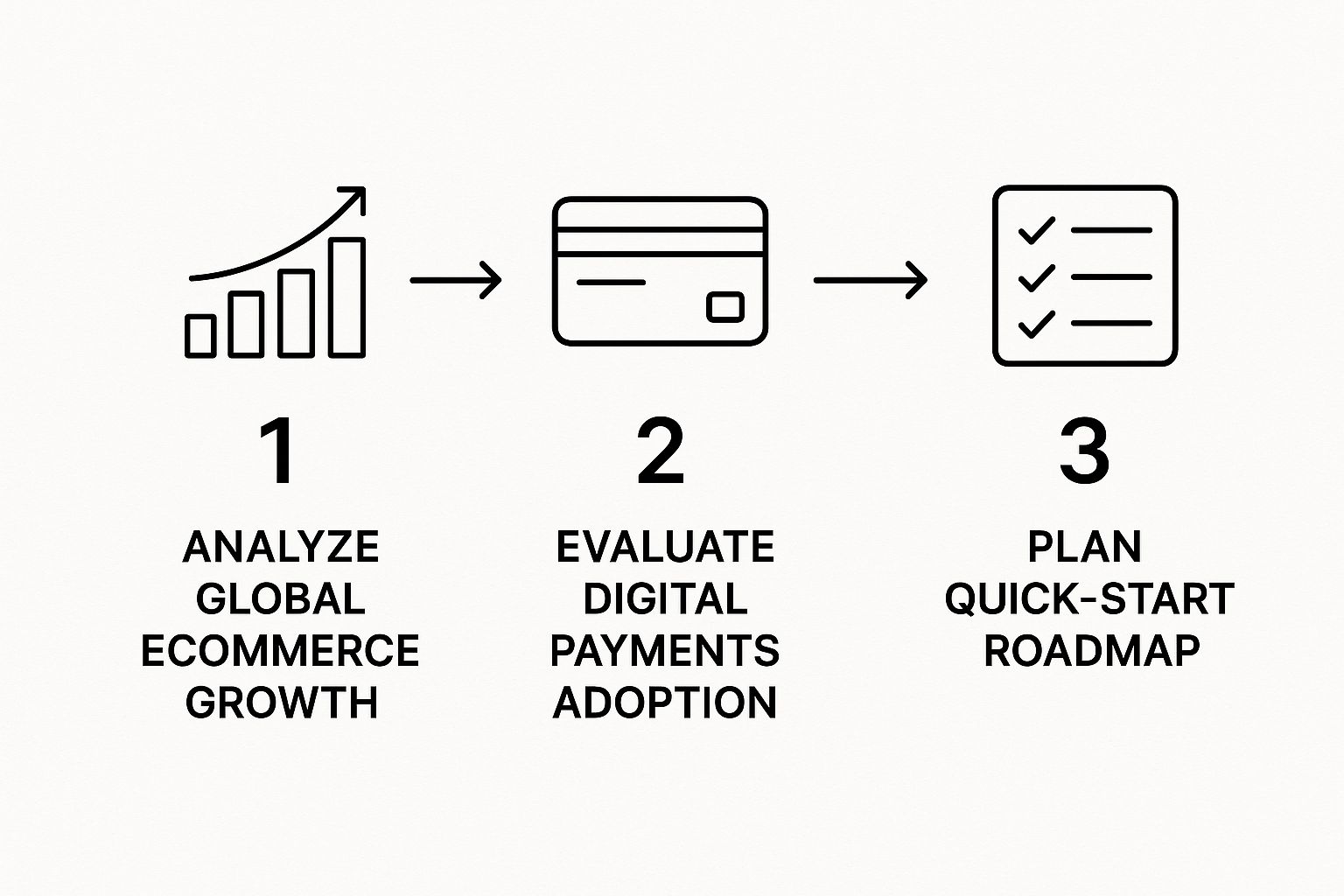
As you can see, the growth of ecommerce and secure payment systems work together, creating the perfect environment for a dropshipping business to succeed.
To help you visualize the journey, here’s a high-level look at the key phases you'll go through.
Your Dropshipping Launch Roadmap
| Phase | Key Objective | Estimated Time |
|---|---|---|
| Phase 1: Research & Planning | Find a profitable niche and validate product ideas. | 1-2 Weeks |
| Phase 2: Setup & Sourcing | Build your ecommerce store and find reliable suppliers. | 2-3 Weeks |
| Phase 3: Launch & Marketing | List products, launch your store, and start marketing. | Ongoing |
| Phase 4: Operations & Scaling | Fulfill orders, manage customer service, and optimize ads. | Ongoing |
This roadmap isn't set in stone, but it gives you a realistic timeline for getting your business off the ground and what to focus on at each stage.
Setting Realistic Expectations
The low barrier to entry is a double-edged sword—it's great for you, but it's also great for everyone else. That means more competition. You also need to be prepared for thinner profit margins than traditional retail, typically somewhere in the 15% to 30% range.
Because you don't control the warehouse, you're on the hook for any problems that pop up. Shipping delay? Damaged item? That's your responsibility to solve, even if it was your supplier's mistake.
Remember, you are building a customer-facing brand. Your success depends on your ability to market products effectively and manage the customer experience from start to finish.
Ultimately, your role is part marketer, part curator. You find cool products, build an exciting brand around them, and connect with the right audience. Your supplier takes care of the logistics. It's this smart division of labor that makes dropshipping such a compelling model for anyone eager to get into ecommerce without a huge upfront risk.
Finding a Profitable Niche and Products

Let's be honest: your entire dropshipping business lives or dies based on the products you choose to sell. It's less about discovering some "secret" product no one has heard of and more about finding a specific group of people—your niche—and giving them exactly what they're looking for.
A winning niche isn't just a category; it's a community. It's an engaged audience already searching for solutions to a problem or ways to feed a passion. Think about hobbies, lifestyles, or specific needs. That's where you'll find fertile ground for a product to take root and grow.
How to Uncover Winning Niches
So, where do you find these people? Go where they hang out. Social media is a goldmine for this, but not for scrolling mindlessly. You need to use platforms like TikTok and Instagram as trend barometers.
Start digging into hashtags that are picking up steam. Look for products that keep popping up in videos and posts from real users. For instance, the whole "cozy desk setup" trend exploded on TikTok, sparking huge demand for things like unique mouse pads, desktop organizers, and custom keyboard accessories. That wasn't a fluke; it was an organic trend born from a passionate community.
Don't forget the classics, either. A simple keyword search using a tool like Google Trends can tell you an incredible story about a product's demand over time. Is it a seasonal fad, or is it on a steady climb? A quick search for "sustainable home goods" shows consistent upward growth—a clear sign of a stable, expanding market.
Validating Your Product Ideas
Once you've got a list of promising ideas, it's time for a reality check. A product can be trending all day, but if the math doesn't work, it’s a non-starter.
Run every single idea through this checklist:
- Can You Actually Make Money? Your target selling price should be at least 2.5 to 3 times what the supplier charges. This margin is crucial—it has to cover your ad spend, Shopify fees, and everything else while still leaving you a profit.
- Is the Supplier Legit? Dive into supplier ratings and reviews. You want someone with a long, consistent history of fulfilling orders. A cheap product from a shaky supplier will bury you in customer complaints and refunds.
- What About Shipping? How long will it take to get to your customer, and what will it cost? A two-month wait is a deal-breaker for almost everyone. Be upfront and crystal clear about shipping times from day one.
The sweet spot for a great dropshipping product is the intersection of high demand, manageable competition, and healthy profit margins. Don't fall in love with a product idea until you've proven it can be profitable.
Real-World Niche Examples
Let's make this more concrete.
Take pet accessories. That’s way too broad. But what about "eco-friendly pet toys for urban apartment dwellers"? Now you're talking. You're targeting a specific person who cares about sustainability and is dealing with a smaller living space.
Or consider home office ergonomics. With remote work being the new normal, people are spending real money on their setups. You could zero in on "ergonomic accessories for standing desks," targeting professionals looking to boost their comfort and productivity.
These niches are specific enough to cut through the noise but large enough to build a real business around. It's a model that works, which is why over 27% of online retailers now use dropshipping. Fashion still brings in the most revenue, but fast-growing niches like food and personal care are where the next big opportunities might be. You can dig into more dropshipping industry statistics on analyzify.com to see where the market is headed.
Making a data-driven decision right now will save you a world of pain and wasted ad money later on. It’s how you build a business that lasts.
Building Your Ecommerce Storefront
Alright, you've locked in your niche—now it's time to build your shop. This is where your brand actually starts to feel real. It's your digital home base where customers will browse, click, and hopefully, buy.
Think of your online store as your prime real estate on the world's busiest street. It has to look the part: professional, trustworthy, and incredibly easy to navigate from the second someone lands on your page. The foundation for all of this is your ecommerce platform.
Choosing Your Ecommerce Platform
For anyone just dipping their toes into dropshipping, the advice is almost always the same: start with Shopify. There's a good reason for that. It’s a complete package that handles the tricky stuff like hosting and payment processing, freeing you up to focus on what actually makes you money—finding great products and marketing them.
Platforms like Shopify are built with the dropshipping model in mind. Their app stores are treasure troves of tools that connect you directly with supplier marketplaces like AliExpress, automating huge chunks of the order fulfillment process. It just works.
When you're weighing your options, here’s what really matters:
- Ease of Use: How fast can you get a good-looking site up without knowing a single line of code?
- App Ecosystem: Does it have a deep library of apps for dropshipping, marketing, and customer support? This is non-negotiable.
- Pricing: Is the monthly cost straightforward and something you can handle right out of the gate?
- Scalability: Will the platform keep up when you start getting 10, 50, or 100 orders a day?
The best platform is the one that gets out of your way and lets you sell. Don't get stuck here. Pick a solid, reputable option and keep the momentum going.
Essential Store Setup and Branding
With your platform chosen, the fun part begins: building your brand. This isn't just about picking a logo and some colors. It's about crafting an identity that connects with your ideal customer and makes them feel confident handing over their credit card details.
First up, grab a memorable domain name. Keep it short, easy to spell, and related to your niche if possible. A professional domain instantly adds credibility that a generic ".myshopify.com" address just can't.
Next, pick a theme. You don’t need to drop hundreds of dollars on a custom theme right away. Just find a clean, mobile-friendly design that showcases your product images. A slow, cluttered website is a surefire way to lose a sale before you even have a chance.
Once the theme is installed, create these crucial pages:
- About Us: Tell your story. Why does this store exist? What problem are you solving? Keep it brief and relatable.
- Contact Us: Give customers a clear way to reach you. An email address and a simple contact form are perfect.
- Shipping Policy: Be brutally honest about shipping times. If an item takes 2-4 weeks to arrive from your supplier, say it loud and clear. Transparency builds trust.
- Refund Policy: Clearly explain your process for returns and refunds. People need to know you stand behind what you sell.
Finally, get your payment gateways sorted. Services like Shopify Payments and PayPal make it incredibly easy to accept credit cards securely. A clunky checkout is a conversion killer. If you want to dive deeper, our guide on how to improve ecommerce conversion rates has some great tips for making sure your checkout is seamless. A trustworthy storefront is the first major step in turning casual visitors into loyal customers.
Finding and Working with Great Suppliers
Let's be blunt: your dropshipping supplier is your business partner. They're the ones holding the inventory, packing the orders, and shipping products to your customers. You’re the storefront, but they're the entire warehouse and fulfillment team rolled into one. This is easily the most important relationship you'll build.
A fantastic supplier makes your job easy. A bad one? They'll sink your business with a flood of angry customer emails and chargeback disputes. You can have the slickest marketing on the planet, but if the product that arrives is shoddy, damaged, or takes forever to get there, your brand's reputation is done. Vetting isn't just a step; it's everything.
How to Vet Suppliers on AliExpress
AliExpress is the go-to for most people starting out, but it’s a massive marketplace. You have to learn how to spot the pros among the pretenders. Looking at the price alone is a classic rookie mistake. What you really need to look at is the seller's history.
First, check their feedback score. I don’t even look at suppliers with less than a 95% positive feedback rating. It’s just not worth the risk. Next, see how long their store has been open. A shop that’s been around for two or more years has a track record and is less likely to disappear overnight.
Then, do this simple test: send them a message. Ask a specific question about the product, materials, or their shipping process. How fast do they reply? Is the answer actually helpful, or just a canned response? This tells you everything you need to know about their customer service before there's a problem with one of your orders. If you're new to the platform, it's worth taking a moment to understand if AliExpress can be trusted for your business by reading our in-depth guide.
My Two Cents: Your relationship with a supplier is built on trust and clear communication. If a seller is flaky or unhelpful before you've even spent a dime, just imagine what they'll be like when a real issue comes up. Walk away.
To help you stay organized, here's a quick checklist I use when evaluating potential partners.
Supplier Vetting Checklist
When you're sifting through dozens of potential suppliers, it's easy to lose track. This table breaks down the essential criteria to focus on, helping you make a smart, data-driven decision instead of just picking the cheapest option.
| Criteria | What to Look For | Red Flags |
|---|---|---|
| Seller Rating | 95% or higher positive feedback. | Anything below 90% is a hard pass. |
| Store Age | At least 2+ years in business. | Brand new store with zero history. |
| Order Volume | Hundreds or thousands of orders fulfilled. | Very few orders for their main products. |
| Communication | Quick, clear, and helpful responses (within 24 hours). | Slow replies, vague answers, or poor English. |
| Shipping Options | Reliable options like AliExpress Standard Shipping. | Only offering slow, untrackable shipping methods. |
| Product Photos | Clear, original, high-quality images and videos. | Using generic stock photos or low-res images. |
Ultimately, you're looking for a professional operation that clearly cares about its business. A supplier who checks all the right boxes is one you can build a long-term, profitable relationship with.
The Power of High-Quality Visuals
Once you have a shortlist of good suppliers, it's time to gather your marketing assets—the images and videos that will actually sell the product. Your product visuals are your single most important sales tool. They need to be sharp, detailed, and show the product from every angle imaginable.
Here’s the thing: manually saving every single image and video is a mind-numbing task, especially for products with tons of color variants or customer review photos. This is where you need to work smarter, not harder.
This screenshot shows how a simple Chrome extension like AliSave Pro can add a download button right onto the AliExpress product page, saving you a ton of hassle.
With a tool like this, you can download all the main product images, variant photos, and even real customer pictures from the reviews in one go. This is a huge time-saver that lets you get products listed and ready to sell in a fraction of the time.
Writing Product Descriptions That Actually Sell
Okay, you’ve got a vetted supplier and a folder packed with great images. Now it’s time to put it all together on your product page. A good product description doesn't just list specs; it tells a story and solves a customer's problem.
Resist the urge to just copy and paste what the supplier wrote. Their descriptions are usually written in broken English and are designed to sell to other businesses, not to your end customer.
Instead, use a simple but effective framework:
- The Hook: Open with a relatable pain point or desire. If you're selling a portable blender, start with something like, "Tired of lumpy protein shakes after a workout?"
- The Solution: Position your product as the answer. "Our new portable blender whips up silky-smooth drinks in seconds, wherever you are."
- Features vs. Benefits: Use bullet points to make the key details scannable. But don't just list a feature ("USB-C charging"). Translate it into a benefit for the customer ("Fast USB-C Charging: Power it up in your car or at your desk so it’s always ready for you.").
- Social Proof: This is where you use those customer review photos you downloaded. Nothing is more convincing than showing real people using and loving the product.
By mixing the supplier's factual product details with your own brand's voice and compelling visuals, you turn a generic listing into a high-converting sales page.
Marketing Your New Dropshipping Business
You've built a beautiful store, found a great supplier, and your first products are live. It feels like you should be done, right? Not quite. A store with no visitors is just a ghost town on the internet. Now for the fun part: bringing your brand to life and getting in front of your very first customers.
Marketing is where you get to show off your brand’s personality. It’s how you’ll cut through all the noise online and genuinely connect with the people who need what you're selling. You don't need a huge budget to make an impact, but you absolutely need a smart, focused plan. Let's dig in.
Go Where the Eyeballs Are: Social Media Marketing
For most dropshipping products, social media isn't just an option—it’s the main event. Platforms like TikTok and Instagram are visual playgrounds where a product can go from totally unknown to viral almost overnight. This is your number one channel for building awareness and driving those crucial initial sales.
Your first job is to create authentic, engaging content, not just sterile product ads. Let's say you're selling portable camping gear. Get out there and create short videos showing it in action on a real hiking trail. Film an unboxing, show off its best features, and demonstrate how it solves a real problem for outdoor lovers.
These platforms are built for discovery. In fact, over 50% of TikTok users say the app helps them discover new products. By creating content that actually entertains or educates, you tap directly into that discovery mindset and introduce your brand to a hungry audience.
Your social media goal isn't just to sell; it's to stop the scroll. If your video or image doesn't make someone pause for three seconds, it's failed. Focus on creating thumb-stopping content first and foremost.
Once you have some organic content that's getting a little traction, it's time to dip your toes into paid ads. Start small. A $10-$20 per day budget is more than enough to start testing what works.
- Targeting is Key: Don't just target "people interested in camping." That's way too broad. Instead, get specific. Target users who follow popular hiking influencers, engage with other outdoor gear brands, or have shown interest in niche hashtags like #backcountrycamping.
- Use Your Best Content: Take a look at your organic posts. Which videos are already getting good engagement? Promote those. The audience has already told you the content resonates, making it a much safer bet for your ad spend.
- Clear Call-to-Action: Every ad needs a clear job to do. "Shop Now" or "Learn More" buttons should take people directly to the product page. Make the path to purchase as short and simple as possible.
Playing the Long Game with SEO
While social media is great for quick traffic, Search Engine Optimization (SEO) is how you build a sustainable business for the long haul. Think of SEO as the art and science of getting your store to show up in Google search results when people are actively looking for products like yours. It’s not fast, but man, is it powerful.
Start with the basics on your product pages. Put yourself in your customer's shoes. What would someone actually type into Google to find your product? If you're selling an "ergonomic vertical mouse," your product title needs to include those exact words.
Next, you have to write unique, genuinely helpful product descriptions. Don't just list a bunch of features; explain the benefits. Instead of saying "800-1600 DPI," write something like, "Adjustable DPI for Precision Control: Effortlessly switch between 800 and 1600 DPI to get the perfect cursor speed for detailed design work or fast-paced gaming." This is way more helpful for customers and gives Google more context about your product.
Finally, think about starting a simple blog attached to your store. Write articles that answer common questions in your niche. If you sell home coffee gear, articles like "How to Make the Perfect Pour-Over Coffee" or "The Best Grind Size for French Press" can attract customers who are still in the research phase, positioning your store as a trusted authority.
Building Your Own Audience with Email Marketing
So what happens when a visitor lands on your store but isn't quite ready to buy? You can't just let them leave and forget you exist. This is exactly where email marketing comes in. Honestly, building an email list is one of the single most valuable things you can do for your business.
The concept is simple: offer something of value in exchange for their email address. A pop-up offering 10% off their first order is a classic for a reason—it works.
Once you have their email, your job is to build a real relationship. Don't just spam them with sales pitches.
- Welcome Email: The first email should go out immediately. It should deliver their discount code and briefly introduce your brand's story.
- Value-Added Content: In your next few emails, share tips, how-to guides, or interesting content related to your niche. Give before you ask.
- Exclusive Offers: Make your subscribers feel like VIPs. Give them early access to new products or subscriber-only discounts.
Your email list is an audience that you own. Unlike your social media followers, you're not at the mercy of some mysterious algorithm. You have a direct line of communication to your most interested potential customers, giving you a powerful and profitable marketing channel that you control completely.
Scaling Your Operations with Automation and AI
When your first few sales start rolling in, it's a huge thrill. But as that trickle becomes a steady stream, you’ll hit a wall. Manually handling every single task is a recipe for burnout, and the excitement of fulfilling an order by hand quickly turns into a major bottleneck. This is the moment you have to shift your mindset from a scrappy founder to a strategic CEO. It's time to work smarter, not just harder.
The secret to actually growing a dropshipping business without losing your mind is embracing automation and artificial intelligence (AI). These aren't just fancy buzzwords; they're your best friends for turning a time-sucking side hustle into an efficient, scalable operation. By automating the repetitive stuff, you get your most valuable asset back—your time—so you can focus on the big picture: strategy, building your brand, and hunting for that next winning product.
Streamlining Core Business Functions
So, where do you start? Go for the low-hanging fruit: the tasks you do over and over again.
Order fulfillment is the most obvious candidate. Instead of manually typing customer details into your supplier's portal for every single sale, you can use apps that connect your store directly to platforms like AliExpress. These tools do the heavy lifting by automatically sending order details, choosing the right shipping method, and even syncing tracking numbers back to your customers. This simple change slashes errors and can save you hours every single day.
Next up is customer service. As you grow, you'll be bombarded with the same questions: "Where is my order?" or "What's your return policy?" A simple AI-powered chatbot on your site can handle up to 80% of these common queries instantly, any time of day or night. Your customers get answers faster, and you can focus your energy on the more complex problems that actually need a human brain.
By delegating routine operations to technology, you shift your role from simply running the business to strategically growing it. Automation isn't about replacing yourself; it's about empowering yourself to do more high-impact work.
Using AI for Smarter Decisions
Automation handles the "doing," but AI can help with the "thinking." It gives you a serious competitive edge by taking the guesswork out of your strategy.
AI tools can dig through your sales data to show you exactly which products are flying off the shelves, which marketing campaigns are actually making you money, and even spot new trends before they blow up. This data-first approach means you’re making decisions based on facts, not just gut feelings.
This efficiency is a huge reason why the dropshipping market is projected to hit a staggering $2573.99 billion by 2034, according to Precedence Research. To get a piece of that pie, you need the right setup. Start by exploring some of the best dropshipping automation tools available to see how you can begin scaling effectively.
Of course, here is the rewritten section with a more natural, human-written tone.
Your Top Dropshipping Questions, Answered
As you start piecing together your dropshipping plan, a few questions are bound to pop up. They’re the same ones most of us had when we started. Let’s clear up some of the most common ones so you can build your store with confidence.
What's the Real Cost to Get Started?
Dropshipping has a reputation for being cheap to start, and it is—but it's not free. A realistic starting budget is somewhere in the $100-$300 range.
This isn't just a random number. It covers the essentials: your Shopify plan, a custom domain name (which is a must for looking professional), and a small marketing budget. You'll need that cash to run your first few ads and see which products actually get people clicking.
Who Handles Returns and Customer Questions?
That’s all on you. When you’re dropshipping, you are the business. Customers will come to you with every question, complaint, and return request, and they'll never even know your supplier exists.
Your first line of defense is a crystal-clear return policy posted prominently on your site. When a customer wants to send something back, you'll be the one to kickstart that process by coordinating with your supplier based on their own rules.
My Two Cents: Your best tool in this business is honest communication. Be upfront about shipping times and how you handle returns. Managing expectations from the get-go builds the kind of trust that turns one-time buyers into repeat customers.
Ready to stop wasting time manually saving product media? With AliSave Pro, you can grab every single image and video from an AliExpress listing with just one click. It’s a huge time-saver. Install the free Chrome extension today and get back to building your brand.