
Trying to sell on eBay can sometimes feel like you're guessing what people want to buy. But the reality is, the most successful sellers don't guess—they follow the data. The secret to figuring out what's selling well on eBay is to look at the categories that are always in demand, like electronics and fashion, and tap into booming sectors fueled by passionate collectors, like auto parts and collectibles.
What's Selling Well on EBay? Top Categories to Watch

Let's get right into the categories where the real action is. Think of this as your inside guide to the eBay marketplace, showing you not just what sells, but also why it's so popular. This high-level view will help you spot opportunities that fit your own interests and sourcing capabilities.
The Power of Evergreen Niches
Some categories are just consistent winners. They're eBay powerhouses because they cater to everyday needs and wants, making them a reliable starting point for any seller.
Electronics: This category is an absolute giant. Everything from the newest smartphones and their accessories to refurbished laptops and gaming consoles flies off the shelves. Shoppers are constantly searching for deals on big names like Apple and Samsung.
Fashion: Clothes, shoes, and accessories never go out of style. This market is massive, covering brand-new items from brands like Nike, pre-owned luxury handbags, and one-of-a-kind vintage pieces.
Home & Garden: This is a practical and seasonal powerhouse. Think about what people need for their homes—power tool batteries, small kitchen appliances, patio furniture, and trendy home decor. It's a category driven by both necessity and a desire to upgrade.
Tapping Into High-Growth Sectors and Passionate Buyers
Beyond the evergreen staples, you'll find explosive growth in niches driven by dedicated communities. These buyers aren't just casual shoppers; they're enthusiasts who are often willing to pay a premium for specific, hard-to-find items.
Collectibles have become the engine of eBay's growth, largely thanks to 'enthusiast buyers.' These aren't just casual shoppers; they're a dedicated group whose average spending has soared to over $3,200 per person over the last 12 months.
This statistic tells a powerful story: the real money is often in catering to a passionate subculture.
Toys & Hobbies: Don't let the name fool you—this isn't just for kids. Collectible card games like Pokémon and Magic: The Gathering are huge. The same goes for action figures from popular movies and TV shows, which can fetch surprisingly high prices.
Auto Parts: For DIY mechanics and car lovers, eBay is the ultimate garage. Top sellers consistently include wheels, tires, replacement body parts like bumpers and mirrors, and all sorts of performance upgrades.
Jewelry & Watches: This category shines with both new and pre-owned items. Wristwatches from trusted brands like Citizen and Seiko are always in demand, as are fashion jewelry pieces like necklaces and pendants.
To get a closer look at what's trending, it's smart to use dedicated tools that show you what sells on eBay well. These platforms give you the hard data you need to stop guessing and start selling with confidence. For even more inspiration, check out our guide on good things to resell on eBay.
Here’s a quick breakdown of these powerhouse categories to help you see the bigger picture.
Top Selling EBay Categories at a Glance
This table offers a snapshot of the high-demand product categories on eBay. Use it to quickly identify key characteristics and potential opportunities for your own selling strategy.
| Category | Popular Sub-Niches | Typical Buyer | Sourcing Potential |
|---|---|---|---|
| Electronics | Smartphones, Laptops, Game Consoles, Accessories | Tech-savvy deal hunters and brand loyalists | Refurbished goods, wholesale, retail arbitrage |
| Fashion | Sneakers, Luxury Handbags, Vintage Apparel, Athletic Wear | Trend-conscious shoppers and bargain hunters | Thrift stores, consignment, liquidation pallets |
| Home & Garden | Power Tools, Small Appliances, Patio Furniture, Decor | Homeowners, DIY enthusiasts, and seasonal shoppers | Wholesale suppliers, home improvement store clearance |
| Collectibles | Trading Cards (Pokémon), Action Figures, Comic Books | Passionate collectors and dedicated hobbyists | Estate sales, flea markets, online communities |
| Auto Parts | Wheels & Tires, Lighting, Exterior Parts, Performance Chips | DIY mechanics and car modification enthusiasts | Junkyards, specialty distributors, direct from manufacturers |
As you can see, each category attracts a different type of buyer and opens up unique sourcing avenues, giving you plenty of options to explore.
How to Find Winning Products with Real Data
Knowing that electronics or fashion are popular categories is a good start, but it’s a bit like knowing treasure exists somewhere in the ocean. To actually find it, you need a map and a compass. For an eBay seller, your map is data, and your compass is a handful of key metrics that point you straight to profitable products. This is how you go from vague ideas to specific, validated opportunities.
The whole point is to stop guessing what's selling and start making decisions backed by real numbers. You want to shift from thinking, "I should probably sell vintage toys," to confidently saying, "This specific 1990s action figure has a 75% sell-through rate and a stable average sale price." This is what separates casual sellers from strategic business owners.
Decoding the Data with Key Metrics
Think of product research data as clues in a detective story. Each metric tells you something important about an item's potential. Three of the most critical clues are sell-through rate, average sold price, and listing duration.
- Sell-Through Rate: This is the big one for validating demand. It's simply the percentage of items listed that actually sold. A high sell-through rate—ideally above 65%—is a screaming signal that buyers are actively searching for and purchasing this specific product.
- Average Sold Price: This number cuts through the noise of wishful thinking and shows you what people are actually willing to pay. Tracking it over 30, 60, or 90 days helps you spot trends. Is the value climbing or dipping?
- Listing Duration: How long does it take for this thing to sell once it's listed? A shorter average duration points to hot demand, which means a quicker return on your investment.
When you focus on these numbers, your research stops being a random search and becomes a calculated hunt for profit. If you want a more detailed walkthrough, our guide explains how to find sold listings on eBay to get this exact data.
Using Terapeak for Market Insights
To get your hands on this data, eBay’s own research tool, Terapeak, is your best friend. It’s built right into the Seller Hub and gives you a backstage pass to years of real sales data. It’s like having a crystal ball that shows you exactly what sold, when it sold, and for how much.
For instance, you could search for "refurbished Nikon D3500 camera" and instantly see vital stats like:
- The total number of listings versus the number of items sold.
- The average sale price over the last month.
- The top-performing listings for that exact item.
This isn’t just about finding a single product; it's about understanding the entire market for it. If you're serious about identifying winning products and spotting market trends, you have to get comfortable with the numbers. You can pick up some more advanced tips by learning about analyzing sales data for growth.
The core of successful product validation isn't about finding a "secret" item nobody knows about. It's about finding an item with consistent, predictable demand and a healthy profit margin, proven by historical sales data.
Ultimately, taking a data-first approach pulls emotion and guesswork out of your inventory decisions. It gives you a repeatable system for finding products with a high probability of selling, letting you invest your time and money with much more confidence.
Your Repeatable Product Research Workflow
Finding products that consistently sell well on eBay isn't about luck or stumbling upon a hidden gem. The real secret is having a system—a structured workflow that you can run over and over again. It turns the chaotic mess of product hunting into a predictable, data-driven process. Think of it less like a frantic treasure hunt and more like a well-oiled assembly line.
Each step in this process methodically builds on the last, guiding you from a raw idea to a validated, profitable product. This is your playbook for making smart inventory decisions. It stops you from wasting money on duds and helps you pour your capital into items that have proven demand.
Let’s break down the five-stage process designed to validate ideas, scope out the competition, and lock in your profits before you ever spend a dime on inventory.
At its core, the research process is about moving from an idea to validation, and then to profit. This simple flow is what keeps you focused on what matters.
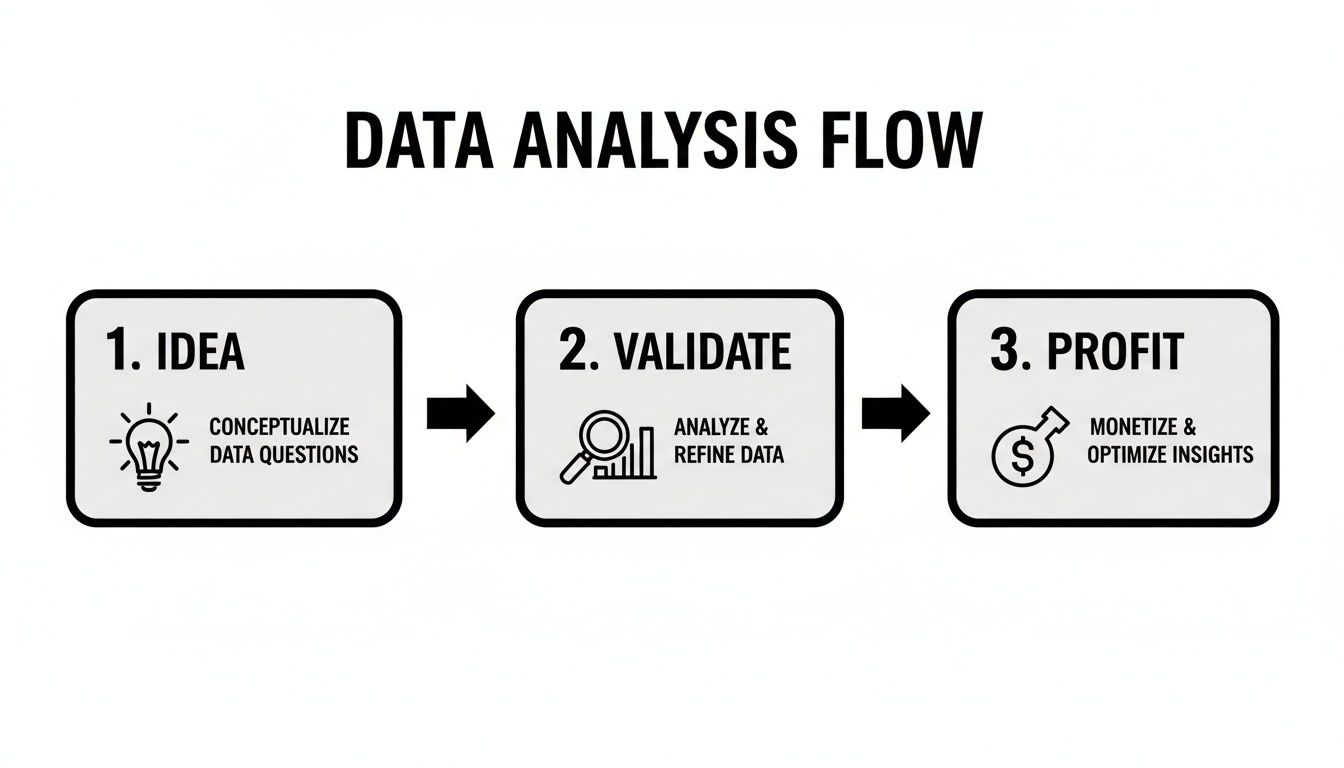
Following this ensures every product you consider is put through its paces, which drastically cuts your risk and boosts your chances of making a quick, profitable sale.
Step 1: Brainstorm High-Potential Ideas
The journey always starts with broad exploration. Begin by looking at the high-demand categories we covered earlier—like Electronics, Auto Parts, or Collectibles—and see which sub-niches catch your eye. Maybe you're into vintage gaming consoles, or maybe you see an opportunity in replacement parts for popular truck models.
Your first task is simple: make a list of at least 10-15 potential product ideas. Don't get bogged down in the details just yet. The goal here is just to create a pool of candidates to test in the next stage.
Step 2: Validate Demand with Data
Now it’s time to separate the winners from the wannabes using cold, hard data. For each idea on your list, you need to dive into eBay's sold listings or use a tool like Terapeak to find the key metrics.
Your primary focus should be on these three numbers:
- Sell-Through Rate: This is your clearest signal of strong buyer demand. You should be aiming for products with a rate of 60% or higher.
- Average Sold Price: This isn't what people are listing it for; it's what they're actually paying. This gives you the realistic market value.
- Number of Sellers: A ton of sellers can mean a saturated market. You're looking for that sweet spot with healthy demand but manageable competition.
Any product idea that doesn't hit these benchmarks gets crossed off the list. No exceptions. This step is purely analytical and is designed to take emotion out of the equation. Just follow the data.
Step 3: Spy on Your Future Competitors
Once you have a shortlist of data-validated products, it’s time to put on your detective hat. For each item, find the top 3-5 sellers and start dissecting their listings. The goal isn't to copy them; it's to find their weaknesses and identify where you can do better.
Successful selling on eBay is often about out-marketing, not just out-pricing. Analyze top listings to find gaps in their titles, descriptions, or imagery that you can exploit.
Ask yourself these critical questions as you review their listings:
- Are their photos crystal clear and professional, or are they blurry and dark?
- Is their title packed with the keywords buyers are searching for?
- Does their description answer every possible question a buyer might have?
- What are their shipping costs and return policies? Are they competitive?
Every single gap you find is a competitive advantage you can build into your own listing. If their photos are terrible, you can win with professional-grade images. If their descriptions are thin, you can win with comprehensive, helpful details.
Step 4: Find Reliable and Affordable Suppliers
You've found a product with proven demand and a competitive angle—now you need to get your hands on it. For a lot of sellers, especially when starting out, a platform like AliExpress is a fantastic place to find suppliers for dropshipping or placing small bulk orders.
When you're checking out a potential supplier on AliExpress, look for these trust signals:
- High Seller Rating: A feedback score of 95% or higher is a great sign of reliability.
- Years in Business: Look for stores that have been operating for at least a couple of years.
- Order Volume: A high number of past orders shows they're an established and trusted operation.
Don't be afraid to reach out and contact a few potential suppliers. Ask them about product quality, shipping times, and how they package their items. Their responsiveness and professionalism will tell you a lot about what it’s like to work with them.
Step 5: Calculate Your True Profit Potential
This last step is the most important one. You have to crunch the numbers to make sure the product is actually going to make you money. A high selling price means nothing if your costs and fees eat up all the margin.
Use this simple formula:
Potential Profit = Average Sold Price – (Product Cost + Shipping Cost + eBay Fees)
You have to factor in everything. eBay fees typically hover around 13% for most categories, but you also have to account for shipping supplies if you aren't dropshipping. If that final number doesn't leave you with a healthy profit margin, the product isn't worth your time, no matter how well it sells. Ditch it and move on to the next validated idea on your list. This final check protects your bottom line and makes sure your effort will be rewarded.
Nailing Your Sourcing and Pricing
Finding a hot product is a rush, but that's just the starting line. The real money is made—or lost—in how you source that product and price it. This is the part of the game where savvy sellers pull away from the crowd, turning a good find into a consistent, reliable income stream.
Think of it this way: your sourcing strategy sets your cost floor, and your pricing strategy sets your revenue ceiling. You need to master both to build an eBay business that doesn't just survive, but actually thrives.
Picking Your Sourcing Model
How you get your hands on your products will define everything from your startup costs to your day-to-day grind. People find success with all sorts of methods, from flipping thrift store gems to retail arbitrage. But for new sellers looking for a low-barrier entry, one model stands out: dropshipping from a massive marketplace like AliExpress.
Dropshipping is a game-changer because it demolishes the single biggest obstacle for new entrepreneurs: inventory. You don't have to buy a garage full of products and hope they sell. Instead, you partner with a supplier who ships the item directly to your customer after you’ve made the sale.
This approach comes with some serious perks:
- Barely Any Financial Risk: You don't buy the product until your customer has already paid you for it. That means you can't get stuck with a pile of unsold stuff.
- An Endless Aisle of Products: A platform like AliExpress gives you a mind-boggling selection. If you can think of a niche, you can probably find products for it.
- Work from Anywhere: Since you’re not handling physical stock, your business can run from a laptop, no warehouse needed.
Of course, the whole system hinges on one thing: finding a supplier you can actually count on.
How to Spot a Good AliExpress Supplier
Your dropshipping supplier isn't just a vendor; they're your business partner. A great one will make you look like a hero with quality products and fast shipping. A bad one can torpedo your reputation before you even get off the ground.
When you're digging through AliExpress, keep an eye out for these tell-tale signs of a reliable partner:
- High Seller Rating: I don't even look at anyone with less than a 95% feedback score. It’s a solid first filter for quality and service.
- Time in the Game: Look for stores that have been operating for at least a couple of years. Longevity in this space usually means they're doing something right.
- Real Customer Reviews: Go beyond the star rating and actually read the recent feedback. Are people happy with the product quality? Are there complaints about shipping taking forever?
Don't just glance at the stars. Dig into what people are actually saying. "Great quality, just like the picture" is what you want to see. "Took 60 days to arrive, broken" is a massive red flag. This is your best defense against future headaches.
Once you have a few candidates, order a sample. There is no substitute for holding the product in your own hands. It’s the only real way to know if the quality is up to your standards. This small investment up front can save you a world of pain later.
Nailing Your EBay Pricing Strategy
Okay, you've got your product and a reliable supplier. The final piece of the puzzle is setting the right price. Price too high, and buyers will scroll right past you. Price too low, and you're either leaving cash on the table or, even worse, losing money after fees. The goal is to find that sweet spot that drives sales and maximizes profit.
First things first: you have to know your numbers. So many sellers just look at the product cost, but that’s a rookie mistake. To figure out your true break-even point, you need the full picture.
Total Cost = Product Cost + Shipping Cost + eBay Fees + Ad Fees (if you run them)
Remember, eBay's final value fee is typically around 13.25% of the total sale amount for most categories, plus a fixed $0.30 per order. Always double-check the current fee structure so your math is on point.
Once you know what it costs to sell one unit, you can start building your strategy:
- Do Your Homework: Look up the sold listings for your exact item on eBay. What's the going rate? Pricing your item competitively within that range is the quickest way to get seen.
- Auction vs. Buy It Now: If you've got a hot-ticket or rare item, an auction can create a bidding war and drive the price higher than you might expect. But for most products with a stable market value, a fixed-price "Buy It Now" listing gives you more predictable results.
By getting a handle on both sourcing and pricing, you graduate from simply finding cool products. You start building a solid, resilient engine for your business, ensuring that every "cha-ching" you hear is a profitable one.
Creating eBay Listings That Actually Convert

Finding a hot product is a massive win, but it’s really only half the job. Even the most in-demand item will just sit there if the listing is lazy, confusing, or just looks untrustworthy. A great eBay listing does more than show off a product; it has to grab a buyer's attention, make them feel confident, and get them to hit that "Buy It Now" button.
Think of your listing as your best salesperson, working for you around the clock. If it looks sloppy, buyers will assume your product and customer service are sloppy, too. A polished, professional listing is your single best tool for cutting through the noise and turning browsers into buyers.
Crafting Titles That Attract Clicks
Your title is everything when it comes to eBay's search. It's the first thing a potential customer sees, and it's what the search algorithm, Cassini, uses to put your item in front of the right people. A weak title makes you invisible. A strong one is like having a storefront on the busiest street in town.
You need to get inside your customer's head. What words are they actually typing into the search bar? Your title should be a mix of keywords that cover the item's brand, model, size, color, and condition.
Here's a simple formula that works:
[Brand Name] + [Product Name/Model] + [Key Feature 1] + [Key Feature 2] + [Condition]
Let's look at the difference.
- Weak Title: Blue Nike Shoes
- Strong Title: Nike Air Max 270 Men's Running Shoes Blue White Size 11 – New with Box
That second title is packed with the exact details a serious buyer is looking for. It skyrockets the chances of showing up in the right searches. eBay gives you 80 characters for a reason—use every last one.
Writing Descriptions That Build Trust
Once a buyer clicks, your description needs to seal the deal. This is where you go beyond just keywords and start telling a story that builds trust and answers questions before they're even asked. Whatever you do, avoid a giant, unbroken wall of text.
Use bullet points to call out the best features and benefits. Be completely honest about the item’s condition. If there's a tiny scratch on a used gadget, point it out and add a photo of it. That kind of transparency builds incredible trust and drastically cuts down on returns and bad feedback.
To help you put all these pieces together, we've created a simple checklist. Run through this every time you create a new listing to make sure you're not leaving money on the table.
eBay Listing Optimization Checklist
| Element | Best Practice | Why It Matters |
|---|---|---|
| Title | Use all 80 characters. Include brand, model, size, color, and condition. | Maximizes visibility in eBay's search algorithm and attracts qualified buyers. |
| Photos | 10-12 high-resolution, original images showing all angles and details. | Builds trust, answers visual questions, and proves the item's condition. |
| Item Specifics | Fill out 100% of the recommended and required fields. | Helps your listing appear in filtered search results, which serious buyers use. |
| Description | Use short paragraphs, bullet points, and bold text for key features. | Makes information easy to scan and digest, keeping buyers engaged. |
| Pricing | Research sold listings for your item to set a competitive price. | Ensures you're aligned with market value, not too high to deter buyers or too low to lose profit. |
| Shipping | Offer free and fast shipping whenever possible. | This is a massive conversion driver and helps you qualify for eBay's Fast 'N Free tag. |
| Return Policy | Offer a 30-day or 60-day return policy. | Increases buyer confidence and can boost your search ranking. |
Following this checklist is a surefire way to build listings that not only look professional but are also engineered to sell. For a deeper dive, our complete guide offers more advanced tips for top-tier eBay listing optimization that can help you fine-tune your entire process.
Why Your Product Imagery Is Everything
Online, your photos are the product. A buyer can't pick it up or inspect it, so your images have to do all the work. Grainy, poorly lit, or generic stock photos scream "amateur seller" and will kill a buyer's confidence in a heartbeat. If you're serious about selling, high-quality, original images aren't optional.
Your images absolutely must:
- Show the product from every possible angle.
- Use a clean, neutral background so the item is the hero.
- Clearly highlight unique features, details, or any flaws.
This is especially true for dropshippers. Too many sellers just copy and paste the same low-res images their AliExpress supplier provides. That's a huge mistake. It makes your listing look exactly like a dozen others, forcing you to compete on price alone.
To get an immediate edge, you need better media. A tool like AliSave Pro is built for this. It lets you download all of a supplier's high-resolution photos, variant images, customer review pictures, and even product videos with one click. By picking and choosing the very best images for your listing, you can present the product in a much more professional and compelling way. It's a simple step that can make a world of difference in your click-through rates and sales.
Common Questions from eBay Sellers
Jumping into eBay selling is one thing, but actually building a profitable store brings up a whole new set of questions. It's not just about what to sell; it's about how you handle the daily grind of competition, suppliers, and growth. Here are some real-world answers to the questions I hear most often.
How Do I Handle Intense Competition in Popular Niches?
First off, don't be scared of competition—it's proof that you've found a market with real buyers. The mistake most new sellers make is trying to win by having the lowest price. That's a race to the bottom that you'll never win.
Instead, you have to find other ways to make your listings the obvious choice.
- Superior Photography: This is your secret weapon, especially if you're dropshipping. While everyone else is using the same generic, low-quality photos from their supplier, you can stand out with crisp, clean, original images that show the product from every conceivable angle.
- Better Listings: Craft your titles and descriptions for both humans and eBay's search algorithm. Write a title packed with relevant keywords, and use the description to answer every question a buyer might have before they even think to ask it.
- Excellent Service: Be the seller people love to buy from. Answer questions fast, ship products ahead of schedule, and be a pro when problems pop up. That positive feedback score is worth more than any discount you could offer.
Think of it like two coffee shops on the same block. One might be 10 cents cheaper, but people will line up at the one with better service, a cleaner shop, and a friendlier barista. Be that coffee shop.
What Should I Do if a Supplier Is Unreliable?
A bad supplier can absolutely wreck your eBay reputation with late shipments or shoddy products. The best move is to vet them before you ever list their items. Always, and I mean always, order samples to see the quality for yourself.
But what if you're already stuck with an unreliable partner? You need to act fast.
Don't just cross your fingers and hope the buyer doesn't notice a delay. Be proactive. Message them, be honest about the situation, and offer a solution—maybe a small refund or a replacement. Your honesty can turn a potential negative feedback into a positive one.
While you're doing damage control, you should be actively searching for a backup supplier. Never, ever depend on a single source for a best-selling product. Having a vetted backup ready to go is just smart business; it protects your income and keeps your store running smoothly when things go wrong.
How Can I Scale My eBay Store from a Side Hustle?
Taking your store from a side project to a serious business is all about shifting your focus from doing tasks to building systems. You can't just work harder; you have to work smarter by automating and delegating whatever you can. This frees you up to focus on what actually grows the business: finding new products and marketing.
Take a hard look at where you spend most of your time.
- Streamline Listing Creation: Stop building every listing from scratch. Use templates and tools to create professional-looking listings in a fraction of the time.
- Automate Order Management: Once you have a steady stream of sales, manually tracking everything becomes a nightmare. It's time to bring in software to help manage your inventory, track orders, and even handle customer messages.
- Optimize Your Sourcing: If you're spending hours at thrift stores finding one-off items, you'll hit a ceiling. To really scale, you need a more repeatable model, like dropshipping or buying in small wholesale batches.
Real growth happens when you finally stop being the bottleneck in your own business. It's about creating a process that can handle more sales without demanding more of your personal time.
Ready to create listings that blow the competition away? It all starts with having incredible product photos. With AliSave Pro, you can grab every high-resolution image and video from an AliExpress supplier with a single click. Try AliSave Pro for free today and give your eBay listings the professional look they need to win the sale.