
So, you’ve got a treasure on your hands and you’re ready to sell it online. It might seem daunting, but the core process is actually straightforward. You’ll need to research and authenticate your item, create a fantastic online listing with great photos, and then safely pack and ship it to its new owner.
The real key to success is picking the right place to sell. You’ve got options ranging from massive marketplaces like eBay to highly specialized auction sites, and your choice can make all the difference.
Your Blueprint for Success in the Online Antiques Market
Before you jump in, it helps to get a feel for the current scene. Selling antiques online today isn't just about offloading old stuff. It's about tapping into a massive, enthusiastic community of collectors and designers who are actively hunting for pieces with a story. This market is booming, and for sellers with a smart approach, the opportunity is huge.
The entire process, from spotting a gem to getting it to the buyer, can be broken down into a simple workflow.
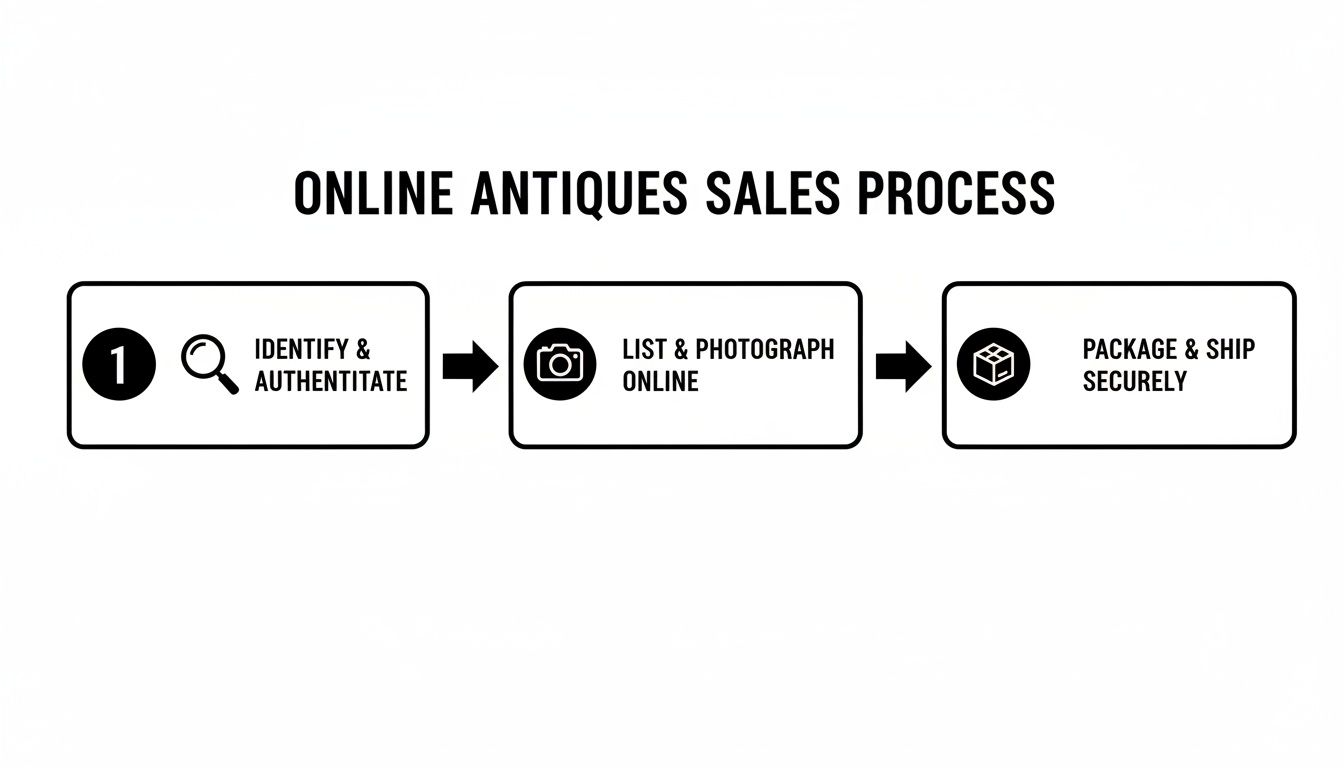
This workflow shows that a successful sale really comes down to three things: knowing what you have, presenting it well, and delivering on your promises. When you get these right, you build the trust that convinces someone to buy an item they’ve only seen on a screen. For a deeper dive, a comprehensive guide on how to sell antiques online can be an invaluable resource to start with.
The Thriving Digital Marketplace
The online antiques market is hotter than ever. It has seen a steady compound annual growth rate of 4.3% over the last five years and is expected to hit a staggering $2.8 billion in revenue by the end of 2025. The big shift toward online shopping has only poured fuel on the fire.
This means you’re not trying to create demand—it’s already there. Your job is to figure out where to find your ideal buyer.
Choosing Your Online Antique Selling Platform
Finding the right home for your item is a crucial first step. Different platforms attract different crowds, and what works for a vintage postcard might not be the best fit for a Georgian highboy. Here’s a quick breakdown of the major players.
| Platform | Primary Audience | Fee Structure | Best For |
|---|---|---|---|
| eBay | General consumers, collectors, bargain hunters | Listing fees + final value fees (variable) | Common collectibles, vintage clothing, items with broad appeal. |
| Etsy | Buyers seeking unique, handmade, and vintage goods | Listing fees + transaction fees + payment processing fees | Vintage jewelry, decor, ephemera, and smaller curated items. |
| Ruby Lane | Serious collectors, antique dealers | Monthly maintenance fee + commission on sales | High-quality, authenticated antiques, fine art, and vintage jewelry. |
| Chairish | Interior designers, design-savvy homeowners | Commission-based (tiered), no listing fees | Designer furniture, high-end decor, and unique statement pieces. |
| Facebook Marketplace | Local buyers | No fees for local pickup | Large furniture, heavy items, and quick local sales to avoid shipping. |
Each of these platforms has its own unique ecosystem. While eBay offers sheer volume, a niche site like Ruby Lane provides a more targeted, knowledgeable audience willing to pay for quality. The right choice ultimately depends on what you're selling, who you want to reach, and how much work you want to put into the sale. For a head-to-head comparison of two popular, yet very different, options check out our breakdown of https://alisavepro.com/ebay-vs-facebook-marketplace/.
Getting Your Antiques Ready for Their Online Debut
A profitable sale starts way before you ever snap a photo. It’s the behind-the-scenes work—the evaluation, the authentication, the careful documentation—that builds the trust you need to convince someone to buy an item they can't even hold. If you skimp on this part, it’s like building a house on a shaky foundation. It might look okay at first, but it won’t stand up to a serious buyer's questions.
When you do this prep work right, you can price your items with total confidence, field any questions that come your way, and start building a reputation as a seller who knows their stuff. This is exactly how you stand out from the crowd and ultimately get better prices for your finds.
First Things First: Research and Authentication
Every antique has a story, and your first job is to figure out what it is. Before you can even think about a price tag, you need to know exactly what you're holding. The process always starts with a close-up, hands-on examination of the piece itself. You’re looking for any little clue that can point you in the right direction.
These details are often tiny but can tell you everything. On a piece of furniture, it might be the way a joint is constructed. For a piece of porcelain, it’s all about the maker’s mark on the bottom.
- Maker's Marks & Signatures: These are your most direct leads. Flip the item over, look inside, check the back—anywhere a stamp, signature, or symbol might be hiding. A quick online search for these marks can often tell you the manufacturer, where it was made, and a rough time frame.
- Materials & Construction: The materials themselves speak volumes. Is that jewelry sterling silver or just silver plate? Is a table built with old-school, hand-cut dovetail joints or modern machine-cut ones? These specifics help you zero in on the age and quality.
- Style & Design: Get familiar with the major design movements, like Art Deco, Victorian, or Mid-Century Modern. The overall look of your piece—its lines, colors, and decorative elements—are powerful indicators of its era.
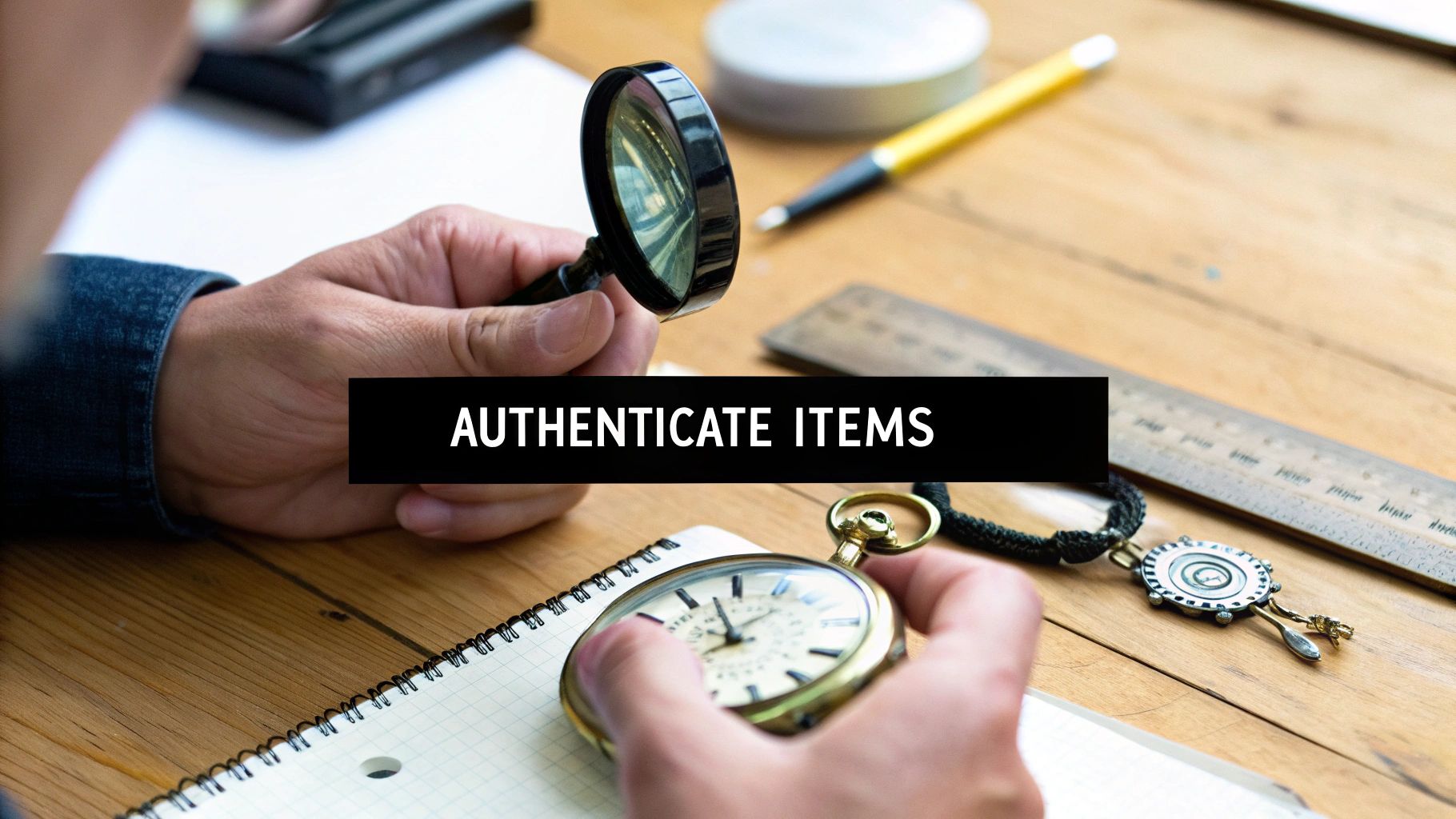
Once you’ve gathered these initial details, it's time to hit the books—or, more likely, the web. Taking the time to properly research and sell antiques on the internet means tapping into the vast knowledge base available online.
When you're dealing with something specialized, like antique textiles, a professional appraisal can be worth its weight in gold. It gives you insight into historical significance, rarity, and condition, so you can price your pieces confidently and negotiate like a pro.
Using Online Tools to Pinpoint Value
The good news is you don't have to be a certified appraiser to get a solid idea of what your antique is worth. The internet gives you incredible tools that show what people are actually paying for items just like yours. My go-to strategy is always to research sold listings.
Looking at active listings is just wishful thinking; a seller can ask for whatever they want. Sold listings, on the other hand, show what the market truly bears. Marketplaces like eBay have a simple filter to show only completed sales, which is an invaluable source of real-world pricing data.
There are also fantastic paid resources. Kovels, for example, is a widely respected online price guide for antiques and collectibles. Their database is massive and can help you identify marks and find current auction prices, giving you a solid baseline for your own strategy.
Documenting Condition and Provenance
When you're selling antiques online, honesty isn't just the best policy—it's the only policy. Your buyer can't pick up the item and inspect it, so your photos and description have to do all the work. That means being brutally honest about every single chip, scratch, repair, or sign of wear, no matter how minor.
Start by giving the piece a thorough, head-to-toe inspection under a bright light. I like to keep a running list in a notebook or a digital doc to record everything I see. This isn't just about pointing out flaws; it's about painting a complete and accurate picture for your customer.
A Quick Condition Checklist
- Surface Check: Any scratches, scuffs, or dings? Note their location and try to describe the size.
- Structural Check: Is it wobbly, loose, or unstable? For furniture, give every joint a gentle wiggle.
- Past Repairs: Look for tell-tale signs like a dab of modern glue, mismatched hardware, or slight variations in color that scream "I've been fixed!"
- Age-Appropriate Wear: Don't forget to mention things like patina, fading, or crazing (on ceramics). These aren't always flaws—to many collectors, they're proof of authenticity and character.
Beyond the physical state, an item's provenance—its history of ownership—can be a massive value-add. If you know where the item came from, who owned it before, or better yet, have an original receipt or old paperwork, that information is pure marketing gold.
Even a simple handwritten note from a previous owner or an old photo showing the piece in its original home can transform a standard antique into an object with a rich, verifiable history. Always feature this documentation prominently in your listing. It builds an emotional connection and provides the kind of assurance that serious collectors are willing to pay a premium for.
Turning Browsers into Buyers with Killer Listings
You’ve done the hard work of finding, researching, and authenticating your antique. Now comes the most critical part: creating a listing that actually sells. This is your digital handshake, your sales pitch, and your storefront all rolled into one. Get it right, and you turn a casual scroll into a committed purchase.
A successful listing boils down to two things: stunning photos that create an emotional pull and a detailed description that builds trust. One without the other is a recipe for a listing that just sits there, collecting digital dust.
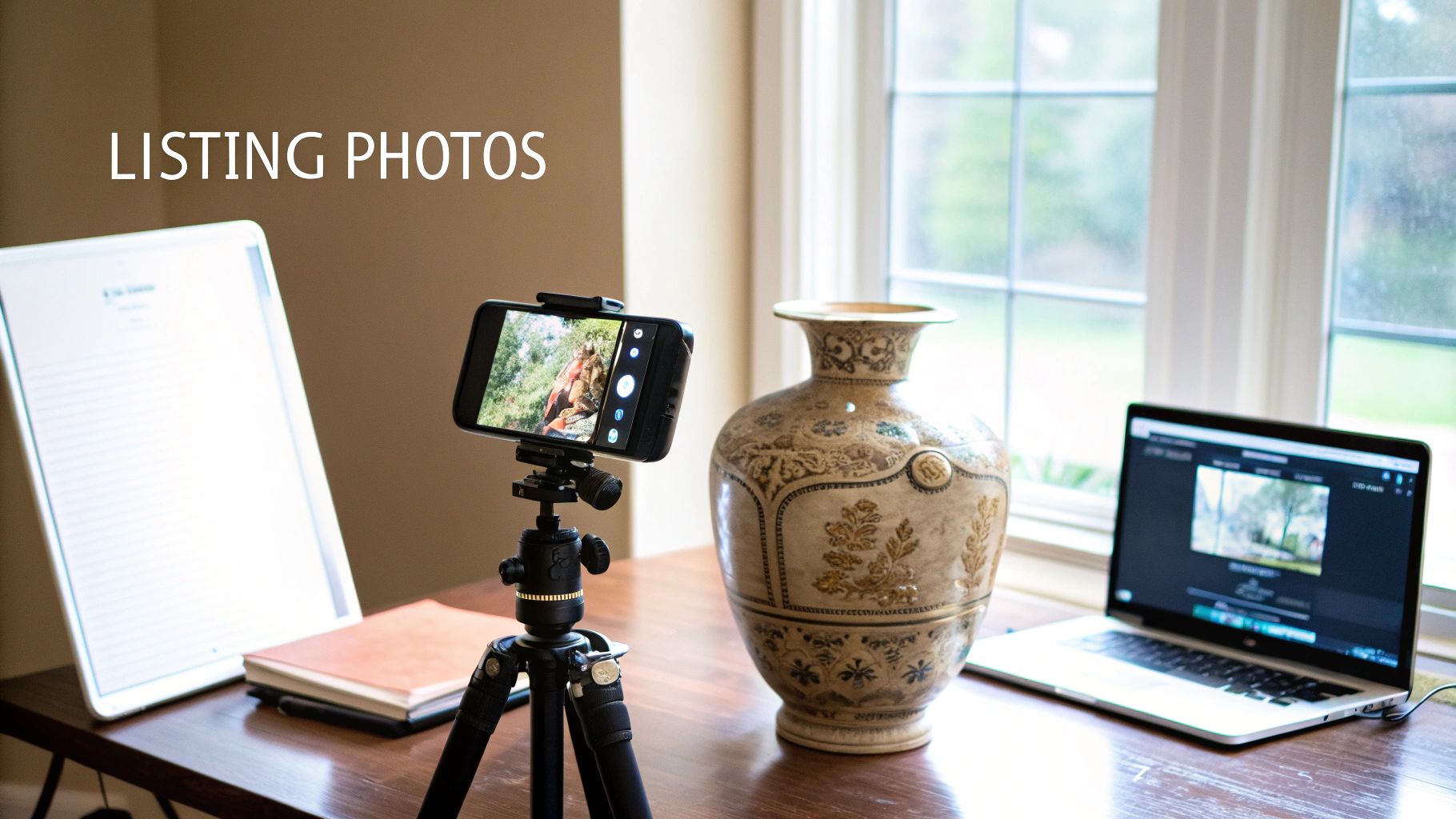
Your pictures grab their attention; your words convince them to click "buy." Let's break down how to master both.
You Don't Need a Fancy Camera to Master Photography
Let me be clear: you do not need an expensive DSLR and a professional studio. Your smartphone is a powerhouse, perfectly capable of producing crisp, clear, and compelling photos. The secret isn't the gear—it's the technique. In my experience, bad photos are the single biggest reason fantastic antiques fail to sell.
First, find your light. Natural light is your best asset. Set up near a big window, but stay out of direct, harsh sunlight. That kind of light creates deep, ugly shadows and can blow out the colors. The absolute best light comes on an overcast day—the clouds act as a massive, free softbox, giving you beautiful, even lighting.
Next, simplify your background. You want the antique to be the star, not the clutter in your living room. A roll of white or gray paper, a clean wall, or even a neatly ironed bedsheet can create a neutral backdrop that makes your item pop.
Your Essential Photo Checklist for Antique Listings
Think like a buyer who can’t hold the item in their hands. What would they want to inspect? Your job is to answer all their visual questions before they even have to ask. A comprehensive photo gallery is your best tool for building confidence and reducing hesitation.
Here's a checklist of shots I never skip. It tells a complete visual story and shows buyers you have nothing to hide.
| Photo Type | Purpose | Pro Tip |
|---|---|---|
| The "Hero" Shot | Your main gallery image. It shows the entire item in its best possible light. | Shoot from a slightly low angle. It makes the piece look more important and substantial. |
| Angle Shots | Give a full 360-degree sense of the item: front, back, sides, top, and bottom. | I take at least 8 photos, rotating the item just a little each time to create a seamless virtual tour. |
| Detail & Texture Shots | Close-ups that show off intricate carvings, the weave of a fabric, or the texture of the paint. | Use your phone’s macro mode. This is where you show off the craftsmanship that makes the piece special. |
| Maker's Marks & Signatures | Crystal-clear, focused images of any hallmarks, signatures, or factory marks. | This is non-negotiable for proving authenticity. Take as many shots as you need to get one that is perfectly sharp. |
| Flaws & Imperfections | Be honest. Show any chips, scratches, crazing, or other signs of wear. | Point directly to the flaw with a pencil tip or use a coin for scale. This builds incredible trust with buyers. |
| Scale Shot | A photo of the item next to something familiar, like a ruler or a coffee mug. | This instantly grounds the buyer's perception of size and prevents disappointment upon arrival. |
Following this checklist ensures you’ve covered all your bases. It preemptively answers questions and removes any doubt a potential buyer might have, making it that much easier for them to feel secure in their purchase.
Writing Descriptions That Do the Heavy Lifting
Your photos hooked them; now your words have to reel them in. A great description marries storytelling with the practicalities of search engine optimization (SEO), ensuring your listing not only gets found but also converts.
It all starts with the title. This is your first, and sometimes only, chance to grab a buyer searching for exactly what you have.
A Bad Title Looks Like This: Old Wooden Chair
A Great Title Looks Like This: Antique Victorian Carved Mahogany Parlor Chair, Original Upholstery, Circa 1880s
The second title is packed with keywords a serious collector would use. It instantly communicates style, material, age, and condition.
When writing the body of your description, assume people will skim. Use short, punchy paragraphs and bullet points for key details like dimensions, materials, and condition. I always start with a short narrative paragraph to set the scene and tell the item’s story, then follow up with the hard facts in an easy-to-read format.
The good news is, the market for unique items is booming. Younger generations, especially Millennials and Gen Z, are moving away from mass-produced furniture and decor. They're fueling a projected 15% annual growth rate in the antiques market through 2025-2026, seeking out sustainable, character-rich pieces. You can read more about the evolving antiques market and its growth on ronati.com.
Weaving in Keywords the Right Way
To get your listing in front of the right eyeballs, you need to think like a customer. What terms would they use in the search bar? Before you write a single word, brainstorm a list.
- Primary Keywords: The big, obvious terms ("Art Deco lamp," "sterling silver spoon").
- Secondary Keywords: More descriptive terms that add detail ("milk glass shade," "hand-chased details," "mid-century modern").
- Long-Tail Keywords: Highly specific phrases a serious buyer might use ("original condition Eames lounge chair," "signed Tiffany Studios table lamp").
Sprinkle these terms naturally throughout your title and description. The goal is to sound like a knowledgeable expert, not a robot stuffing keywords. If you’re selling on a major platform like eBay, this becomes even more critical. For a deeper dive, check out these strategies on advanced eBay listing optimization.
Finally, be exhaustive. Provide exact measurements—length, width, height, and even weight. Describe the condition with ruthless honesty. Detail every known bit of history. By creating a listing that is both beautiful and transparent, you remove all the friction from the buying process, making "Add to Cart" an easy, confident click.
6. Closing the Deal: Pricing, Shipping, and Customer Care
Getting the sale is one thing; getting it right is another. This is where you graduate from a hobbyist to a professional. A great listing gets you the click, but your strategy for pricing, shipping, and service is what builds your reputation and ensures you actually make a profit. Many sellers stumble here, but nailing these logistics is the key to a sustainable online antique business.
It’s about more than just slapping a price tag on something. You need to pick the right sales format for each unique piece. Then, you have to figure out how to transform a fragile, hundred-year-old object into a parcel that can survive being tossed around in a delivery truck. And finally, you provide the kind of service that turns a one-time buyer into a repeat customer who sings your praises.
Choosing the Right Pricing Strategy
How you price your antique can make or break the sale. There’s no single magic formula; the best approach really depends on the item’s rarity, current demand, and where you're selling it.
- Fixed-Price (Buy It Now): This is your best bet for items with a clear, established market value. If your research on sold listings shows a consistent price range, a fixed price offers clarity for the buyer and a predictable profit for you. It's the most straightforward way to sell antiques on the internet.
- Auction Format: Got something truly rare, unique, or in high demand? An auction is the way to go. It creates a buzz and competitive bidding that can drive the final price well beyond what you might have gotten with a fixed price.
- Best Offer: I love adding a "Best Offer" option to my fixed-price listings. It's a great hybrid strategy that invites negotiation and helps move inventory that’s been sitting for a while, giving you flexibility without the all-or-nothing pressure of an auction.
When it comes to pricing, real data is everything. Forget what people are asking for—you need to know what similar items have actually sold for. Marketplaces like eBay make this research simple. If you need a hand, our guide on https://alisavepro.com/how-to-find-sold-listings-on-ebay/ will walk you through the exact process.
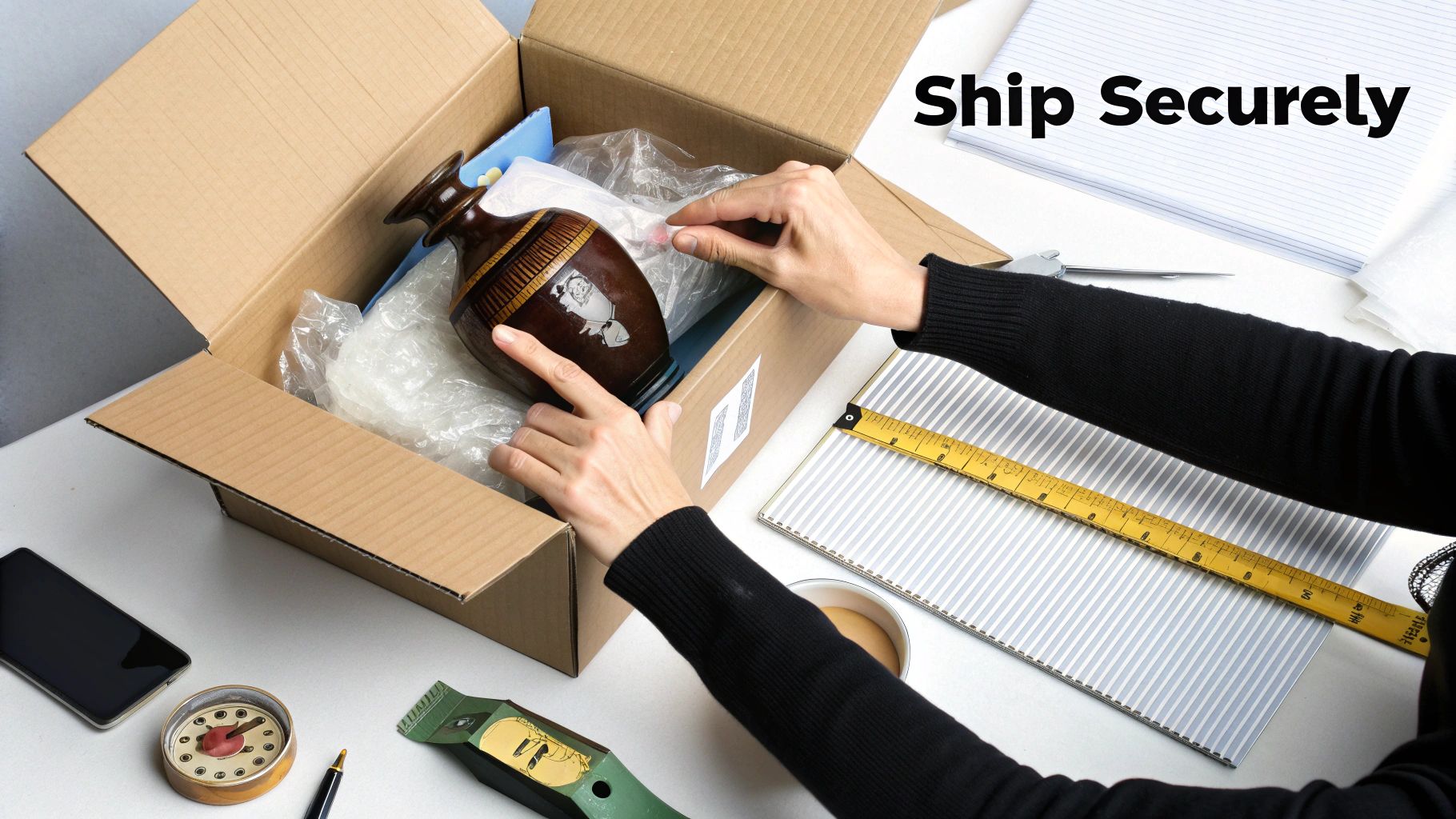
Shipping Antiques Without the Heartache
The idea of shipping a delicate porcelain figurine or a painting in a gesso frame can be nerve-wracking. I get it. But with the right materials and a methodical process, you can pack like a pro and ensure your items arrive in one piece. Honestly, damage in transit is one of the most common—and avoidable—headaches in this business.
A buyer's disappointment over a broken item is far more damaging to your reputation than the few extra dollars you'll spend on more bubble wrap. Think of your packing job as the final, critical act of customer service.
First, get your supplies in order. And trust me, you’ll need more than you think.
- Double-Boxing: For anything truly fragile, this is non-negotiable. Pack the item securely in a smaller box, then float that box in the middle of a larger one with padding all around. This "box-in-a-box" method is your ultimate shock absorber.
- Quality Materials: Don't cheap out here. Use new, sturdy boxes, good packing tape (not the dollar-store kind), and a mix of cushioning like bubble wrap, packing peanuts, or kraft paper.
- The Shake Test: Once it's all packed up, give the box a gentle shake. If you feel or hear anything moving inside, it’s not ready. Open it back up and add more padding until the item is completely immobilized.
Calculating shipping costs accurately is just as important for protecting your profits. Always weigh and measure the final, packed box before you create the listing. Use the shipping calculator on the marketplace to get an exact cost. Guessing is a surefire way to lose money on a sale. For large items like furniture, you'll need a professional freight service. To get started, check out these expert tips for safe transport of antique furniture.
The Art of Exceptional Customer Care
In the faceless world of e-commerce, outstanding customer service is how you stand out and build a brand people trust. It's what brings customers back and gets you those glowing reviews that convince new buyers to take a chance on you.
Be responsive. Be professional. Answer questions quickly and politely, even if the information is already in your listing. After a sale, send a quick message to say thank you and provide the tracking number the moment it ships. It’s a small thing, but it provides huge peace of mind for your buyer.
Finally, handle any issues with grace. If an item arrives damaged despite your best packing job, or if a buyer is unhappy for any reason, stay calm. A quick, empathetic response that focuses on finding a fair solution can often turn a negative experience into a positive one, saving the sale and your reputation.
Scaling Your Online Antique Business
Moving from a passionate hobbyist selling a few items to running a real-deal online antique business is a big leap. It forces you to think differently—less about the thrill of a single find and more about building a sustainable system for sourcing, listing, and shipping. This is where you graduate from treasure hunter to entrepreneur.
The secret to smart growth isn't just about finding more stuff; it's about consistency. You need a reliable pipeline of new inventory and a marketing engine that keeps working even when you’re not actively listing. It’s all about creating repeatable processes that save you time and expand your reach beyond your current methods.
Building a Consistent Sourcing Strategy
Let's be blunt: you can't sell what you don't have. Winging it with sourcing might work when you're just starting out, but to truly scale, you have to actively hunt for inventory from multiple, reliable streams. Diversifying your sources is your best defense against the dreaded dry spell and opens you up to new categories of items.
Think bigger than the weekend flea market. Building a solid relationship with a few local estate sale companies, for example, can get you a first look at entire collections before they ever hit the public market. The same goes for local auction houses, where you can often score bulk lots at a much better price than you’d get buying piece by piece.
Here are a few proven channels to keep your inventory flowing:
- Local Estate Sales: Get on every email list for estate sale companies in your region. The key is showing up early on the first day to find the best pieces before they’re gone.
- Online Auctions: Websites like LiveAuctioneers and Everything But The House (EBTH) give you access to sales happening all over the country. This is a fantastic way to source specialized items you’d never find in your own backyard.
- Networking with Other Dealers: Don’t be afraid to connect with local antique shop owners. They might have inventory that’s not quite right for their shop or items outside their niche that they'd be happy to sell to you at a dealer price.
This multi-channel approach is your ticket to having something new and exciting to list all the time, which keeps your online presence fresh and your customers coming back.
Marketing Your Brand Beyond the Marketplace
Relying entirely on marketplace traffic from sites like eBay or Etsy is a risky game. To build a resilient, long-term business, you need to create your own audience and a brand people recognize. This means marketing your business as its own unique entity, not just another seller profile.
This is where social media becomes your best friend. Platforms like Instagram and Pinterest are incredibly powerful for antique sellers because they're so visual. They are perfect for showcasing your unique finds and, more importantly, telling the stories behind them. A thoughtfully curated feed can attract a loyal following of design lovers and serious collectors who are genuinely interested in your specific style.
Think of your social media as your digital showroom. It's where you build a community, share your expertise, and give followers a behind-the-scenes look at your latest acquisitions long before they're even listed for sale.
The internet has been a massive game-changer for the antiques trade. The global market is projected to grow at a 5.0% compound annual growth rate from 2025 to 2033, mostly because online auctions and e-commerce have made antiques so much more accessible. The sweet spot for online sales is often in the low-to-medium price range of $100-$5,000, which sees the highest volume and has turned antiques into a highly profitable internet niche. You can find more data on the growing digital antiques market on globenewswire.com.
Managing the Business Side of Growth
As your sales ramp up, so does the paperwork. It’s easy to ignore the legal and financial side of things, but that’s a mistake that can cause major headaches later on. Getting organized from the very beginning is non-negotiable.
First things first: set up a separate bank account just for your business. This simple step will make tracking your income and expenses a thousand times easier. Pair that with some simple accounting software to keep a clean record of every purchase, sale, and business expense, like packing tape, boxes, and marketplace fees.
Finally, get smart about your tax obligations. Once you're consistently selling for a profit, you're running a business, and the government wants its cut. Depending on where you live and how much you sell, you may also need to collect and remit sales tax. Spending a little money to consult with a small business accountant is a wise investment that can save you from costly errors and set you up for long-term success.
Got Questions About Selling Antiques Online? Let's Talk.
Even with a great plan, jumping into the online antique market can feel like navigating a maze. You start wondering what actually sells, how to deal with the dreaded return request for a fragile piece, or what your legal obligations are. It's easy to get bogged down.
Getting a handle on these common questions is the key to moving forward with confidence. Let's clear up some of the most frequent hurdles I see new sellers face. These insights come from years in the trenches and will help you sidestep rookie mistakes right from the start.
What Antiques Actually Make Money Online?
This is the million-dollar question, isn't it? While trends come and go, some categories are perennial winners in the online space. The secret I've learned is that profitability is often less about sheer age and more about how an item clicks with today's buyers and their homes.
Certain niches just have staying power because they fit perfectly with popular design aesthetics or tap into a passionate collector base. Be on the lookout for these:
- Mid-Century Modern Furniture: Anything with clean, Danish-modern lines or from big names like Eames is almost always a hot ticket.
- Vintage Jewelry: Shoppers are looking for character. Well-crafted pieces from distinct eras like Art Deco or the Victorian period offer a uniqueness that mass-produced jewelry just can't match.
- Collectible Toys: Think 1970s and 1980s nostalgia. Items still in their original boxes can fetch incredible prices from Millennial and Gen X buyers reliving their childhoods.
- Unique Decorative Arts: This is where the fun is. Quirky folk art, unusual studio pottery, or a statement lamp can become the centerpiece of a room, and people will pay for that "wow" factor.
My single best piece of advice? Get obsessed with the "sold" listings on sites like eBay and LiveAuctioneers. Active listings are just what sellers hope to get. Sold prices are the stone-cold truth of what people are actually paying.
How Do I Handle Returns on Fragile Items?
When it comes to fragile antiques, the best return policy is preventing the return in the first place. You’re selling one-of-a-kind items that can't be replaced, so your listing has to do the heavy lifting. This means being radically transparent.
First, have a crystal-clear return policy. Many of us in the business sell items "as-is," but remember that platforms like eBay often have buyer protection policies that can trump your personal terms. That's why prevention is everything. Use hyper-detailed photos and write brutally honest descriptions. I mean everything—document every scratch, craze line, or flea bite. Your goal is for the buyer to have zero surprises.
If a return is unavoidable, you need to protect yourself and the item. Make your terms non-negotiable:
- Must Use Original Packaging: Insist that the buyer repacks the item using all of the original materials. This is your best shot at getting it back in one piece.
- Buyer Must Insure the Return: Require the buyer to purchase shipping insurance for the item's full value for the trip back. This protects both of you if disaster strikes on the return journey.
Do I Really Need a Business License?
This is a big one, and the answer is: it depends. If you're just offloading a few heirlooms from your grandmother's attic, you're probably fine operating as a hobbyist.
But the moment this shifts from a casual clean-out to a regular business—where you're actively sourcing and selling for profit—most places will consider you a business. That usually means you'll need to register with your city or state and, in many cases, collect and remit sales tax.
Don't guess on this. The best thing you can do is check directly with your local Small Business Administration (SBA) office or city clerk. They'll tell you exactly what's required in your area. Operating as a legitimate business from day one isn't just about staying on the right side of the law; it builds trust with your customers and gives you important legal protections.
Ready to streamline your listing process? AliSave Pro lets you download all the high-quality product images and videos you need from AliExpress in a single click, saving you hours of manual work. Get the free Chrome extension and start creating stunning listings faster today at https://alisavepro.com.