
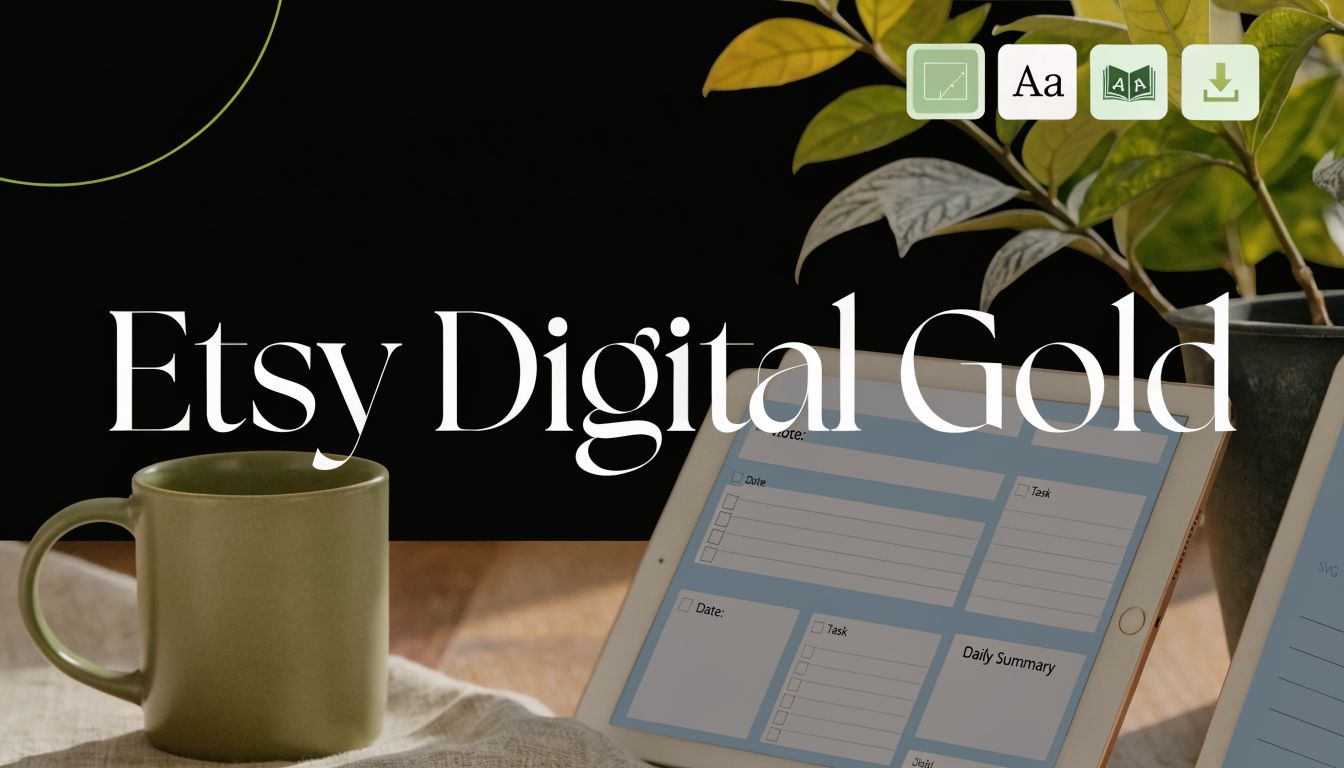
Etsy is no side channel for digital files. It is a real product channel with strong margins, fast testing cycles, and none of the operational drag that comes with physical inventory.
That matters for a specific type of seller. If you have run a dropshipping store, used a product research tool like AliSave Pro, tested hooks in paid ads, or improved weak product pages until they converted, you already have the skills that drive digital sales on Etsy. The format changes. The operating model does not.
Digital products reward the same fundamentals that win in e-commerce. Read demand clearly. Spot gaps in crowded search results. Package the offer around a buyer outcome. Build a cleaner listing than the shops around you. Creative talent helps, but it is rarely the deciding factor.
I have seen sellers waste months designing files nobody asked for. The better approach is simpler. Start with demand, create the minimum version that solves the problem, then improve it once real buyers show you what they want. On Etsy, the best selling digital product on etsy is usually the one tied to a clear use case and presented in a way that removes hesitation.
For e-commerce operators, that is an advantage hiding in plain sight.
Table of Contents
- The Untapped Goldmine of Etsy Digital Products
- Top 5 Best Selling Digital Product Categories in 2026
- How to Validate Your Niche Idea Before Creating Anything
- Your Toolkit for Creating and Delivering Digital Products
- Pricing and Listing Optimization for Top Rankings
- Promoting Your Shop and Driving External Traffic
- Your Roadmap from First Sale to Six Figures
The Untapped Goldmine of Etsy Digital Products
The sellers who win with Etsy digital products treat listings like inventory-free assets. They build them, improve them, bundle them, and keep them working long after the first upload.
That matters even more for e-commerce operators and dropshippers.
If you already know how to spot demand, study competitors, test thumbnails, and write offers that get clicks, you already have the hard part. Etsy has plenty of talented creators. Fewer sellers are good at product research, positioning, and conversion. That gap creates room for disciplined operators to take market share fast.
Digital products also fix several problems that eat physical product margins. There is no supplier delay, no damaged shipment, no refund caused by slow delivery, and no constant pressure to manage stock. The work shifts to research, product packaging, listing quality, and customer intent. That is a better fit for sellers who come from paid traffic, product testing, or dropshipping.
I have seen this play out repeatedly. Sellers with physical product experience usually adapt faster to Etsy digital than traditional handmade sellers adapt to marketing. They are already used to reading demand signals and making decisions from buyer behavior instead of personal preference.
The model compounds well. A winning planner can become a niche bundle. A bundle can expand into templates, trackers, or add-ons for the same buyer. Over time, a small catalog starts acting like a portfolio. Each listing brings in sales on its own, but the main upside comes from related products that raise average order value and make the shop look established.
This is why trend research matters more than design talent at the start. A clean, useful product in a proven niche will usually outperform a beautiful product in a weak niche. If you want a practical way to spot demand shifts before you build, study what’s trending on Etsy right now and look for patterns you can turn into downloadable products.
The opportunity is straightforward. Use the same research and merchandising skills that work in e-commerce, then apply them to products with no fulfillment friction and far better margins.
Top 5 Best Selling Digital Product Categories in 2026

The easiest way to think about Etsy digital categories is like a digital real estate portfolio. Some product types are stable and evergreen. Some depend on trends. Some take more skill but attract stronger buyers.
What consistently sells
1. Printable planners and journals
This is the category I’d start with if the goal is reliable demand. Printable planners dominate Etsy digital case studies, capturing over 30% of top listings, and Canva-editable planner templates reach average shop revenues of $5,000 to $15,000 monthly for top 1% sellers, based on 2025 market analysis. Buyers understand the value immediately. Better organization is an easy sell.
The sweet spot is a planner built for a specific user, not a generic audience. Budgeting, productivity, routines, teachers, students, event planning, and specialized life management angles tend to package well.
2. Social media and business templates
These sell because buyers want speed, not originality. Coaches, freelancers, local businesses, and creators buy templates to avoid starting from scratch. If you can make Canva assets that look polished and are easy to edit, you’re solving a direct business pain point.
3. SVG files and creative assets
This market attracts crafters, Cricut users, side hustlers, and print-on-demand hobbyists. It’s less forgiving if your design quality is weak, but demand stays steady because buyers need usable files, not inspiration.
4. Patterns and instructional downloads
Crochet, knitting, sewing, and craft patterns keep selling because they combine utility with hobby spending. Buyers are usually intentional. They’re not browsing casually. They want a finished result and will pay for clarity.
5. Printable art and digital decor
This category is crowded, but still workable when the style is distinctive and the mockups fit a specific room aesthetic. Generic wall art struggles. Art aimed at a defined taste tends to perform better.
For a broader trend read before choosing a lane, I’d review current Etsy movements through this roundup of what’s trending on Etsy.
A simple category comparison
| Category | Market Demand | Competition | Creation Effort | Avg. Price Point |
|---|---|---|---|---|
| Printable planners | High | High | Medium | Low to medium |
| Social media templates | High | High | Medium | Medium |
| SVG and craft files | High | Medium to high | Medium to high | Low to medium |
| Patterns | Steady | Medium | Medium | Medium |
| Printable art | Steady to high | High | Low to medium | Low to medium |
The best category isn’t the one with the most demand. It’s the one where you can make a better offer than the current first page.
How to Validate Your Niche Idea Before Creating Anything

A lot of sellers waste time designing before they confirm demand. Don’t start in Canva. Start in search.
Use Etsy like a demand scanner
Type your base keyword into Etsy and let autocomplete do some work. If you’re exploring planners, don’t stop at “digital planner.” Add buyer modifiers and use-case terms. Try words tied to intent, audience, format, and outcome.
Here’s the process I recommend:
- Start broad: Search a parent term such as planner, template, SVG, or printable.
- Add modifiers: Layer audience or use-case words like wedding, teacher, budget, meal, ADHD, realtor, coach, salon.
- Study the first page: Look for patterns in titles, preview images, bundle structure, and what buyers are being promised.
- Read reviews: Reviews tell you why people bought and what they still wanted.
- Check listing quality: Weak thumbnails, vague descriptions, and poor mockups are openings. A crowded niche with weak merchandising is still a niche you can enter.
What a healthy niche looks like
You’re looking for signs of demand and signs of weakness at the same time. If listings appear polished, clearly positioned, and buyer language repeats across multiple shops, demand is likely real. If top listings all look interchangeable, there’s room to differentiate.
Red flags matter too:
- Purely trend-driven demand: If the product only makes sense because of a short-lived aesthetic, it may die before you rank.
- Copycat saturation: If every listing is the same file with a different cover image, buyers start shopping on price.
- Low clarity products: If you can’t explain the benefit in one sentence, conversion usually suffers.
- Messy fulfillment: Products that require too much buyer explanation create support issues later.
A niche is validated when buyers already understand the outcome and current sellers still leave obvious quality gaps.
You can also use tools like eRank or Marmalead as supporting checks, but Etsy’s own search results usually tell you enough to make a smart first decision. The main job is finding a buyer problem with language you can mirror and a product structure you can improve.
Your Toolkit for Creating and Delivering Digital Products

You don’t need a giant software stack. You need the right tool for the file you’re making and a workflow that keeps revisions simple.
Choose tools by product type
For most beginners, Canva is enough. It works well for planners, journals, social templates, checklists, lead magnets, simple workbooks, and editable PDFs. It’s fast, familiar, and easy to hand off to buyers who also use Canva.
Use Kittl if your products depend more on style and typography. It’s helpful for decorative printables, quote art, and some graphic-heavy assets where visual polish matters more than document structure.
Use Adobe Illustrator when you’re making SVGs, detailed vectors, icons, or files that buyers need to resize without quality loss. Illustrator has a steeper learning curve, but the output is stronger for technical graphic products.
A simple way to choose:
| Product type | Best starting tool | Better advanced tool |
|---|---|---|
| Planner or workbook | Canva | Adobe InDesign |
| Social media template | Canva | Adobe Photoshop |
| SVG or vector pack | Illustrator | Illustrator |
| Printable art | Canva or Kittl | Photoshop or Illustrator |
Build delivery once
The product file matters, but delivery quality affects reviews. Keep the buyer experience clean.
Use a repeatable packaging system:
- Main asset: The product itself in the format promised.
- Instruction file: A short PDF that explains how to open, edit, print, or use the purchase.
- Access links: If the buyer needs a Canva template or cloud folder, make the access path obvious.
- Preview guide: A one-page visual can cut confusion fast.
Etsy’s instant download feature is what makes the model attractive. Once the files are uploaded correctly, delivery runs automatically. That means your time goes into better products and better listings, not manual sending.
If your shop grows, your files can get messy fast. A clear naming system and organized asset library saves hours later. For a practical workflow reference, see this guide to digital asset management for small business.
Clean fulfillment wins twice. Buyers leave better reviews, and you spend less time answering preventable questions.
Pricing and Listing Optimization for Top Rankings

Most digital products don’t fail because the file is bad. They fail because the listing doesn’t make the value obvious fast enough.
Multiple Etsy digital download stores have reported annual revenues from $93,000 to $168,000, and the $168K case study tied its results to niching down, bundling 10 to 50 items per listing, and using optimized thumbnails and SEO that produced conversion rates of 2% to 5%, double the platform average, according to this seller breakdown. That tells you where to focus. Merchandising matters.
Your listing usually matters more than your file
A buyer doesn’t experience your product first. They experience your thumbnail, title, and promise. If those are weak, the product never gets a chance.
I optimize Etsy listings around three elements:
- Search intent: Put the primary keyword and the exact buyer use case into the title naturally.
- Thumbnail clarity: Show what the buyer gets immediately. Avoid artistic mystery.
- Offer structure: A bundle often beats a single file because the value is easier to justify.
If you sell a planner, don’t lead with a cute brand name. Lead with the use. If you sell templates, show the editable screens. If you sell SVGs, display the finished craft outcome.
This walkthrough is useful if you want a visual example of how listing elements affect clicks and conversion.
How to price without looking cheap
Pricing digital products is less about production cost and more about buyer confidence. Very low prices can hurt trust. If the product solves a real problem, price it like it has a job to do.
Here’s what tends to work:
- Single product for entry: Good for testing a niche and getting first reviews.
- Small bundle for momentum: Better perceived value and easier upsell path.
- Expanded bundle for serious buyers: Works well when the buyer wants completeness, not just one file.
Your description should also remove friction:
- State what’s included
- State who it’s for
- State how it’s used
- State what is not included, especially for editable products
- Answer the main pre-purchase question before the buyer asks it
Better mockups raise perceived value. Better SEO earns the click. Better offer design closes the sale.
Promoting Your Shop and Driving External Traffic
Etsy search is important, but relying on Etsy alone is slow. The shops that grow faster usually create demand outside the platform and send buyers into listings that already convert well.
Use platform-native content
Pinterest works well for products with a visual planning, decor, or business utility angle. Clean mockups, before-and-after examples, and use-case graphics fit the platform naturally.
TikTok works when you show transformation. Don’t post the file itself. Show the outcome. A planner in use, a template customized for a niche business, or a printable turned into a polished setup performs better than a static screen recording.
Email also matters earlier than most Etsy sellers think. Even a small buyer list gives you a way to relaunch improved bundles, seasonal variations, or companion products without waiting for the algorithm. This primer on building an email list is worth reviewing if you want a simple retention channel beyond Etsy.
A clear brand identity helps here. If your Pinterest profile, Etsy banners, listing thumbnails, and social content all feel disconnected, trust drops. If you need a cleaner presentation across platforms, this guide on how to craft your powerful digital brand is a solid reference.
Why dropshippers can win faster
Dropshippers already understand ad creatives, product angles, competitor research, and the difference between a good product and a good presentation. That translates well to digital products.
There’s also an overlooked hybrid play. An underserved angle covered by Outfy is using AliSave Pro-style workflows to repurpose top-selling Etsy digital ideas into physical listings by capturing AliExpress product media, creating high-res planner mockups on notebooks, or applying preset-style looks to product visuals for Shopify or WooCommerce testing. That matters because it lets e-commerce sellers test a winning Etsy idea in both digital and physical formats.
That doesn’t mean turning Etsy into a generic product lab. It means using your existing skill set more intelligently:
- Creative testing: You already know multiple thumbnails can change click behavior.
- Angle testing: You know one audience promise often beats a broad one.
- Offer packaging: You know bundles usually outperform weak single-product offers.
- Cross-channel thinking: You’re comfortable validating demand on one platform and monetizing it on another.
Etsy creators often start with the file. Operators start with the market, then build the file around the buyer.
That mindset is a serious advantage.
Your Roadmap from First Sale to Six Figures
A scalable Etsy shop isn’t built from one lucky listing. It’s built from repeated launches, clear feedback loops, and disciplined expansion.
The first 90 days
Start with a small catalog, not a giant one. Launch 3 to 5 products in one niche, as outlined in your plan, so your shop looks coherent and buyers can see related options. Keep the offers connected. A budget planner, expense tracker, and savings printable make more sense together than three unrelated products.
Use the first stretch to gather signal, not just sales.
- Watch favorites and clicks: They tell you which listing promise is working.
- Read customer questions carefully: Repeated confusion usually means your mockups or description need work.
- Improve winners first: Don’t spread effort evenly across weak and strong listings.
- Turn singles into bundles: Once one product gets traction, build adjacent products around it.
If you want a smarter way to stay consistent with promotion while your catalog grows, this resource on small business marketing automation gives useful ideas for simplifying repetitive outreach and content tasks.
The move from first sale to meaningful revenue usually comes from doing more of what already works. Expand the winning niche. Improve thumbnails. Tighten titles. Add companion products. Raise perceived value. Then repeat.
The best selling digital product on etsy rarely stays a single product for long. It becomes the front door to a focused product line.
If you’re an e-commerce seller who wants faster creative workflows while testing Etsy-inspired products across channels, AliSave Pro is worth a look. It helps you download AliExpress product media quickly for listings, mockups, ads, and content, which makes research and creative production much less manual.